Research Note
The relationships proposed in this article are working, provisional placements based on surviving historical records, census age patterns, land associations, migration, and reasonable inference. They should not be read as proven family relationships unless specifically identified as such.

This reconstruction also challenges several long-repeated assumptions found in family trees—particularly claims that this Lancaster County Blackman family came from Rhode Island or directly from Ireland. The surviving evidence does not support those traditions, and the research presented here indicates that those commonly copied origins are incorrect.

The purpose of this reconstruction is to provide a documented research framework—a starting point that future records, DNA evidence, or other discoveries may confirm, refine, or disprove.
For generations, the early Blackman families of Lancaster County, South Carolina, have remained difficult to separate from one another. Their names appear in land records, census schedules, deeds, and later migrations, yet the records rarely tell us plainly how the men were related or identify the wives and children living inside their households.
The early Blackmans of Lancaster County left behind enough records to show that they were there, but not enough to explain plainly how they were related. Their names appear in plats, deeds, and census schedules, yet the wives and children within their households were usually left unnamed. As a result, the family has remained visible in the records but difficult to reconstruct.
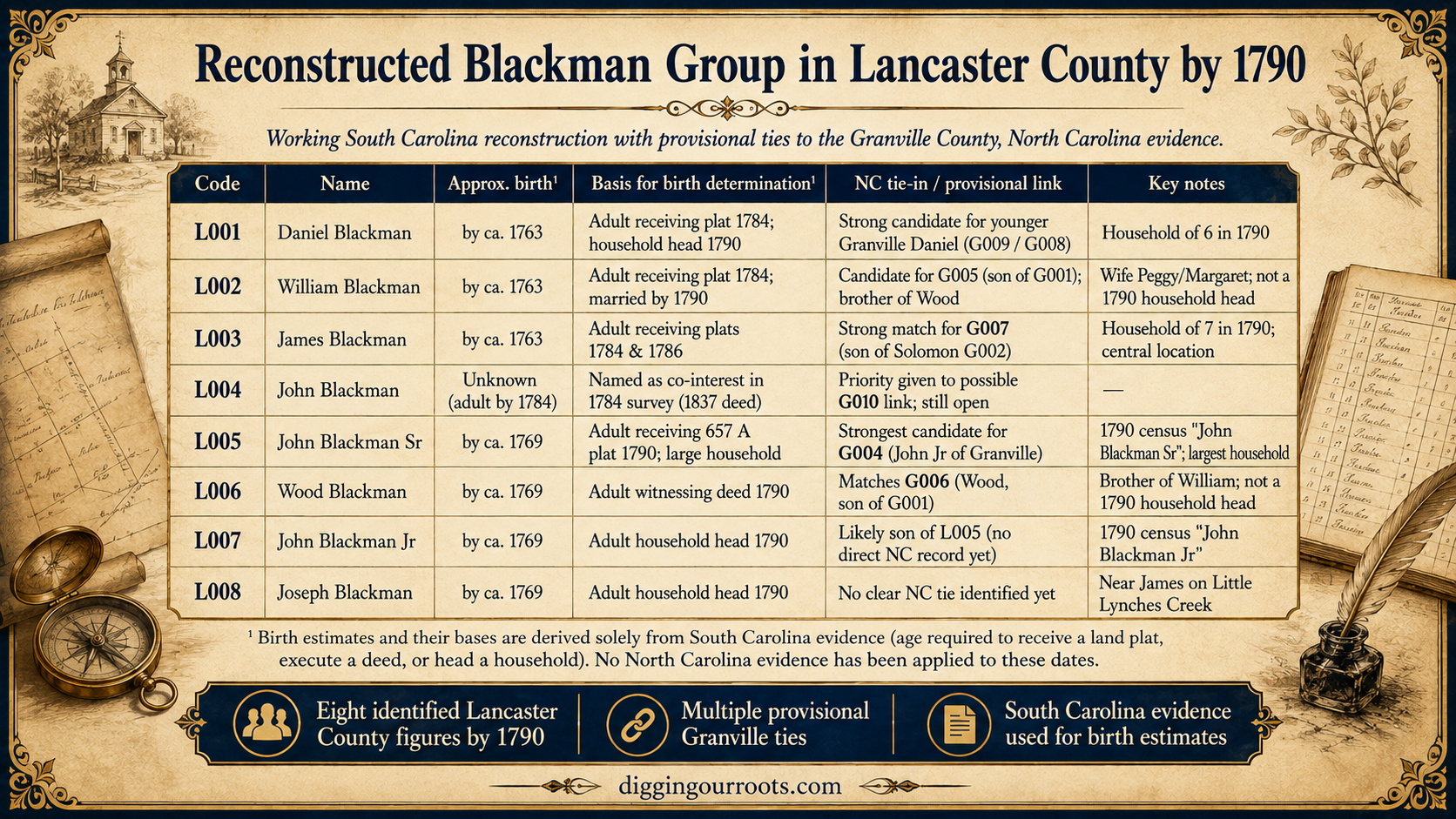
This article will attempt to bring those scattered pieces together and examine the Blackmans as a connected group rather than as isolated individuals. It will begin with their appearance in Camden District land records in 1784 and then follow the households through the 1790 and 1800 censuses. By comparing ages, household composition, neighboring landowners, repeated associations, marriages, and later migrations, it may be possible to identify where certain sons, daughters, and younger men most likely belonged.
Not every conclusion will carry the same weight. Some relationships may be strongly supported by several records that align with one another. Others may remain provisional because they depend on age ranges, household vacancies, or patterns that are suggestive but not conclusive. The goal is not to present every placement as fact, but to explain clearly why one possibility appears stronger than another.
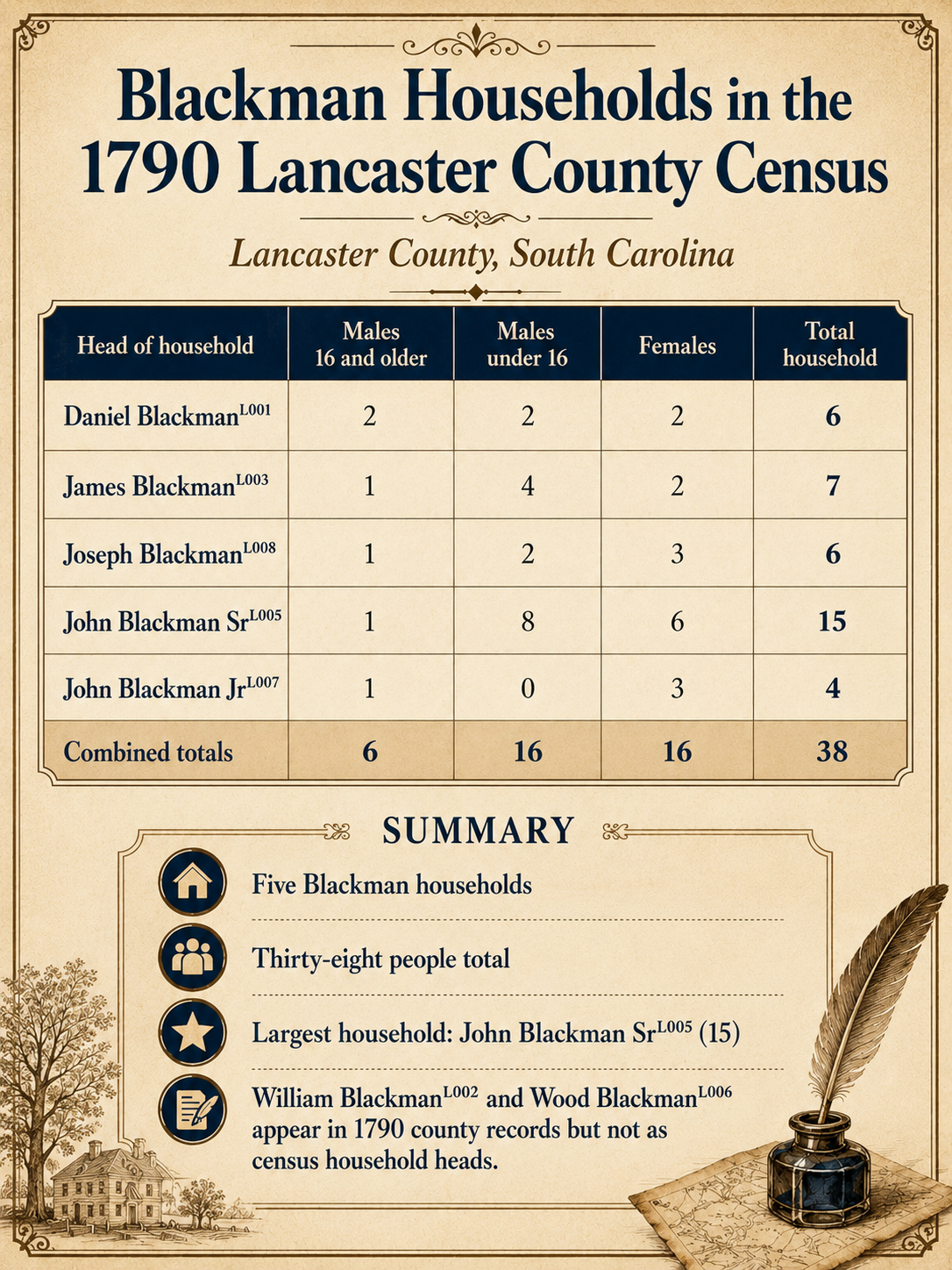
The 1790 census provides the first broad snapshot of the family group. It records five Blackman households in Lancaster County, including two men named John, along with sixteen boys under the age of sixteen and sixteen females whose names were not recorded. Those unnamed household members form the starting point for the reconstruction.
As the same families are followed into later censuses, some of those anonymous positions begin to narrow. A boy under sixteen in 1790 may appear as a young household head in 1800 or 1810. A man whose age remains consistent from one census to the next may fit more naturally in one earlier household than another. Land records and migration patterns can then help test whether that placement makes sense beyond the numbers alone.
The result will not be a finished family tree in which every relationship is proved. It will be a documented working reconstruction of the Blackman community in Lancaster County—one that gathers the evidence, identifies the strongest patterns, explains the uncertainties, and creates a framework that future records or DNA evidence may confirm, refine, or correct.
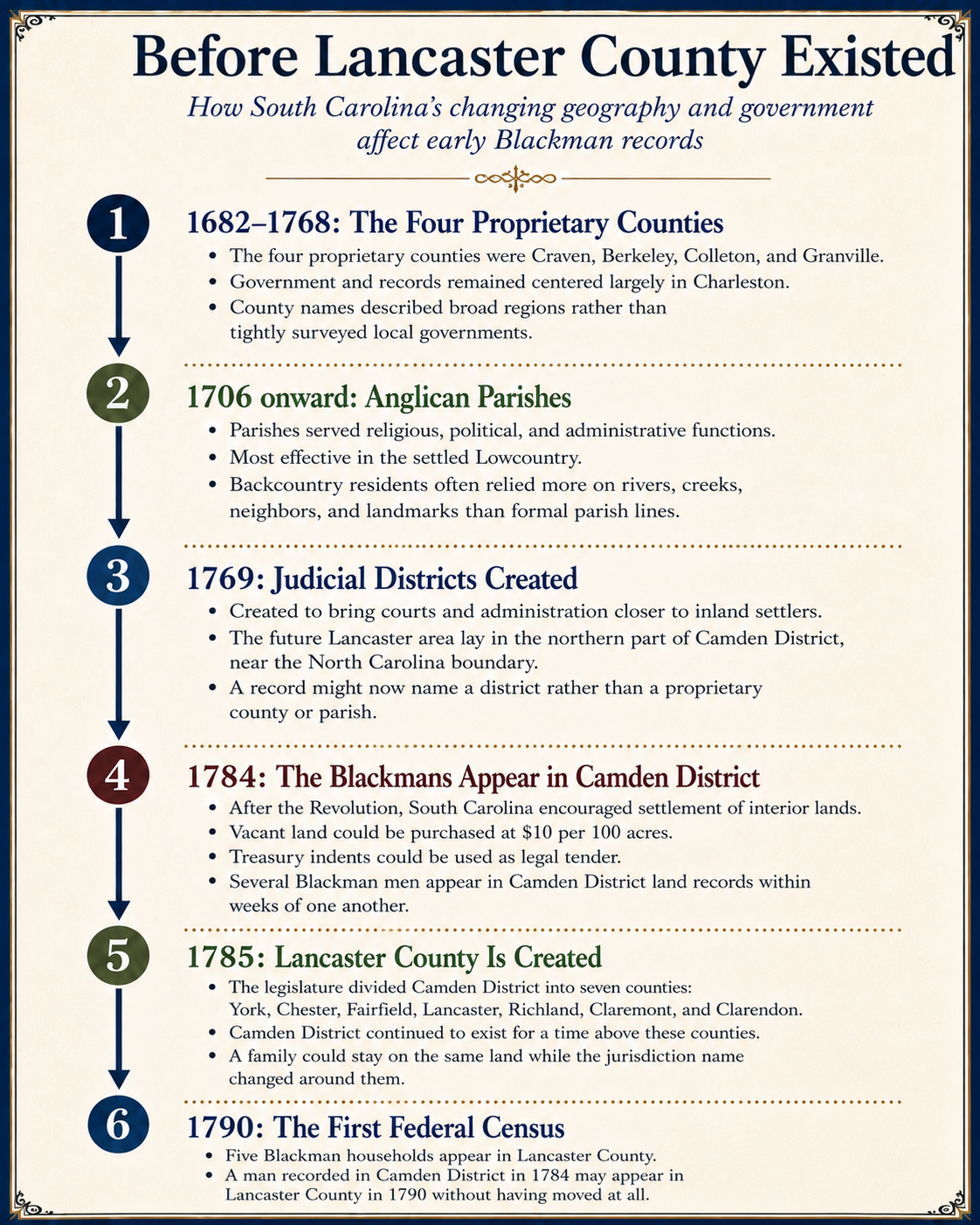
Against that background, the Blackmans’ appearance in the Lancaster area beginning in 1784 takes on added meaning. For much of the Revolutionary War era, South Carolina’s land system had been largely dormant. When the General Assembly reopened the process in 1784 and again provided a formal way to survey and grant vacant land, the backcountry saw an immediate rush to secure claims. Families who had recently arrived—or who may already have been living on the land without formal title—moved quickly to put their holdings on paper.
The Blackmans appear to have been part of that first postwar wave. Coming out of North Carolina and some perhaps from other parts of South Carolina, members of the family settled along Little Lynches Creek, Bear Creek, and Flat Creek, in the part of Camden District that would soon become Lancaster County. These waterways lay along the southern reach of long-used migration routes carrying families down from northern North Carolina and the Virginia–North Carolina border country. For people already familiar with the Camden backcountry, or with relatives and neighbors who had gone before them, the open creek bottoms offered both opportunity and familiarity. By 1784, the Blackmans were not simply acquiring scattered parcels of land—they were beginning to establish the cluster of farms and households that would grow into the community later remembered as the Blackman Settlement.
Three Blackman Plats in the Autumn of 1784
The first clear appearance of the Blackman group in Camden District, South Carolina came during the autumn of 1784.
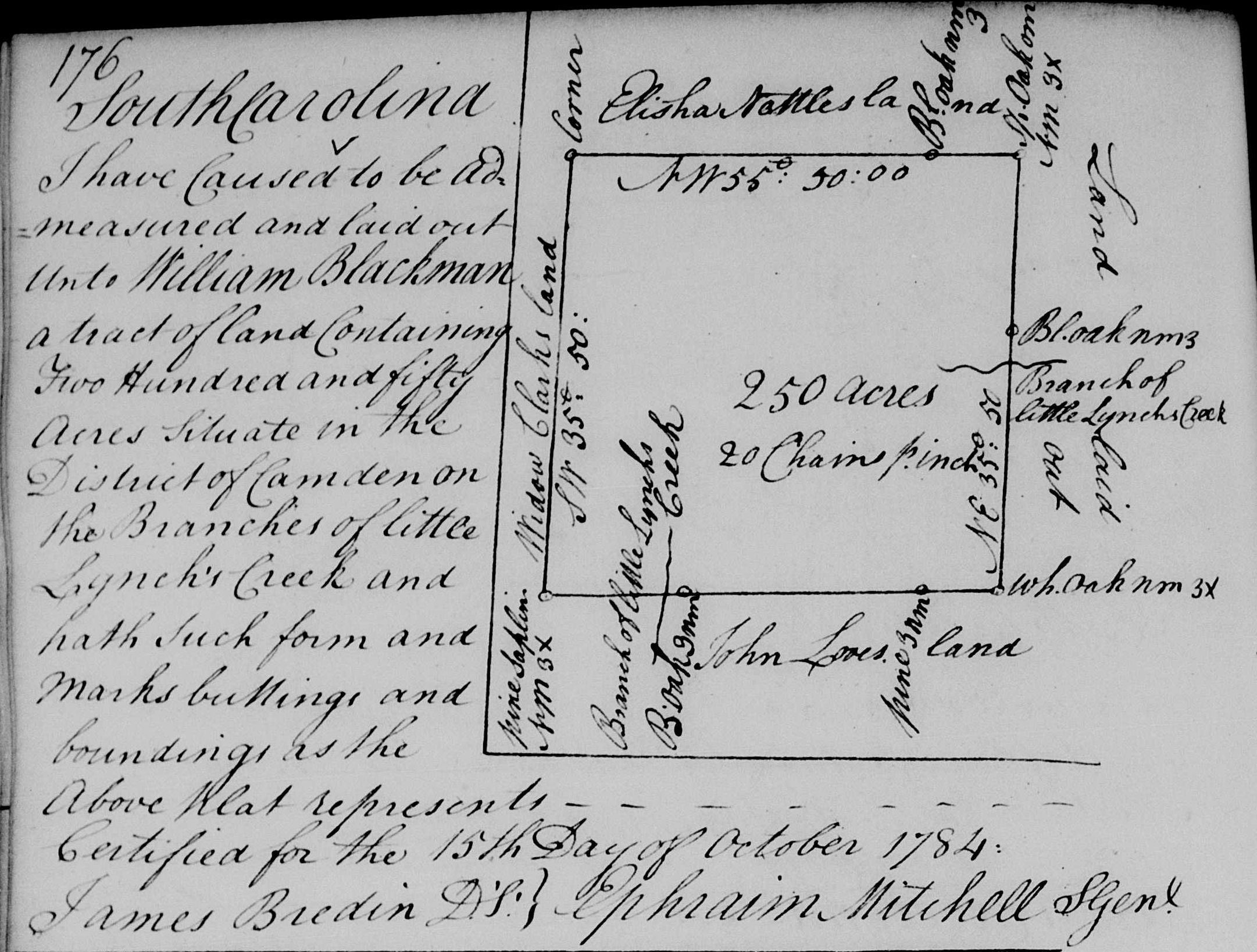
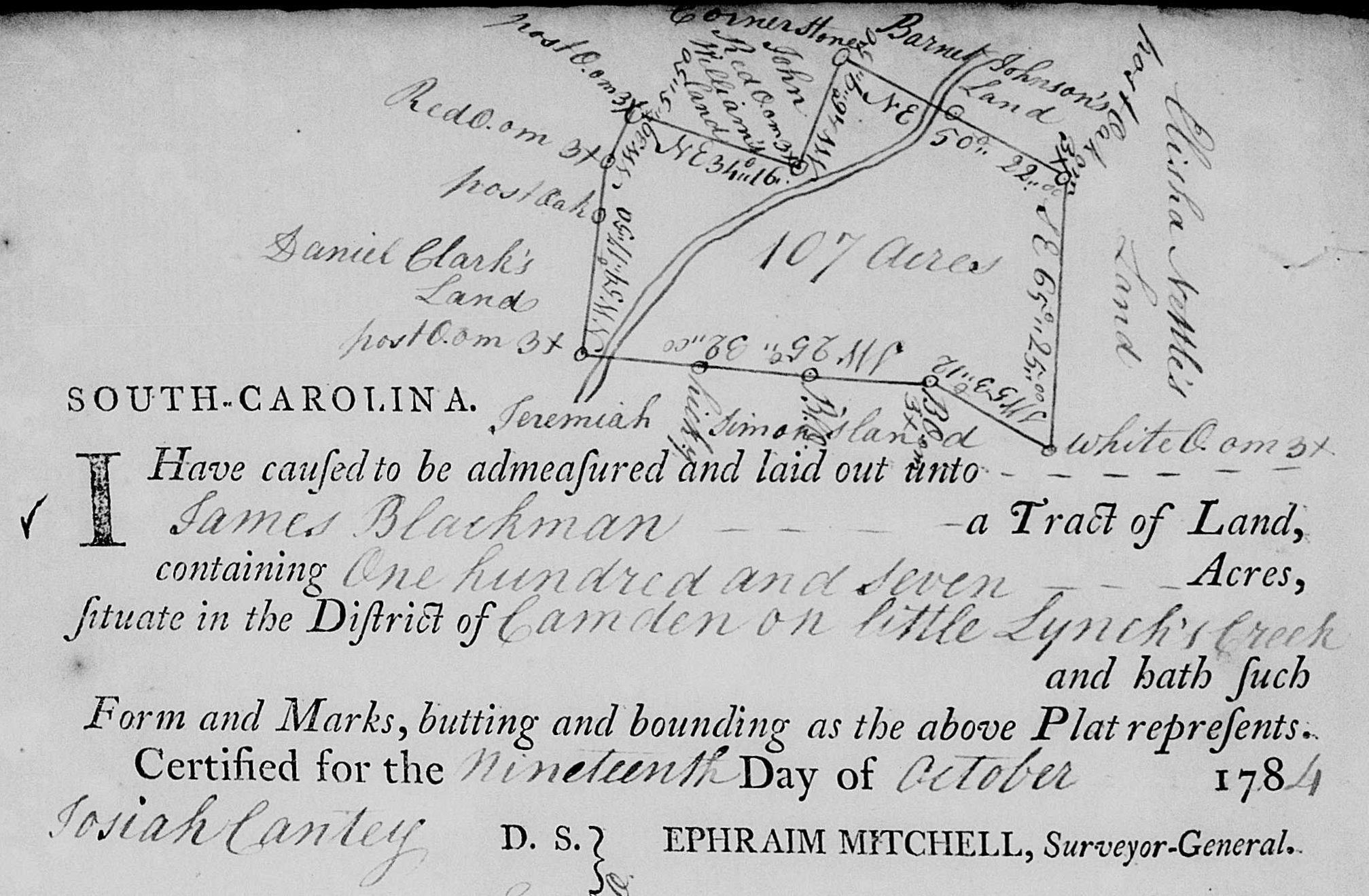
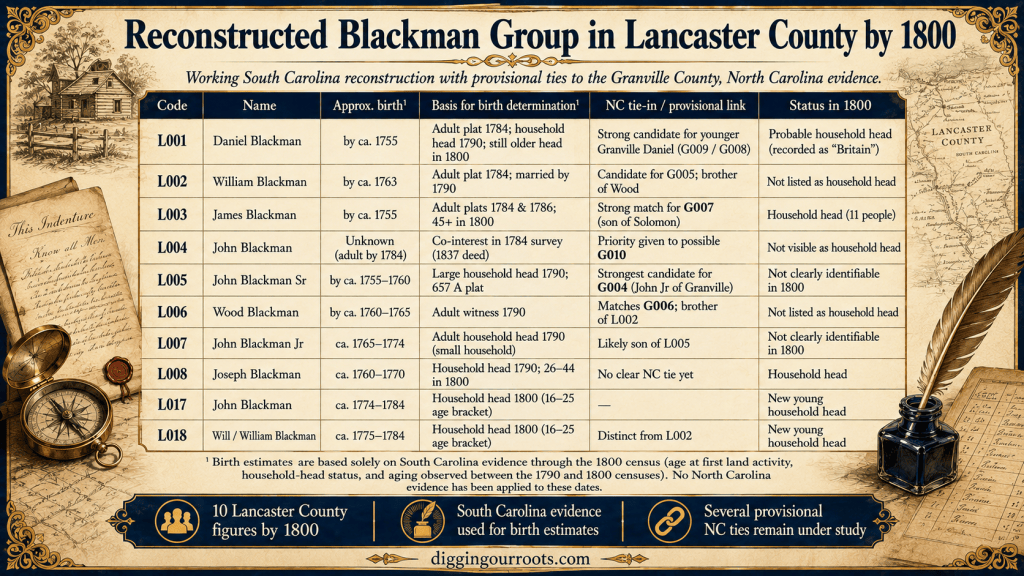
On 27 September 1784, Daniel Blackmanᴸ⁰⁰¹ received a plat for 100 acres on Bear Creek. Less than three weeks later, on 15 October, William Blackmanᴸ⁰⁰² received a plat for 250 acres on a branch of Little Lynches Creek. Four days after that, on 19 October, James Blackmanᴸ⁰⁰³ received a plat for 107 acres on Little Lynches Creek.
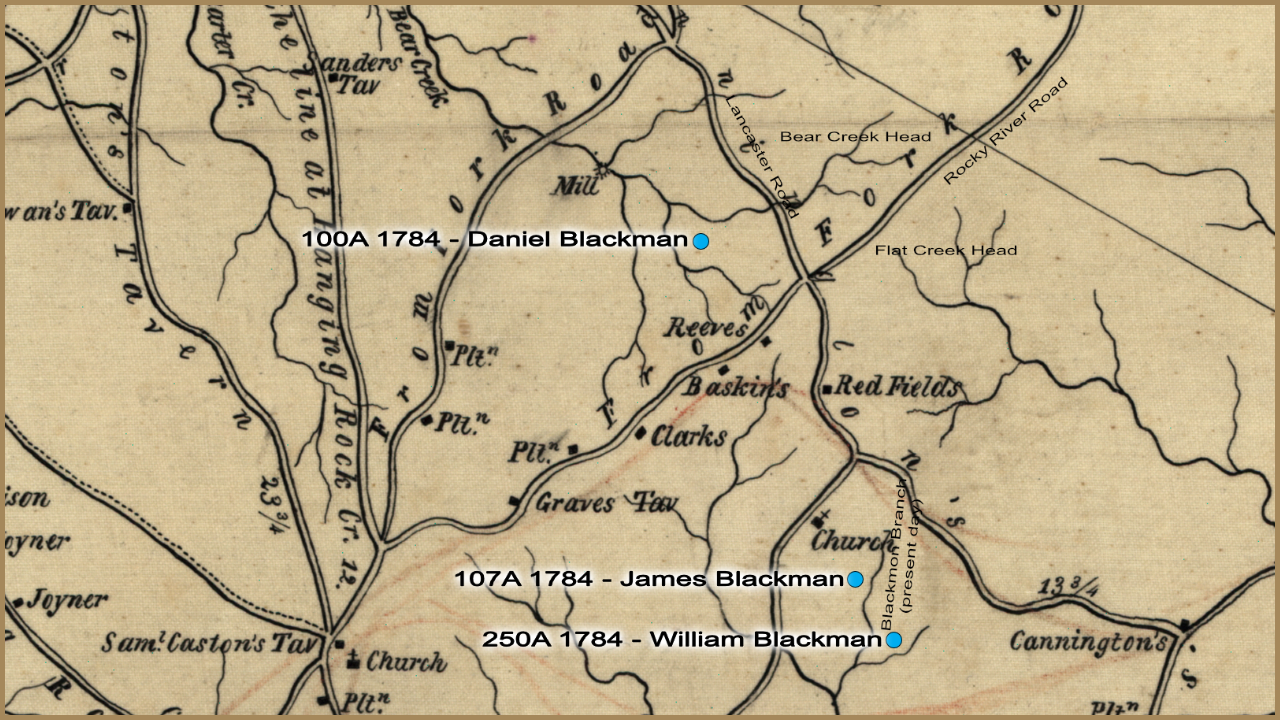
These three surveys place Daniel Blackman, William Blackman, and James Blackman in the same part of Camden District within a span of only twenty-two days. Their appearance so close together in both time and place provides the first strong evidence that the Blackmans were entering the area as part of a broader family movement rather than as unrelated men arriving by chance.
William and James settled on Little Lynches Creek, along a branch identified on present-day maps as Blackmans Branch. Daniel’s tract lay nearby on Bear Creek. As the accompanying map shows, Little Lynches Creek, Bear Creek, and Flat Creek were neighboring waterways, and the early Blackman properties were concentrated within the same general area.
Daniel Blackman on Bear Creek
Among the Blackman families who appear to have made the move south from North Carolina into the Camden District, Daniel Blackmanᴸ⁰⁰¹ was the first of the group to secure a recorded plat.
His survey, dated 27 September 1784, laid out 100 acres on Bear Creek and was completed by Josiah Cantey. The tract was bounded by lands associated with John Henry, Johnson, and John Murphy.
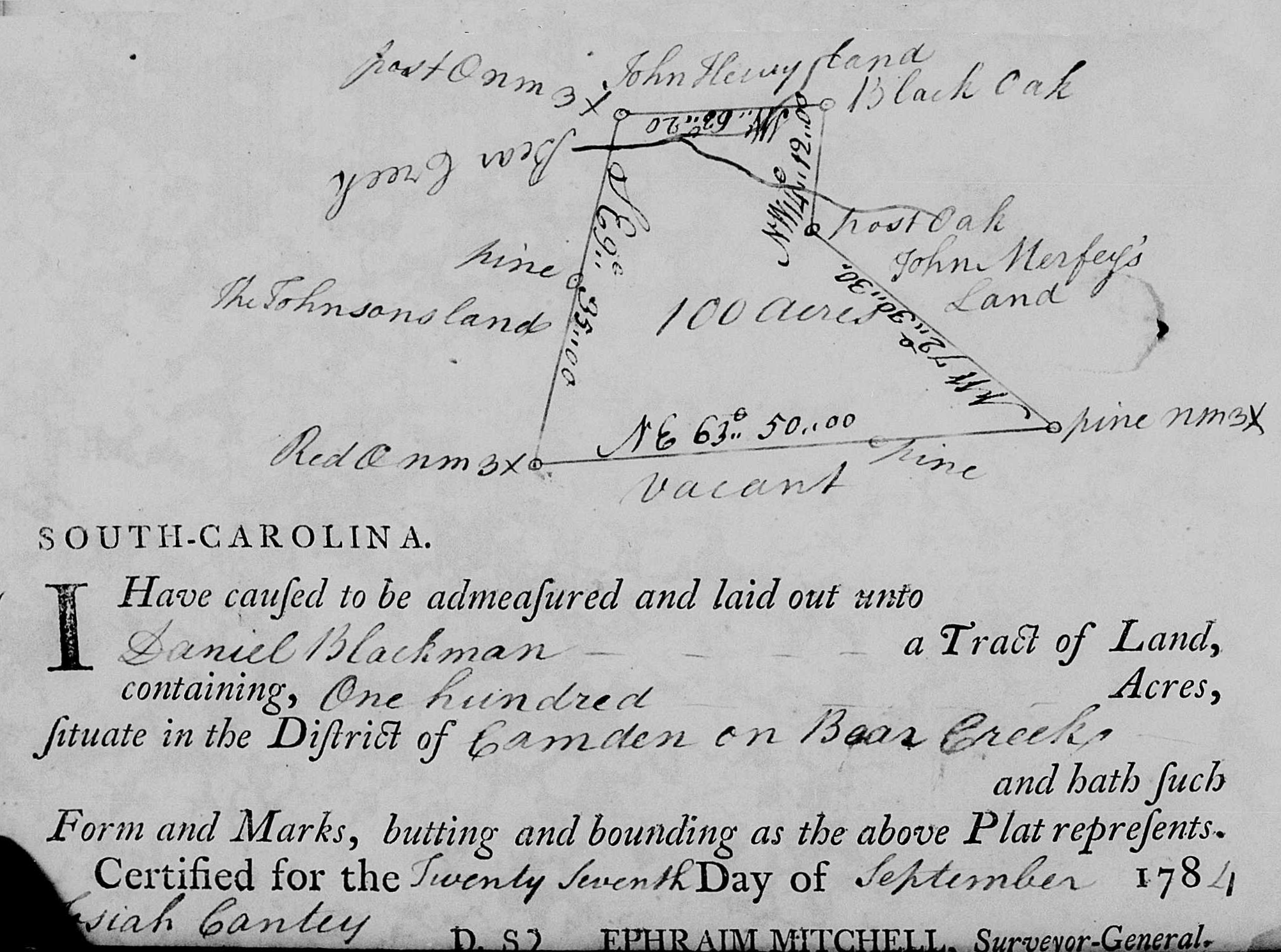
The plat is valuable because it preserves more than Daniel’s name and acreage. It places him within a recognizable neighborhood that had begun developing during the 1770s in the broad proprietary region known as Craven and shows the actual shape of the land he was claiming. The boundary lines, adjoining landowners, and course of Bear Creek help anchor Daniel to a specific part of the Camden District landscape.
Later evidence suggests, however, that Daniel may not have held the entire tract for his own exclusive use. An 1837 deed referred to the property as land that had been “surveyed for John Blackman Senr. and Daniel Blackman.” The surviving 1784 plat was formally issued only in Daniel’s name, but the later wording preserves the memory of a different arrangement between the two men.
The apparent understanding appears to have been that the tract would be divided, with the southern portion belonging to John Blackmanᴸ⁰⁰⁴ and the upper portion remaining with Daniel. No surviving deed or recorded partition has yet been found documenting that division, so the arrangement may have existed as a private family agreement, an unrecorded transfer, or a locally recognized understanding that never made its way into the formal title record.
John was himself part of the younger Blackman generation seen in the earlier North Carolina records. He had lived near Daniel along on Ruin and Tabbs Creek and appears to have made the move south with the same broader family group. In the present reconstruction, John Blackmanᴸ⁰⁰⁴ is provisionally associated with John Blackmanᴳ⁰¹⁰, while Daniel Blackmanᴸ⁰⁰¹ is provisionally associated with Daniel Blackmanᴳ⁰⁰⁹. Those identifications remain working hypotheses, but they help connect the Lancaster settlement back to the Blackman neighborhood already visible in North Carolina.
Correlation between L (Lancaster) and G (Granville) person identifications will be explained later in the article.
That possibility changes how the 1784 plat should be viewed. Rather than representing Daniel alone, the tract may mark the beginning of a shared Blackman foothold on Bear Creek. Daniel held the formal survey, while John may have occupied or claimed the southern portion under an arrangement understood within the family and neighborhood.
The later deed is especially important because it was written more than fifty years after the original survey. Its language suggests that the connection between John and Daniel’s interests had been remembered and passed forward through the family, even though the original agreement itself has not survived. Just as importantly, the reference to John as “Senior” suggests there was another, younger John in the family or community at the time. That small distinction may prove useful in future research as we continue trying to separate and identify the different men named John Blackman.
For family research, Daniel’s appearance remains important because he did not vanish after the survey. Six years later, he was still present in Lancaster County and headed a household in the 1790 census. That continuity suggests that the Bear Creek tract was not a speculative claim or a brief stop along the way. Daniel appears to have settled in the area, while the shared arrangement with John helped form one of the earliest pieces of the growing Blackman neighborhood.
William and James on Little Lynches Creek
William Blackmanᴸ⁰⁰² followed Daniel less than three weeks later with a 250-acre plat on a branch of Little Lynches Creek. Four days after William’s survey, James Blackmanᴸ⁰⁰³ received 107 acres on Little Lynches Creek.
Their timing and location place them especially close to one another. Both men were establishing land interests along the same creek system, in the area later associated with Blackmans Branch.
Unlike Daniel and John, whose earlier trail appears to lead directly from North Carolina, William and James may represent another branch of the wider Blackman family that had already been living elsewhere in South Carolina before moving into the Lancaster area. Their nearly simultaneous arrival on Little Lynches Creek suggests that this was not simply a series of unrelated individual moves. Instead, the emerging pattern points toward several related Blackman branches converging on the same part of Camden District—some coming down from North Carolina, others relocating from elsewhere within South Carolina—and joining together in the formation of a new family neighborhood.
In that sense, the settlement beginning in 1784 may have been as much a family reunion on the frontier as a land rush. Daniel and John appear to represent one stream of the migration, while William and James provisionally represent another. Within only a few weeks, those separate branches were establishing themselves along Bear Creek and Little Lynches Creek, laying the groundwork for the larger Blackman Settlement that would soon take shape.
The records do not say whether Daniel, William, and James arrived together or explain precisely how they were related. Even so, three men of the same surname obtaining land in the same locality within only twenty-two days creates a strong beginning for reconstructing the Blackman family’s arrival in Camden District, South Carolina.
James Blackman Acquires Additional Land
On 16 January 1786, James Blackmanᴸ⁰⁰³ received a second plat, this time for 300 acres on a branch of Bear Creek.
James’s first tract had been on Little Lynches Creek. His second placed him within the same Bear Creek area where Daniel Blackmanᴸ⁰⁰¹ and John Blackmanᴸ⁰⁰⁴ were already established. Because the creeks and properties lay close together, this was not a distant or unrelated purchase. It was an expansion of James’s landholdings within the same growing Blackman settlement.
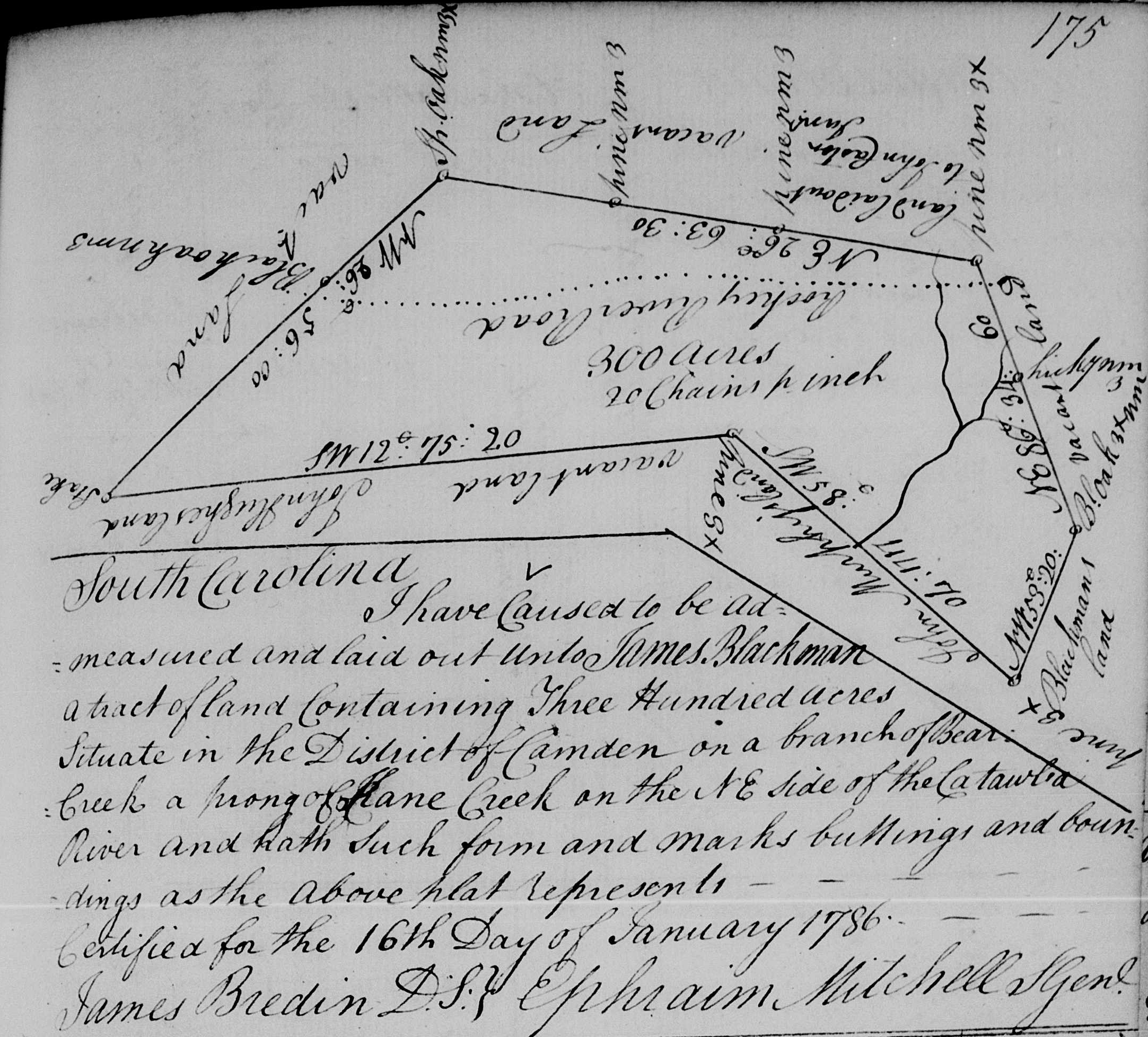
In time, this 300-acre tract would become one of the central pieces of the neighborhood later remembered as the Blackman Settlement. Positioned on Rocky River Road and the road leading toward the village of Lancaster, James’s land stood close to the heart of the family community as the different Blackman branches spread across Bear Creek, Flat Creek, and the surrounding countryside. What first appeared in the records as a series of individual land claims was, in fact, becoming a recognizable family settlement.
Daniel’s family appears to have become established mainly to the north of James’s tract.
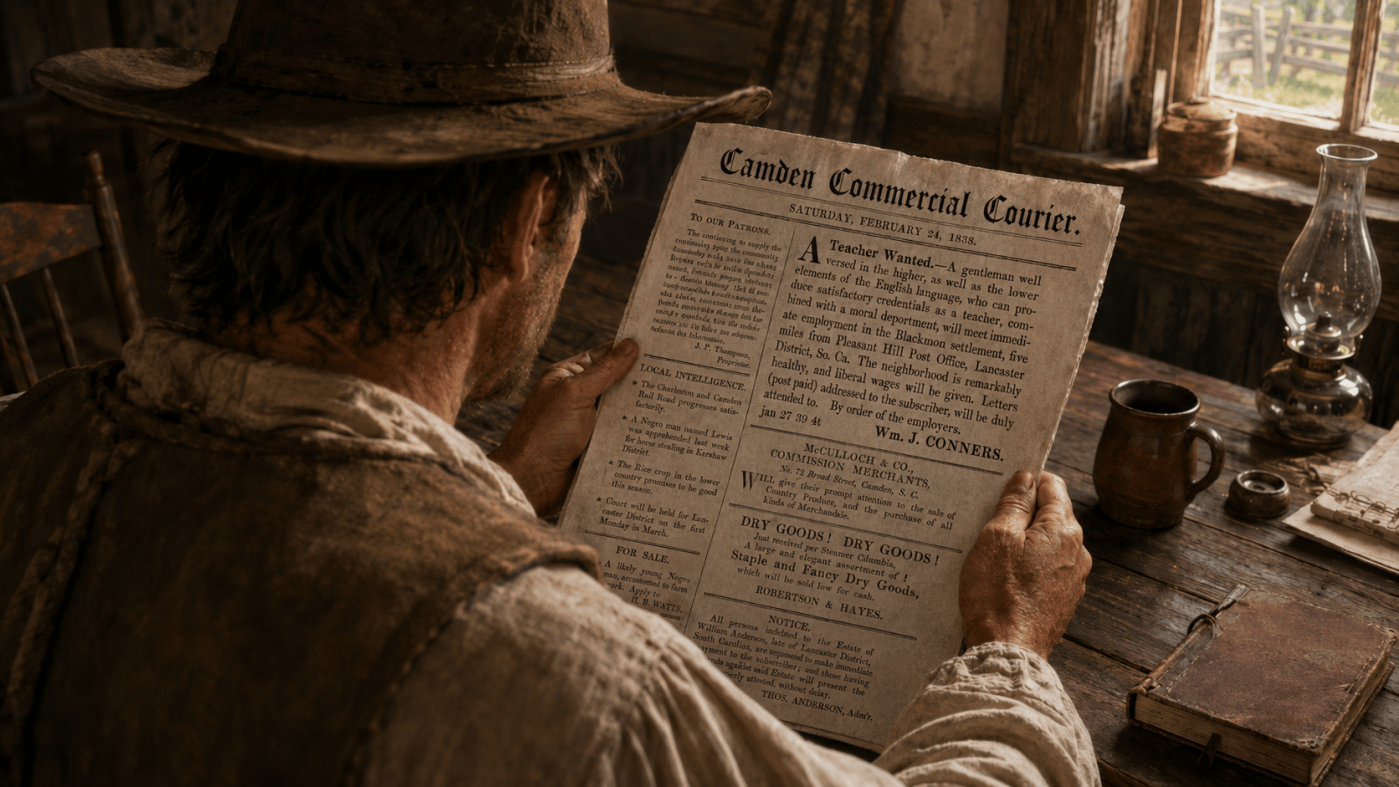
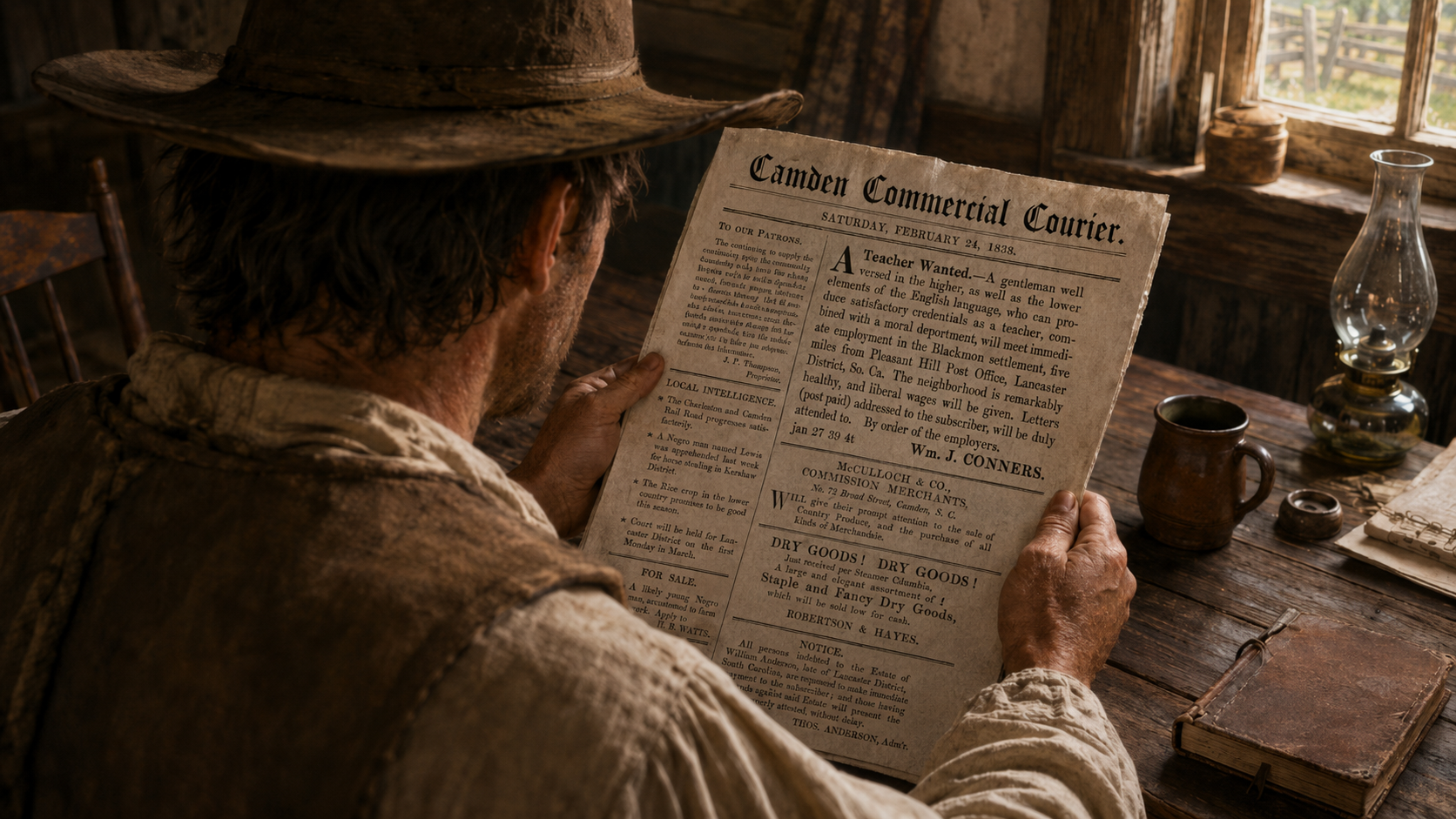
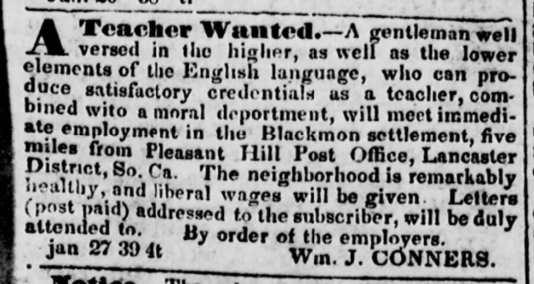
(See advertisement in this article’s cover image. Showcases the historical usage of the ‘Blackman Settlement’. Source and date as depicted in the illustration is accurate and true.)
John’s Large Bear and Flat Creek Plat
The Blackman settlement became more clearly defined on 30 January 1790, when a John Blackmanᴸ⁰⁰⁵ received a plat for 657 acres on the waters of Bear and Flat Creeks.
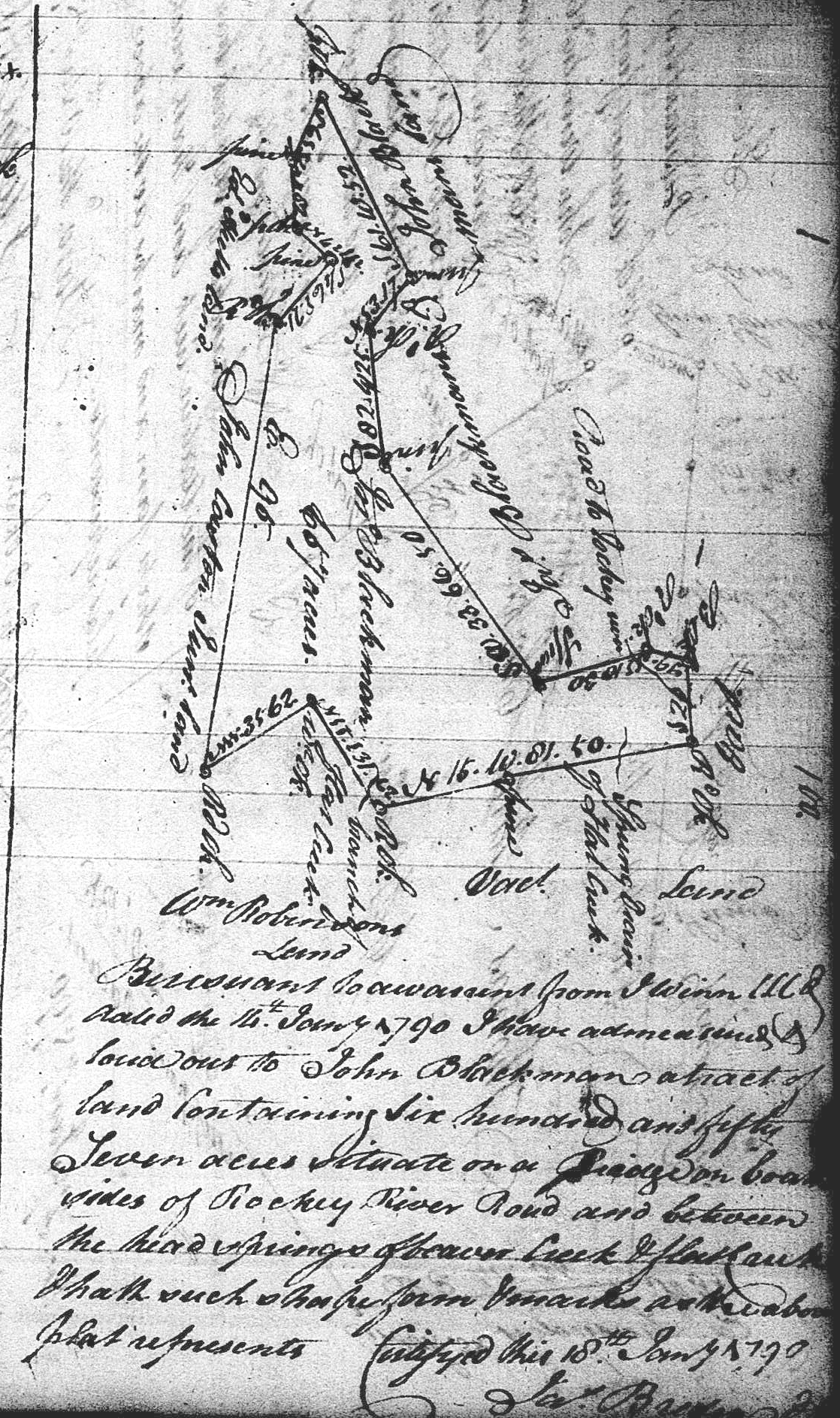
James Blackmanᴸ⁰⁰³ was named as an adjoining landowner on the 657-acre survey. This placement fits the broader neighborhood pattern already beginning to emerge. James’s 300-acre tract occupied a central position, while Daniel’s family lands lay mainly to the southeast and John’s landholdings extended to the east and south.
The 1790 plat therefore did more than show that John and James owned neighboring property. It helped define the shape of the developing Blackman community around Rocky River Road and the road leading toward the village of Lancaster.
By the time the first federal census was taken, the land records show several branches of the family established within one compact area:
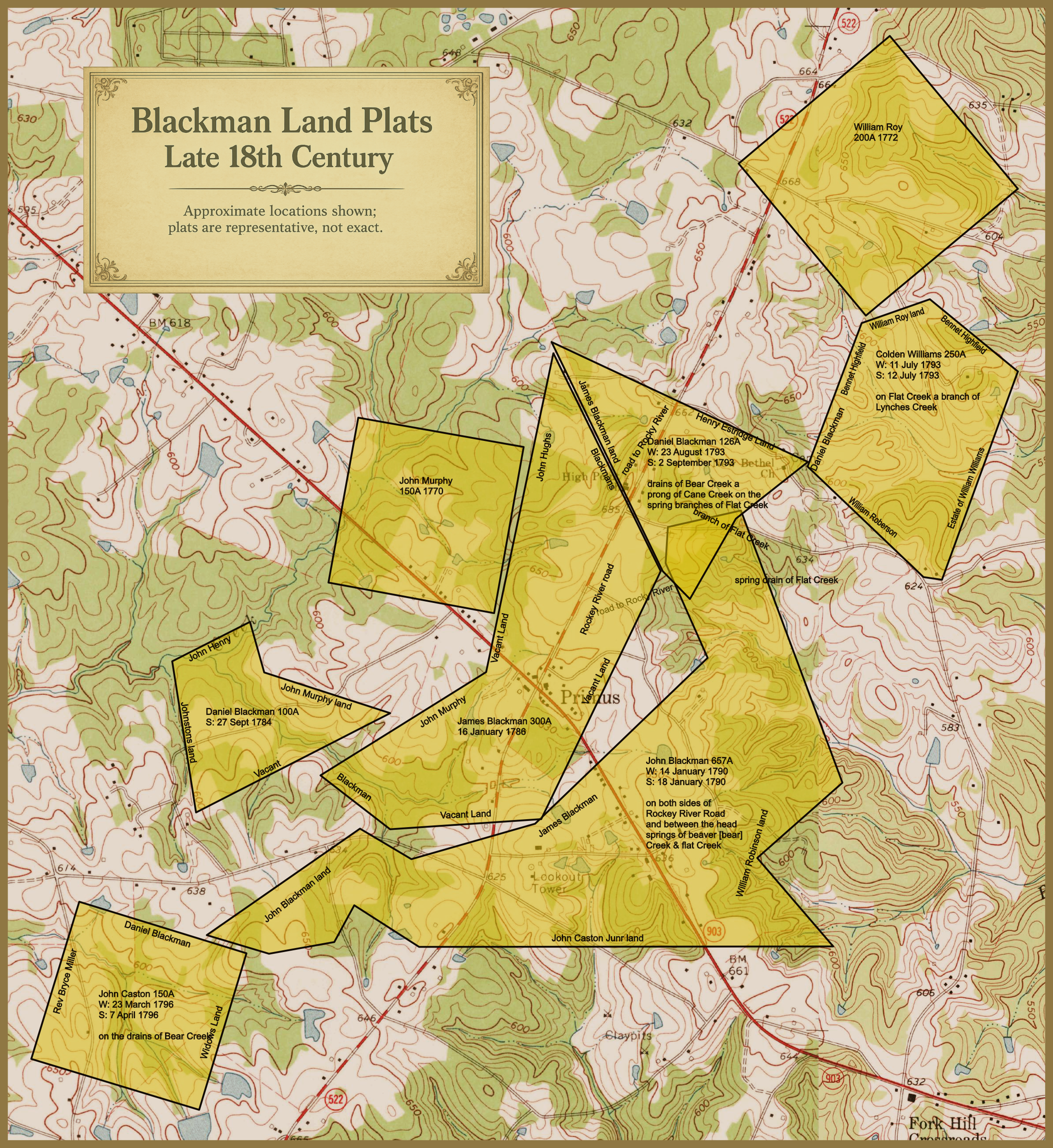
- Daniel Blackmanᴸ⁰⁰¹ and his family around the Bear Creek lands to the north;
- James Blackmanᴸ⁰⁰³ near the center of the neighborhood;
- John Blackmanᴸ⁰⁰⁵ extending across the Bear and Flat Creek area to the east and south (provisioned as a different John Blackman than John Blackmanᴸ⁰⁰⁴);
- and William Blackmanᴸ⁰⁰² nearby along Little Lynches Creek and Blackmans Branch.
Seen together, the surveys reveal a family neighborhood taking shape rather than a collection of unrelated land claims. The Blackmans were settling around the same creeks and roads, with their properties forming the geographic foundation for the households later recorded in the 1790 census.
William Blackman, Peggy, and the Appearance of Wood Blackman
A deed dated 25 March 1790 adds important family detail to the land story.
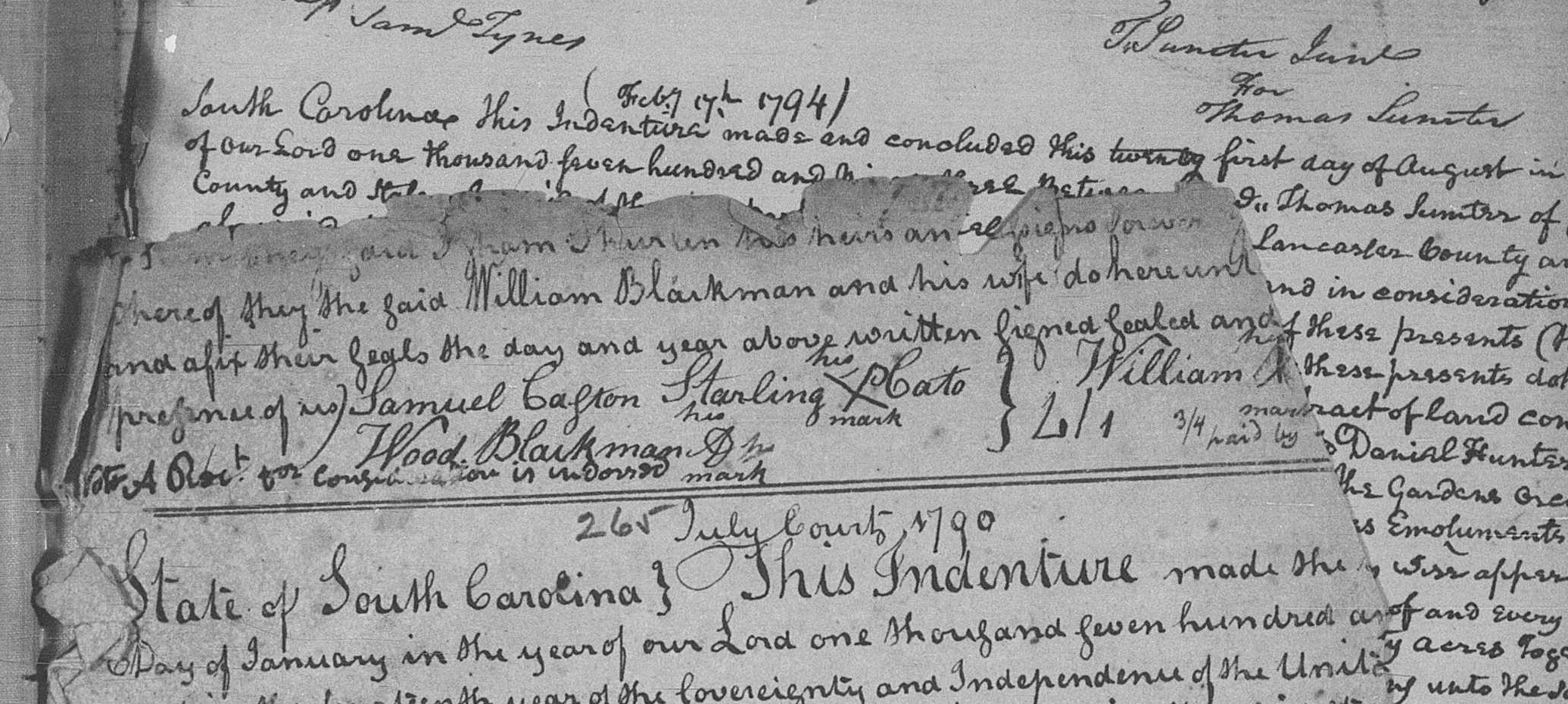
Described as a planter, William Blackmanᴸ⁰⁰² sold 150 acres on branches of Little Lynches Creek to Isham Shurlen for £40 sterling. The property had been surveyed for William and granted to him on 5 March 1787.
The witnesses were Samuel Caston, Starling Cato, and Wood Blackmanᴸ⁰⁰⁶.
Wood’s presence deserves special attention. He was not simply another Blackman living somewhere in the Camden District (Lancaster County as of 1785). By witnessing William’s deed, he was personally involved in one of William’s legal transactions.
Earlier North Carolina records help explain that connection. In 1757, a William Blackmanᴳ⁰⁰⁵ appeared among the taxable men associated with the household of John Blackman Sr.ᴳ⁰⁰¹. Several years later, in 1764, Wood Blackmanᴳ⁰⁰⁶ appeared in the same family setting and was specifically identified as a son of John Blackman Sr.ᴳ⁰⁰¹.
Taken together, those records support the working reconstruction that William Blackmanᴸ⁰⁰², John Blackmanᴸ⁰⁰⁵—who appears as John Jr. in the earlier North Carolina evidence—and Wood Blackmanᴸ⁰⁰⁶ were brothers, all belonging to the family of John Blackman Sr.ᴳ⁰⁰¹.
The full North Carolina evidence belongs to an earlier chapter of the family’s history and will be examined separately, but it provides important context here. Wood’s appearance as a witness was not simply the chance presence of another man with the same surname. It brought two members of the same immediate family together in a Camden District/Lancaster County deed.

The property did not remain outside William’s hands for long. On 15 November 1790, Isham Shirling conveyed it back to him. That deed also identifies William’s wife as Peggy Blackman, likely a nickname for Margaret Blackman.
Peggy’s appearance is especially valuable because women were rarely named in the early census schedules. The deed restores her name to the family story and identifies William and Peggy as a married couple living within the Little Lynches Creek community.
Together, the two 1790 transactions show William continuing his connection to the land, identify Peggy as his wife, and place his brother Wood beside him in a legal record.
What the Land Records Reveal
By 1790, the records identify several members of the Blackman group within the same small area of Lancaster County:
- Daniel Blackmanᴸ⁰⁰¹ on Bear Creek;
- William Blackmanᴸ⁰⁰² on Little Lynches Creek;
- James Blackmanᴸ⁰⁰³ on Little Lynches Creek and Bear Creek;
- John Blackmanᴸ⁰⁰⁴ on Bear Creek;
- John Blackmanᴸ⁰⁰⁵ on Bear Creek and Flat Creek;
- Wood Blackmanᴸ⁰⁰⁶ appearing as William’s brother and deed witness;
- Margaret ‘Peggy’ Blackman, identified as William’s wife.
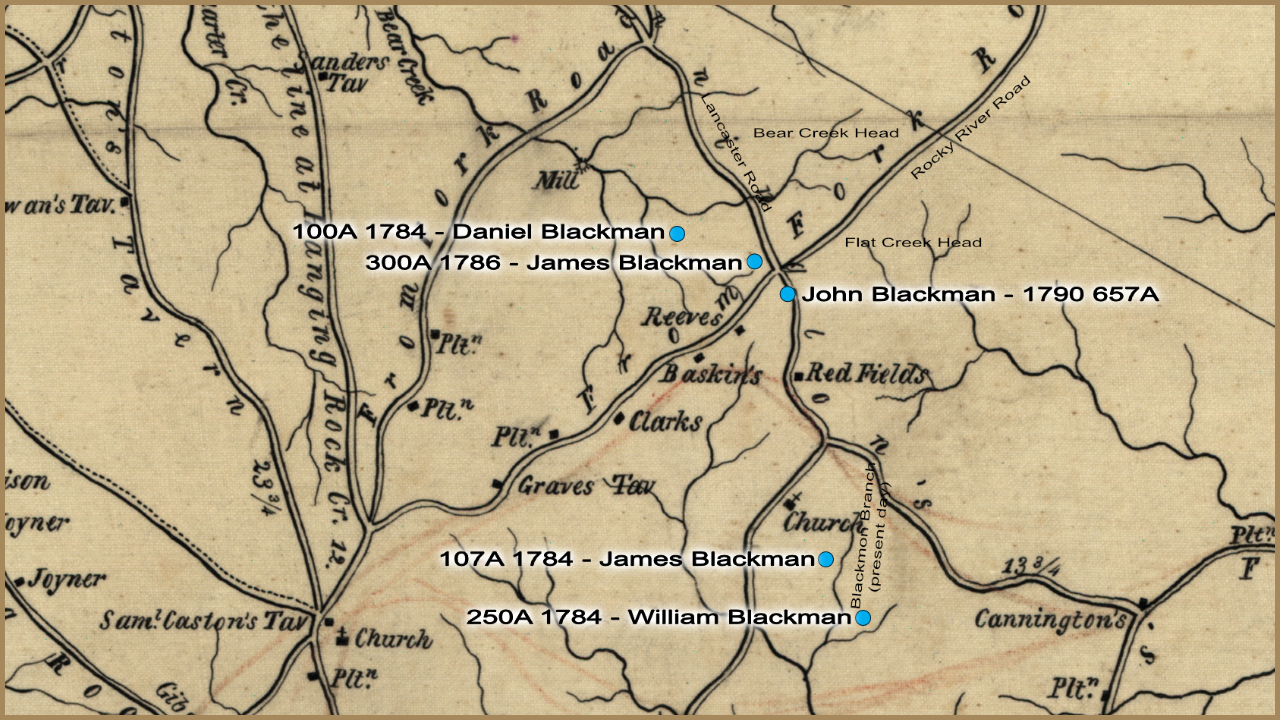
The accompanying map shows just how closely these properties were situated. The importance of the records is therefore not in proving that the waterways formed separate Blackman neighborhoods. They did not. The properties belonged to one concentrated settlement area.
What the documents begin to reveal is the makeup of the group itself.
John, William, and Wood can be placed within the same immediate family through the earlier North Carolina evidence. James was an adjoining landowner to John. Daniel appeared nearby during the same opening period of settlement. Peggy can be restored as William’s wife.
The Blackmans in the 1790 Census
The land records show the Blackmans establishing themselves in Camden District during the 1780s. By the time the first federal census was taken in 1790, Lancaster County had been created from the northern portion of that district, and the census provides the first household-by-household view of the group.
Five Blackman households were recorded, and the combined households contained thirty-eight people.
This was no longer the picture of a few isolated landholders. By 1790, the Blackmans formed a substantial family group within Lancaster County, with six adult males, sixteen boys under sixteen, and sixteen females living among the five households.
Matching the Census to the Land Records
Three of the census heads can be connected directly to the earlier land records.
Daniel Blackmanᴸ⁰⁰¹ had received his Bear Creek plat in September 1784. James Blackmanᴸ⁰⁰³ had acquired land on both Little Lynches Creek and Bear Creek. John Blackmanᴸ⁰⁰⁵ had also received his large plat on Bear and Flat Creek just before the census was taken in 1790.
The land records and census therefore reinforce one another. The plats establish where the men were living and acquiring property; the census reveals the households that had formed around them.
Two Men Named John Blackman
The 1790 census records two separate Blackman households headed by men named John, and in this case the census itself helps distinguish them.
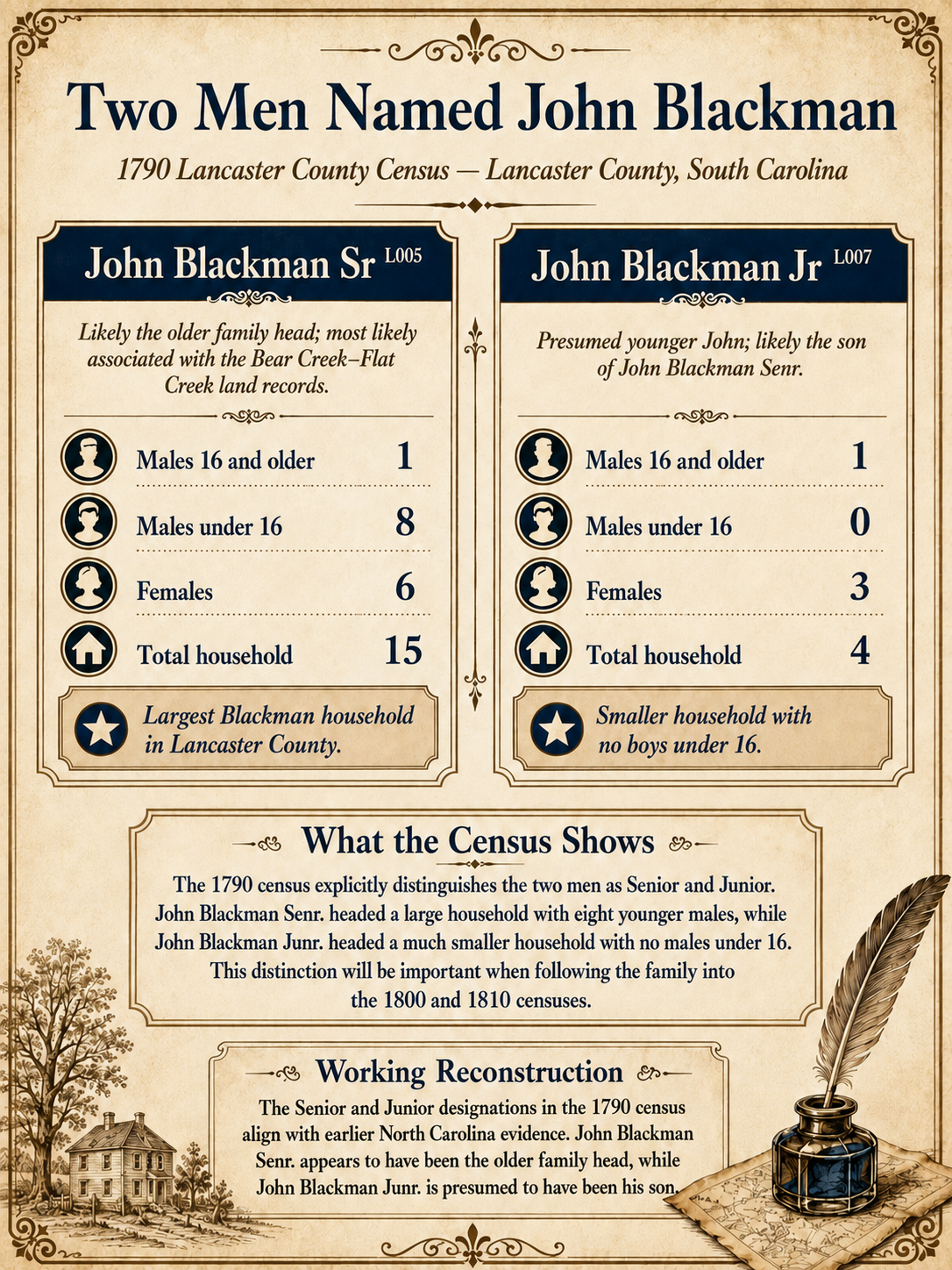
The larger household was recorded under John Blackman Senr., now identified in this study as John Blackman Srᴸ⁰⁰⁵. His household contained:
- one male aged sixteen or older;
- eight males under sixteen;
- six females.
With fifteen people, it was by far the largest Blackman household in Lancaster County.
The second household was recorded under John Blackman Junr., identified as John Blackman Jrᴸ⁰⁰⁷. His household was much smaller and contained:
- one male aged sixteen or older;
- no males under sixteen;
- three females.
The census therefore does more than show that two men named John lived in Lancaster County. It explicitly separates them as senior and junior.
The contrast between their households is striking. John Sr headed a large family with eight younger males, while John Jr had no boys under sixteen living in his home. Keeping those two households separate will be essential as the family is followed into the 1800 census and beyond.
It should also be kept in mind that the “Junior” designation in the census may not necessarily identify a son of John Blackman Srᴸ⁰⁰⁵. In this period, “Junior” could simply distinguish the younger of two men with the same name, meaning the reference could instead apply to John Blackmanᴸ⁰⁰⁴. For the purposes of this research, however, John Blackman Jrᴸ⁰⁰⁷ is retained as a separate working identity unless later evidence shows that the designation should be interpreted differently.
James Blackman’s Household
James Blackmanᴸ⁰⁰³ headed a household of seven in 1790:
- one male aged sixteen or older;
- four males under sixteen;
- two females.
The adult male was presumably James. The four younger boys make his household especially important because they provide several possible positions for the Blackman men who began appearing independently during the following two decades.
A 1798 deed described James as a yeoman, a term generally used for an independent working farmer who occupied and managed his own land. Within the Blackman Settlement, James would likely have been viewed as a respectable, established householder—a man with property, a productive farm, and helping anchor the settlement through his land, household, and position within the neighborhood.
Earlier North Carolina evidence suggests that James was a son of Soloman Blackmanᴳ⁰⁰². In 1764, James appeared as a taxable male within Solomon’s household, indicating that he had reached at least sixteen years of age by that time. This places James’s birth in 1748 or earlier and confirms that he belonged to the older adult generation by the time the family appeared in Camden District.

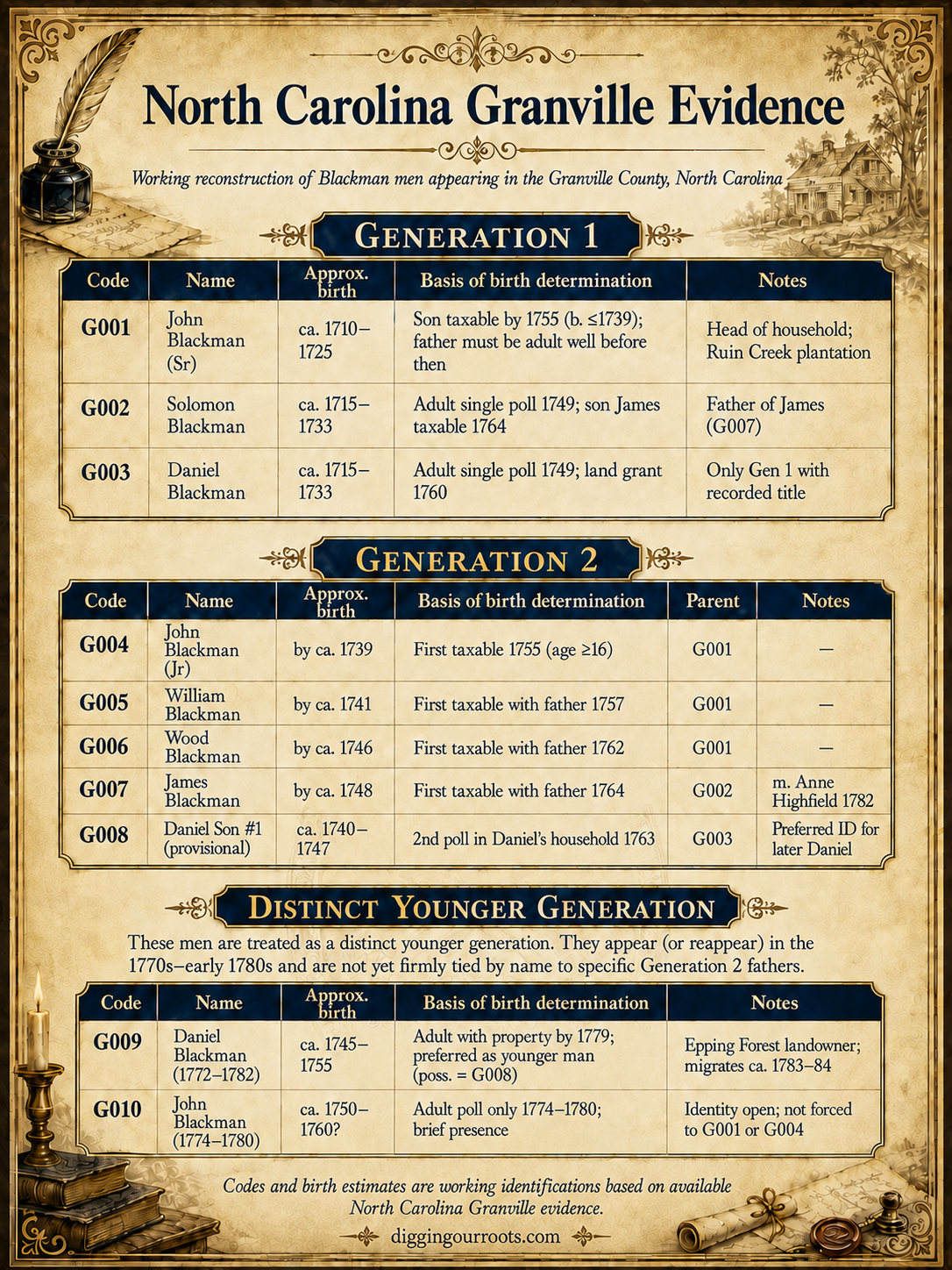
Solomon himself appears near the beginning of the surviving North Carolina records alongside John Blackman Srᴳ⁰⁰¹ and Daniel Blackmanᴳ⁰⁰³. Because all three men were already established adults during the same early period, the working reconstruction provisionally places Solomon, John, and Daniel within the same generation and considers them possible brothers.
Solomon has not yet been identified in the Lancaster County land records examined for this study, nor does he appear as a named household head in the 1790 Lancaster census. He may have died before the move, remained elsewhere, lived within another household, or appeared in records that have not yet been located. Whatever the explanation, James appears to represent Solomon’s probable branch within the developing Lancaster County settlement.
That possibility makes the four unnamed boys in James’s household especially valuable. As a working reconstruction, they may have included:
- James Blackman Jrᴸ⁰⁰⁹;
- Nathan Blackmanᴸ⁰¹⁰;
- Burrell Blackmanᴸ⁰¹¹;
- and one currently unidentified son.
James Jr. is a natural candidate because he later appeared under that generational designation and fits broadly within the expected age range. Burrell also belongs to the younger generation that later became associated with the Lancaster-to-Harris County migration.
Nathan’s placement requires more caution. Later records place his birth about 1774–1775, meaning he would have been approximately fifteen or sixteen when the 1790 census was taken. He could therefore fit among James Blackman’s males under sixteen, but only if he had not yet reached his sixteenth birthday by the enumeration date.
A later family pattern also makes it useful to distinguish Nathan from Jonathan Blackmanᴸ⁰¹³ rather than place them as brothers. Many years later, in Harris County, Georgia, Nathan’s son is believed to have married a daughter of Jonathan Blackmanᴸ⁰¹³. That marriage would have united the two branches in the next generation (A Chest Full of Clues: Following the Story of William and Martha Blackman – digging our roots).
Such a match would have been entirely acceptable in the early nineteenth century even if Nathan and Jonathan had been brothers, since their children would have been first cousins. Cousin marriages were not unusual in rural and frontier communities where neighboring families were already connected through land, migration, church, and kinship. Even so, the broader reconstruction appears more natural if Nathan and Jonathan belonged to separate Blackman branches and their children were more distant cousins.
Under that arrangement, Nathan can remain provisionally associated with James Blackmanᴸ⁰⁰³‘s household, while Jonathan may belong to the line of John Blackman Srᴸ⁰⁰⁵. Their later movement together to Harris County would then represent the continued closeness of two related Lancaster County branches rather than the relocation of two brothers. The marriage of their children would have strengthened an existing family alliance and helped preserve the older network of Blackman relationships after the move to Georgia.
There is also additional circumstantial evidence that may support Nathan’s provisional placement within James Blackmanᴸ⁰⁰³‘s family. Both James Blackman Jrᴸ⁰⁰⁹ and Nathan appear to have lived on, and acquired property near, James Sr.’s Bear Creek lands (James Jr sold Nathan in 1828 that was part of land granted to James Sr). By contrast, they do not appear to have settled among the other members of the later household—James Sr.’s wife Anna and their children—who were associated more closely with the Little Lynches Creek area.
That geographic pattern may be meaningful. It suggests that James Jr. and Nathan remained connected to their father and to the older Bear Creek property, while maintaining some separation from the later family group associated with Anna. Geography alone cannot prove a parent-child relationship, but when combined with the other evidence, their continued presence near James Sr.’s land provides another useful clue supporting Nathan’s tentative placement in this branch of the family.
Altogether this does not prove Nathan’s placement with James, but it gives the hypothesis an additional measure of coherence. It separates Nathan and Jonathan into related but distinct family lines while still explaining their close association, shared migration, and the later marriage connecting their descendants.
The census therefore allows the four positions to be populated provisionally, but the identities should not yet be treated as equally secure. James Jr. appears to be the strongest candidate, Burrell is plausible, Nathan remains possible.
James had already obtained land on Little Lynches Creek and Bear Creek, and his Bear Creek property occupied a central position within the developing Blackman neighborhood. The census now shows that he was also raising a household with several sons who would begin emerging under their own names during the early nineteenth century.
If the North Carolina reconstruction is correct, James’s household preserved the next generation of Solomon Blackmanᴳ⁰⁰²‘s line in Lancaster County. Their arrival in Camden District during the 1780s, however, may not have marked the family’s first attempt to establish itself in South Carolina. Earlier evidence suggests that members of the combined Blackman families moved south from North Carolina during the mid-1760s, settled for a time within one of South Carolina’s old proprietary divisions—possibly the broad region then called Granville or even Craven—and only later became established around Bear Creek and Little Lynches Creek beginning in 1784.
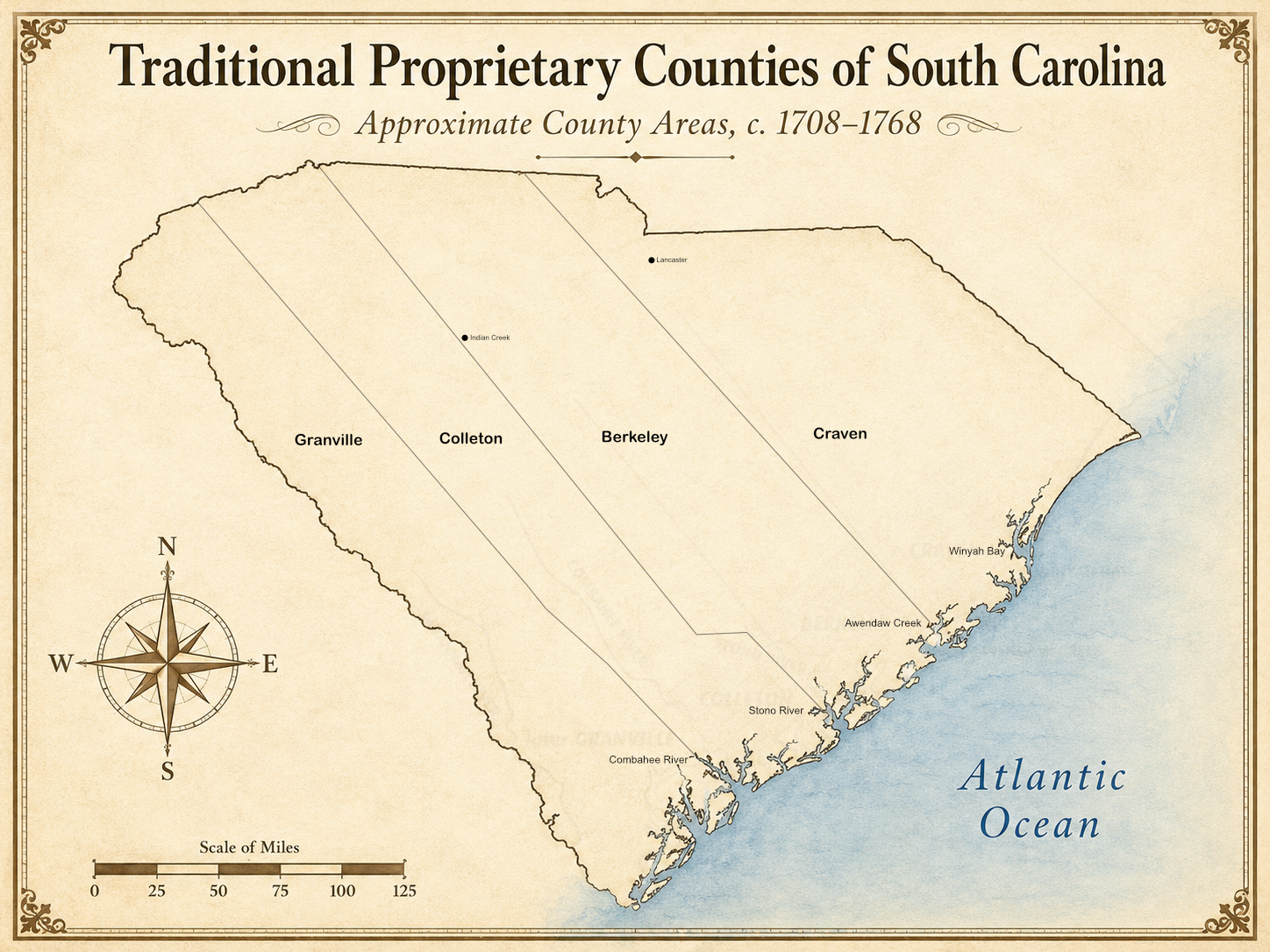
Those proprietary counties should not be understood as modern counties with carefully surveyed borders and a courthouse government serving a clearly defined population. Names such as Granville described large, loosely administered regions whose practical boundaries were often uncertain, especially as settlement expanded into the backcountry. A family could therefore be recorded as living “in Granville” without occupying a place that can now be matched neatly to a modern county line.
The exact relationship between James, Daniel, William, and John remains unproved, and the surviving records do not yet allow every stage of the migration to be followed continuously. Even so, their similar ages and early association support a broader working possibility: that closely related Blackman households moved south together or in stages, first entering the older South Carolina frontier during the 1760s and later becoming part of the more concentrated Blackman settlement in Camden District beginning in 1784.
Daniel Blackman’s Household
Daniel Blackmanᴸ⁰⁰¹ headed a household of six in 1790:
- two males aged sixteen or older;
- two males under sixteen;
- two females.
One of the adult males was Daniel himself. The second is now provisionally identified as Joel Blackmanᴸ⁰¹⁴.
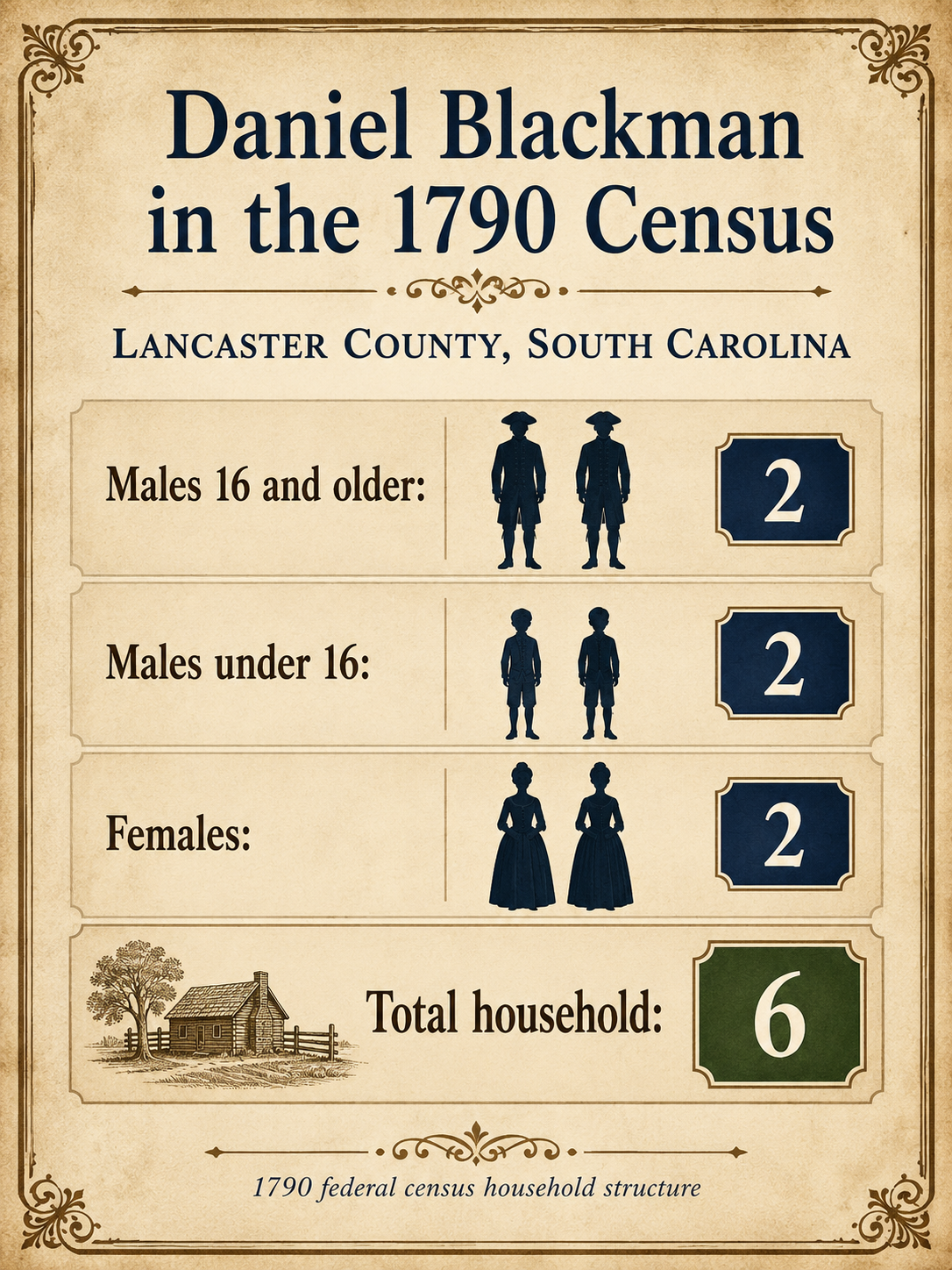
Joel is believed to have been born about 1770–1774, which would have made him approximately sixteen to twenty years old when the 1790 census was taken. He therefore fits the second male aged sixteen or older in Daniel’s household.
Joel’s later connection to Daniel is strengthened by land records identifying him as an heir with an interest in Daniel Blackman’s estate. Although the later deed does not by itself state the exact parent-child relationship, it confirms that Joel belonged to one of the hereditary lines descending from Daniel. When that estate evidence is considered with Joel’s estimated age and his earlier placement within Daniel’s North Carolina family, the second adult-male position becomes a strong working fit.
The two boys under sixteen may have included Brittain Blackmanᴸ⁰¹⁵ and Harbard Blackmanᴸ⁰¹⁶.
Brittain’s placement has gained additional support from later deeds showing that he also possessed an inherited interest in Daniel’s estate. Like Joel, Britain was not merely a nearby Blackman with a similar surname. He held a legal share in property that had descended from Daniel.
Harbard remains the more tentative placement. Born between 1780-84, his age in the 1810 census, is consistent with him young enough to fit one of Daniel’s two males under sixteen in 1790. No record yet introduced directly identifies Harbard as one of Daniel’s heirs. However, source material reviewed and compiled by Viola Caston Floyd in her foundational research and writings reportedly placed him as an heir.
The household can therefore be provisionally reconstructed as follows:
The two females remain unnamed. One was likely Daniel’s wife. The second could have been a daughter, daughter-in-law, granddaughter, or another female relative within the household.
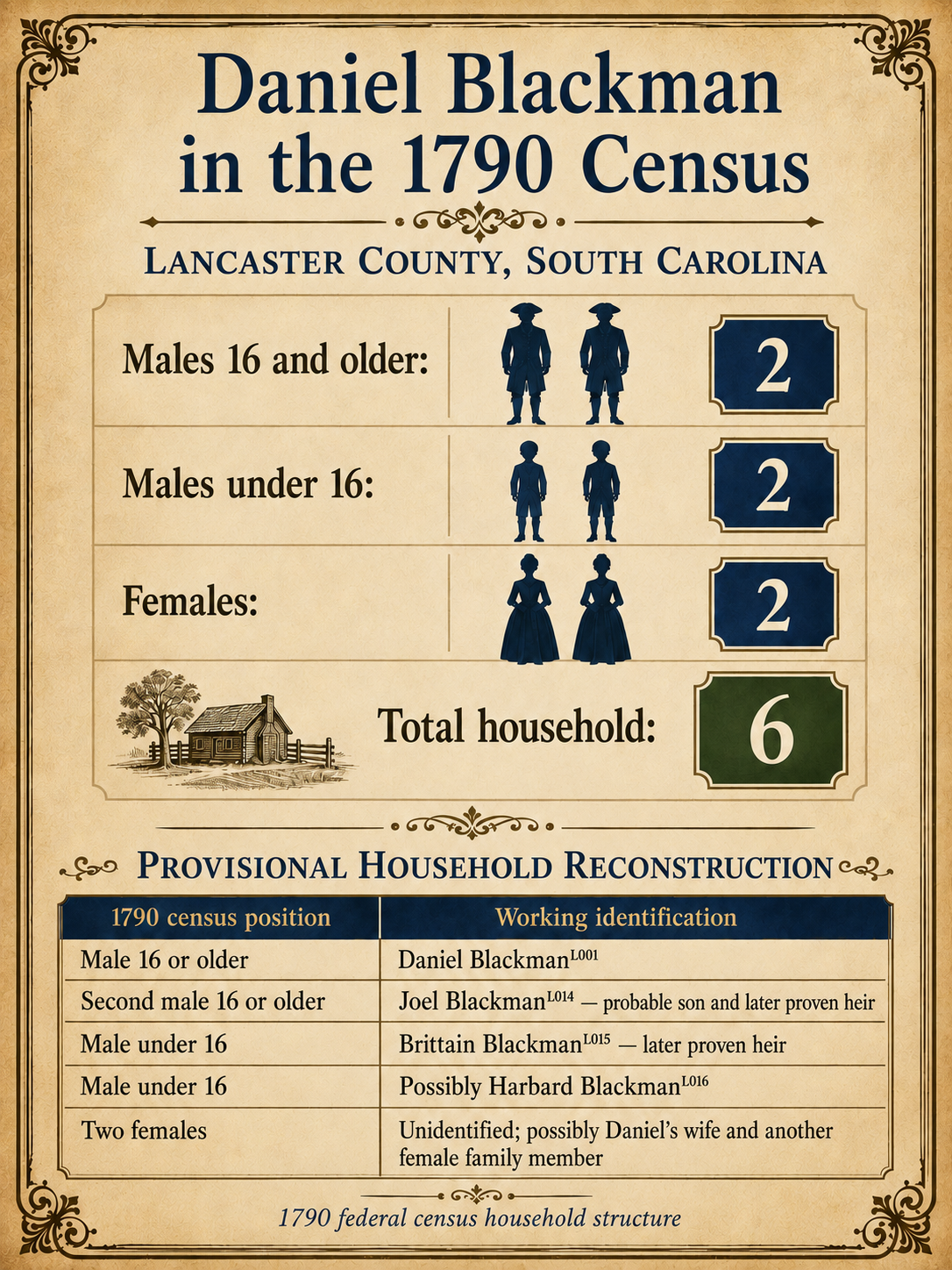
Taken together, the census and estate evidence now give Daniel’s household a more recognizable shape. Joel and Brittain can both be connected to Daniel through later inherited interests in his land, while their ages fit the positions available in 1790. Harbard remains a possible addition to the household, but his placement requires further evidence.
This remains a working reconstruction rather than a fully proved family group. Even so, the later deeds move Joel and Brittain beyond simple census speculation. They show that both men belonged to Daniel’s heir network and make Daniel’s 1790 household the most logical place to begin reconstructing their earlier family positions.
Joseph Blackman Appears
Joseph Blackmanᴸ⁰⁰⁸ is the only 1790 household head who had not yet appeared in the land records gathered for this study.
His household contained:
- one adult male;
- two boys under sixteen;
- three females.
Joseph’s absence from the known early plats does not mean that he was new to Lancaster County. He may have acquired land through a deed not yet located, lived on family property, rented land, or occupied a tract that was not recorded in his own name.
The 1790 census confirms that Joseph was present in Lancaster County and headed a household of six. The census order suggests that Joseph was living on or near property along Little Lynches Creek, close to James Blackmanᴾ⁰⁰⁶ and his family.
William and Wood Are Missing as Household Heads
The most noticeable difference between the land records and the census is the absence of William Blackmanᴸ⁰⁰² and Wood Blackmanᴸ⁰⁰⁶ as named household heads.
William had acquired land on Little Lynches Creek in 1784, sold part of it in March 1790, and received it back in November of that year. Those transactions show that he remained connected to the area during the census year.
Wood witnessed William’s March 1790 deed and was already associated with him as a probable brother.
Yet neither man appears as an independently named Blackman head in the Lancaster County census.
Several explanations remain possible. They may have been counted within another household, temporarily living outside Lancaster County, omitted by the enumerator, or recorded elsewhere under a spelling that has not yet been recognized. William may also have been between households or residing on property that was legally his while being counted in another location.
Their absence should not be mistaken for evidence that they had left the family group. The deed evidence places both men within the Blackman community in 1790, even though the census does not record them by name as household heads.
The First Family Snapshot
The combined land and census evidence creates the first useful picture of the Blackmans in Lancaster County.
The land records identify John, Daniel, William, James, and Wood within the same local settlement and places Peggy beside William as his wife. Earlier evidence connects John, William, and Wood within the same immediate family.
The census adds a second John and introduces Joseph as another household head. It also reveals that the group included far more people than the land records alone would suggest: thirty-eight individuals spread across five homes.
Not every landholder appears as a census head, and not every census head has yet been found in the land records. That difference is not a weakness in the evidence. It is precisely why the two record groups must be studied together.
The plats show the framework of the settlement. The census fills that framework with families.
From this point forward, the task is to follow those households through time and determine which of the sixteen unnamed boys—and perhaps some of the unnamed females—can be connected to the Blackmans who appear in the next generation.
The Blackmans in the 1800 Census
Ten years after the first federal census, the Blackman households of Lancaster County looked very different.
The 1790 census had recorded five household heads: John Blackman Srᴸ⁰⁰⁵, John Blackman Jrᴸ⁰⁰⁷, Daniel Blackmanᴸ⁰⁰¹, Joseph Blackmanᴸ⁰⁰⁸, and James Blackmanᴸ⁰⁰³. By 1800, only Joseph and James remained clearly identifiable as household heads. Several older names had disappeared, while three new Blackman households had emerged.
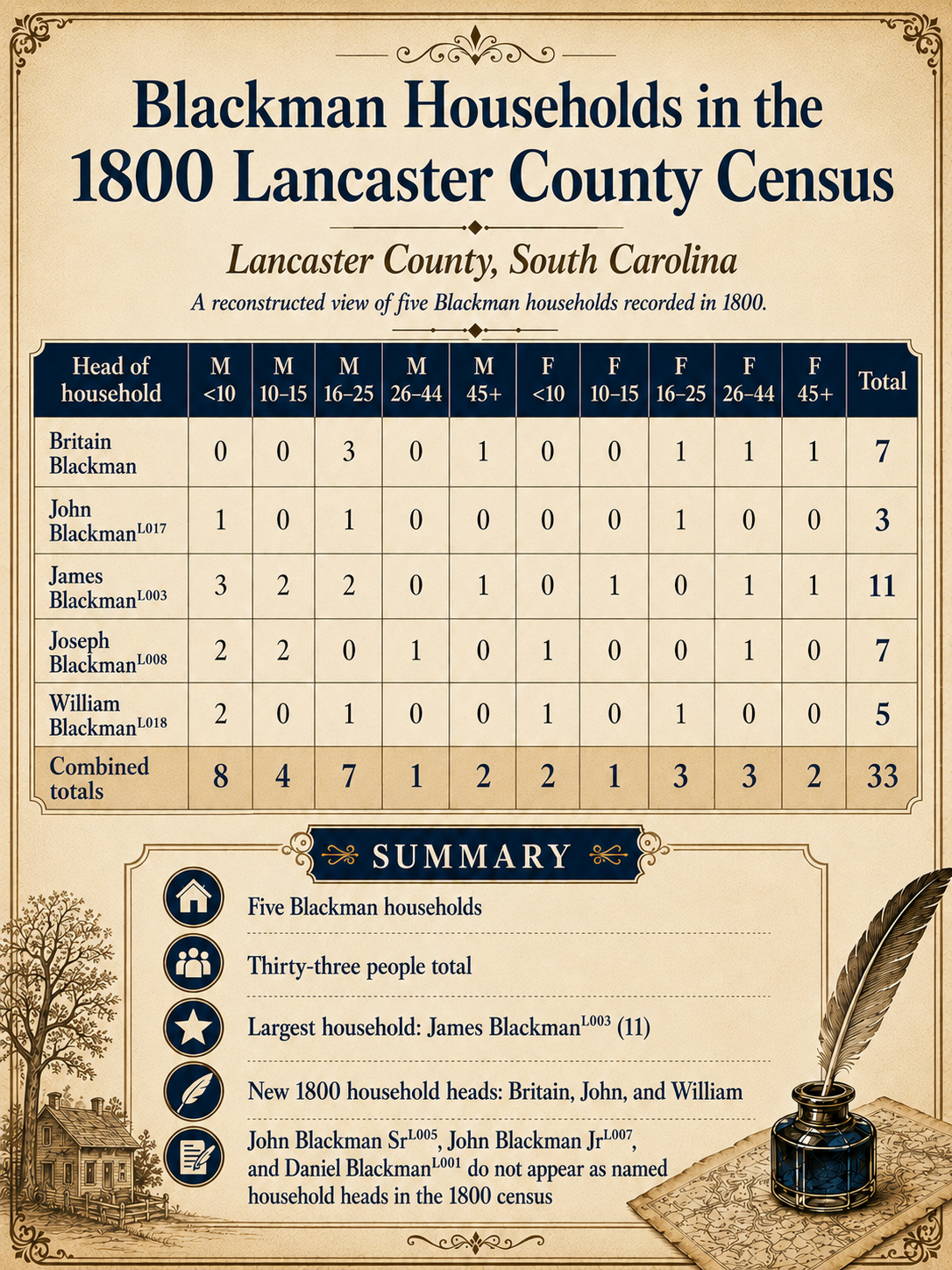
The 1800 census therefore marks an important transition. It begins to show the younger generation separating from the large households recorded ten years earlier and establishing homes of their own.
Together, these five households contained thirty-three people.
That was five fewer than the thirty-eight people recorded in 1790, but the smaller total does not mean the family had declined. The structure of the households suggests that part of the older generation had disappeared from the census while younger men were beginning to form new households.
James and Joseph Continue from 1790
James Blackmanᴸ⁰⁰³ and Joseph Blackmanᴾ⁰⁰⁵ provide the clearest continuity between the 1790 and 1800 censuses.
James had headed a household of seven in 1790, including four boys under sixteen. By 1800, his household had grown to eleven people and included:
- one man aged forty-five or older;
- two males aged sixteen through twenty-five;
- two males aged ten through fifteen;
- three boys under ten;
- one woman aged forty-five or older;
- one woman aged twenty-six through forty-four;
- one girl aged ten through fifteen.
The man aged forty-five or older was almost certainly James himself. The woman in the same age category was likely his wife, although the census did not identify relationships or provide her name.
A later dower entry recorded in Lancaster County Deed Book N identifies James’s wife as Anna. She is provisionally believed to have been his second wife and may have been the woman recorded as Anne Highfield, who married James Blackmanᴳ⁰⁰⁷ on 30 December 1782 in Granville County, North Carolina.
If that identification is correct, the older couple in James’s 1800 household can be reconstructed as James and Anna Highfield Blackman. Because the marriage record and later dower entry are separated by many years, Anna’s identification with Anne Highfield should still be treated as a strong working possibility rather than a proved conclusion.
Several additional associations lend support to that reconstruction:
- William Ward served as James Blackman’s marriage bondsman or surety in Granville County, North Carolina.
By signing the marriage bond, Ward placed his own financial responsibility behind James’s representation that no lawful obstacle prevented the marriage. His willingness to assume that obligation suggests that he likely knew James, Anne, or both well enough to trust that the proposed marriage was legitimate. The exact relationship remains unknown. Ward may have been a relative or trusted associate of either the bride or groom. But it appears more so that he was a trusted friend and neighbor of the Blackmans of Granville. His father Benjamin Ward purchased 50A in 1769 that once was in the possession of John Blackman Srᴳ⁰⁰¹ and is where the Blackman family was centered and homesteaded along Ruin Creek. William Ward also is shown in the tax records of the 1770s living in the same district, Epping Forrest (Ruin Creek), as the Blackmans and Highfields. His later appearance in Lancaster District, South Carolina is especially interesting. William Ward migrated south with, or near the same time as, members of the Blackman group and was later living on 150A along Little Lynches Creek near James Blackmanᴸ⁰⁰³’s property, as shown in the 1790 census. He also witnessed Britain Blackmanᴸ⁰¹⁵’s 1802 deed to Nathan Blackmanᴸ⁰¹⁰, showing that his association with the wider Blackman network continued after the move to South Carolina. - William Ward’s 150A was purchased from John Williams, and was a track of land granted to Daniel Williams in 1773. The purchase deed was witnessed by Edward Williams, James Blackmanᴸ⁰⁰³ and Abraham Estridge. The Estridge’s are also another important family name making the Blackman connection to Granville County, North Carolina. The Estridge family was one of the longest running neighbors and or assoicates of the Blackmans in Granville County. Ephraim Estridge and Abraham Estridge appear alongside the Blackmans from the earliest surviving tax list in 1749-1750 and continue through the militia rolls and tax records of the 1750s and 1760s. They lived in the same Tabbs Creek / Ruin Creek neighborhood and remained near the Blackmans into the 1780s. In 1793 Henry Estridge appears as a boundary owner on Daniel Blackmanᴸ⁰⁰¹’s plat in Lancaster District, South Carolina — a clear continuation of the same family connection that had existed in Granville for more than forty years.
- Hezekiah Highfield and Judith Highfield lived near the Blackmans on Tabbs Creek in North Carolina.
The 1779 tax records place Judith Highfield only a few households away from Daniel Blackmanᴳ⁰⁰⁹, provisionally identified as Daniel Blackmanᴸ⁰⁰¹. That close neighborhood association suggests that the Highfields and Blackmans were part of the same local community before the move south. Hezekiah and Judith are provisionally considered possible parents of Anne Highfield. Their proximity to Daniel strengthens the possibility that James’s marriage to Anne arose from an already established relationship between the two families. The surviving evidence, however, does not yet directly identify Anne as their daughter. - Bennet Highfield also appeared in the Lancaster neighborhood.
Bennet Highfield later appears in Lancaster land records near the head branches of Flat Creek and close to Daniel Blackman’s property. His presence suggests that at least part of the Highfield family may have moved into the same South Carolina neighborhood as the Blackmans. Bennet is provisionally believed to have been Anne Highfield’s brother. If that reconstruction is correct, his settlement near Daniel provides another link between the North Carolina Highfields and the Blackman community in Lancaster District.

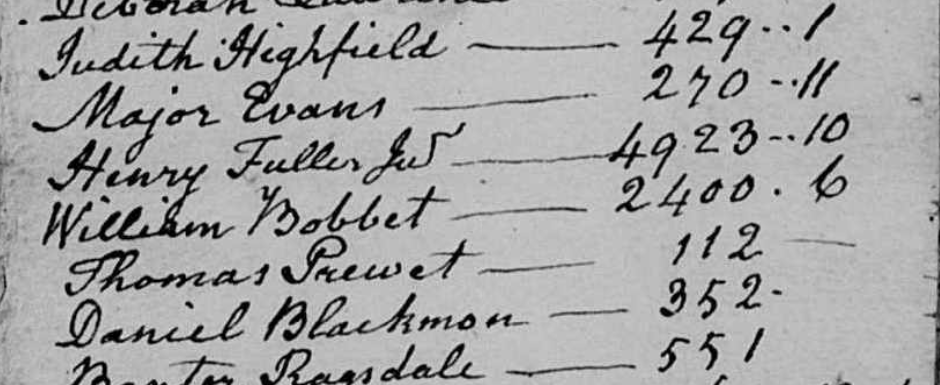
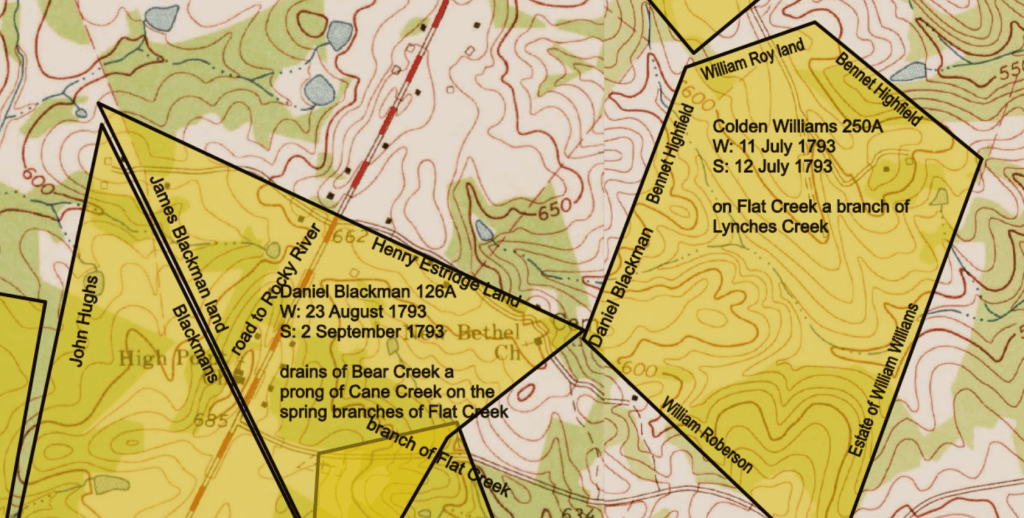
Taken together, these details create a meaningful pattern. William Ward connects James’s 1782 marriage bond to the later Little Lynches Creek neighborhood. Hezekiah and Judith Highfield connect the Blackmans to the Highfield family in North Carolina, while Bennet Highfield carries that association forward into the Flat Creek area of Lancaster District.
None of these facts independently proves that Anna Blackman and Anne Highfield were the same woman. Collectively, however, they strengthen the working conclusion that James’s wife Anna was likely Anne Highfield and that the Blackman, Highfield, and Ward families were already connected before their appearance in Lancaster County.
The two young adult males
The presence of two males aged sixteen through twenty-five is especially important. In 1790, James’s household contained four unnamed boys under sixteen. Ten years later, two young adult males remained in the home, while two others fell within the ten-through-fifteen category.
The two young men aged sixteen through twenty-five are now provisionally identified as:
- James Blackman Jrᴸ⁰⁰⁹
- Nathan Blackmanᴸ⁰¹⁰
James Jr. is a natural fit because he later appeared under that generational designation and is strongly associated with James Senr.’s family.
Nathan, believed to have been born about 1774–1775, also fits this census position. Depending upon his exact birth date, he would have been approximately twenty-five years old when the 1800 census was taken. His placement here therefore provides a reasonable bridge between one of James’s unnamed boys in 1790 and the adult Nathan who later appeared in Lancaster County records.
Nathan’s later movements also place him within an important network of closely connected Blackman families. Between approximately 1828 and 1829, Nathan joined a migration from Lancaster County to Harris County, Georgia. The group included:
- Jonathan Blackmanᴸ⁰¹³, provisionally identified as a son of John Blackman Srᴸ⁰⁰⁵;
- Joseph Blackmanᴸ⁰⁰⁸, whose Lancaster lands were associated with Little Lynches Creek;
- Joel Blackmanᴸ⁰¹⁴, provisionally identified as a son and proven heir of Daniel Blackmanᴸ⁰⁰¹;
- and Nathan Blackmanᴸ⁰¹⁰, now provisionally placed within the household of James Blackmanᴸ⁰⁰³.
Their movement together is significant. It suggests that the migration was not the relocation of a single household but the continuation of the broader Blackman family neighborhood first visible around Bear Creek, Flat Creek, and Little Lynches Creek. Members provisionally associated with the lines of John, Daniel, James, and Joseph left Lancaster during approximately the same period and reestablished themselves near one another in Harris County.
That shared migration does not by itself prove Nathan’s parentage. It does, however, strengthen his placement within the closely connected Lancaster Blackman group and makes James’s 1800 household a reasonable working position for him.
The younger children in James’s household
One of the two boys aged ten through fifteen is provisionally identified as John J. Blackmanᴸ⁰¹⁹. His placement is strengthened by an 1831 Lancaster County Court of Equity partition concerning the real estate of James Blackman, deceased.
The proceeding identifies Benjamin Blackmanᴸ⁰²⁰ and Uriah Blackmanᴸ⁰²¹ as heirs, while John J. Blackman brought the suit. Although the surviving description does not expressly call John a son, his role is consistent with an heir seeking or participating in the division of James’s estate.
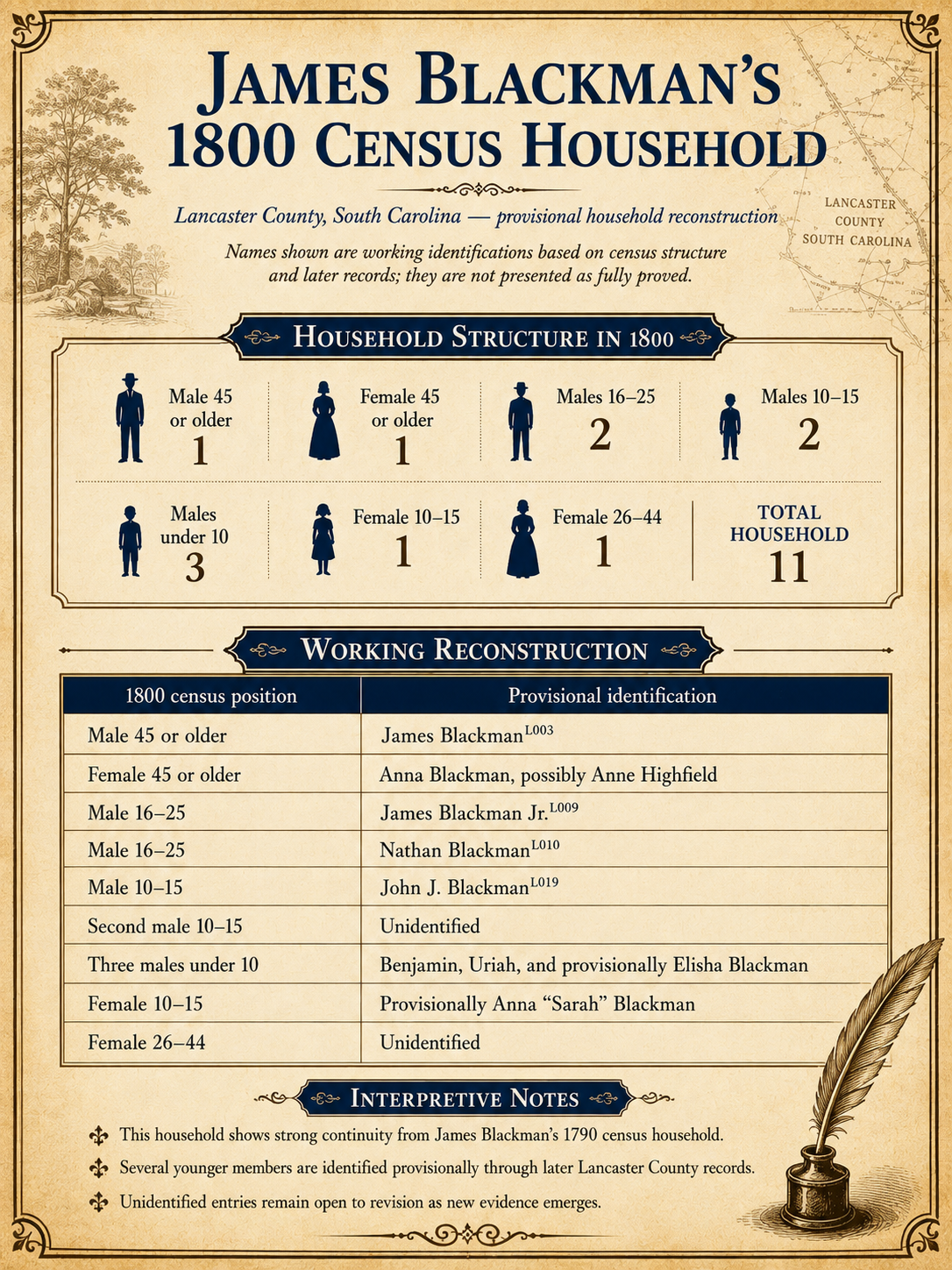
The same later evidence helps provide possible names for several of the younger children in the 1800 household. The three boys under ten are provisionally identified as:
- Benjamin Blackmanᴸ⁰²⁰;
- Uriah Blackmanᴸ⁰²¹;
- Elisha Blackmanᴸ⁰²².
Benjamin and Uriah are supported by their later identification as heirs of James. Elisha’s placement remains a supplementary working conclusion based on the broader family reconstruction.
The girl aged ten through fifteen is provisionally identified as Anna “Sarah” Blackman who is believed to have married Glass Caston.
James’s household can therefore be given the following working shape:
These placements should not yet be treated as a complete or fully proved list of James’s children. Even so, the census progression, the 1831 partition, and Nathan’s later association with the Lancaster-to-Harris County migration provide an increasingly coherent picture of James’s family.
Joseph’s Household
Joseph’s household also shows a strong progression from 1790.
In 1790, Joseph had two boys under sixteen and three females. By 1800, his household contained:
- one man aged twenty-six through forty-four;
- one woman aged twenty-six through forty-four;
- two boys aged ten through fifteen;
- two boys under ten;
- one girl under ten.
The two boys aged ten through fifteen fit naturally with the two boys recorded under sixteen in Joseph’s 1790 household. The younger children were likely born during the decade between the censuses.
One of the boys aged ten through fifteen is provisionally identified as Burrell Blackman.
Joseph’s age category also helps narrow his birth range. As a man aged twenty-six through forty-four in 1800, he was born between approximately 1755 and 1774. Because he had already headed a household in 1790, the earlier end of that range is more likely, and a working estimate near 1760 remains reasonable.
Joseph’s later participation in the move to Harris County adds another layer of continuity. He did not leave Lancaster in isolation. He migrated as part of a wider group that included men provisionally connected to several branches of the earlier Blackman settlement, carrying those Lancaster County family associations into western Georgia.
Three New Household Heads
The names Britain, John, and William appear as separate Blackman household heads in 1800.
None of these three men can be identified simply by matching a name from 1790. Their ages and household structures must be considered independently.
The 1800 “Britain Blackman” Household
The household recorded under the name Britain Blackmanᴾ⁰⁰⁷ in the 1800 census now appears less likely to represent a separate older Britain Blackman and more likely to be a mistaken or irregular entry for Daniel Blackmanᴸ⁰⁰¹.
The household contained:
- one man aged forty-five or older;
- three men aged sixteen through twenty-five;
- one woman aged forty-five or older;
- one woman aged twenty-six through forty-four;
- one woman aged sixteen through twenty-five.
At first glance, the entry seemed to identify an older Britain born no later than about 1755. The household’s age structure, however, fits the family pattern already established for Daniel much more naturally than it does a separate, previously unknown man.
Daniel was already an older household head in 1790, when his home included two adult males, two boys under sixteen, and two females. Ten years later, the 1800 entry shows an older couple surrounded by several younger adults. That progression is broadly consistent with Daniel’s children aging into the sixteen-through-twenty-five category.
The three young men are especially important. They were born approximately between 1774 and 1784, placing them within the same general generation as the younger males provisionally associated with Daniel’s household. Joel Blackmanᴾ⁰¹¹, Brittain Blackmanᴾ⁰¹⁵, and Harbard Blackmanᴾ⁰¹³ all fit within, or close to, the age pattern suggested by this entry.
The later estate records add weight to that interpretation. Joel and Brittain are both shown to have held inherited interests in Daniel’s estate. Their appearance within a household that otherwise resembles the natural continuation of Daniel’s 1790 family makes the recorded name “Britain” increasingly difficult to accept at face value.
The simplest explanation may be that the enumerator entered the wrong given name, confused the older household head with a younger member of the family, or otherwise recorded the household incorrectly. Census records were copied, organized, and sometimes rewritten after the original visit, leaving room for names to be misplaced or altered.
For that reason, Brittain Blackmanᴾ⁰¹⁵ should no longer be treated confidently as a separate elder Britain Blackman. Instead, the 1800 household is best viewed provisionally as Daniel Blackman’s continuing family household, with the name “Britain” representing a likely enumeration or transcription error.
Under this revised interpretation, the household may reflect:
- Daniel Blackmanᴸ⁰⁰¹ as the male aged forty-five or older;
- Daniel’s wife as the female aged forty-five or older;
- three younger adult males from Daniel’s family, possibly including Joel Blackmanᴾ⁰¹¹, Brittain Blackmanᴾ⁰¹⁵, and Harbard Blackmanᴾ⁰¹³;
- and two additional adult women whose identities remain unknown.
This reconstruction is not yet proved, but it creates a much smoother progression from Daniel’s 1790 household and better matches the later evidence connecting Joel and Brittain to Daniel’s estate.
This 1800 household may also represent the last surviving census glimpse of Daniel Blackmanᴸ⁰⁰¹. After this point, Daniel no longer appears as a recognizable household head, and the later land records increasingly refer not to Daniel himself, but to his heirs.
The exact date of Daniel’s death remains unknown, but the surviving evidence gradually narrows the window.
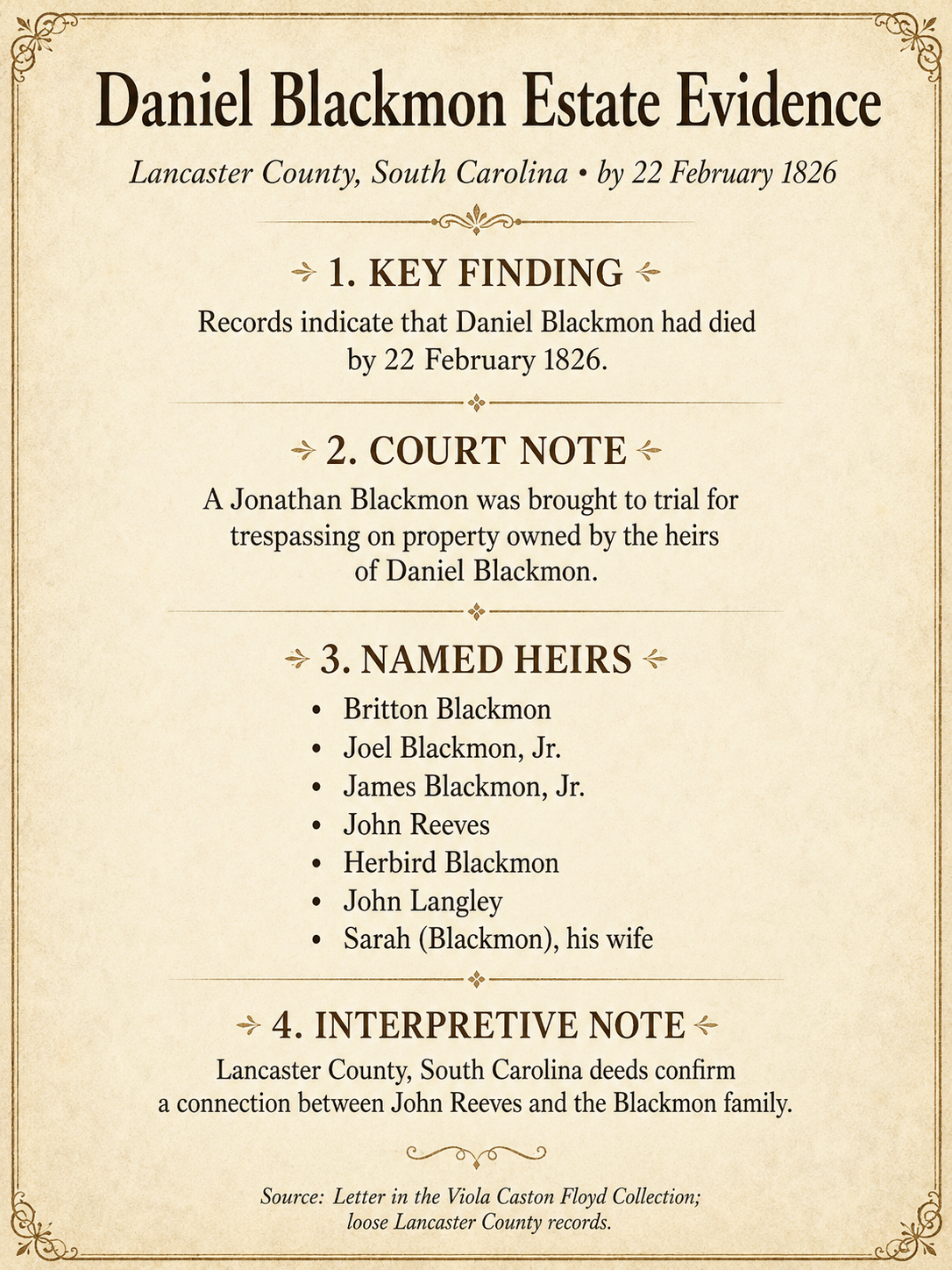
One clue comes from the research of Viola Caston Floyd, whose work indicates that Daniel had died by 22 February 1826. That establishes a latest possible date, but the land records suggest that his death occurred much earlier.
A stronger clue appears in a plat for Jonathan Blackmanᴾ⁰¹⁴ dated 19 June 1820. One of the adjoining boundaries was described as land belonging to “The Heirs of D. Blackman.” That wording strongly suggests that Daniel was already deceased by that date and that his property had passed into the hands of his heirs.
An even earlier reference appears in a grant to McMullen & Quigley, dated 23 April 1804, where the northeastern boundary was described as land belonging to “the heirs of Dan’l Blackman.” If that language was recorded contemporaneously, it pushes Daniel’s death back to before April 1804.
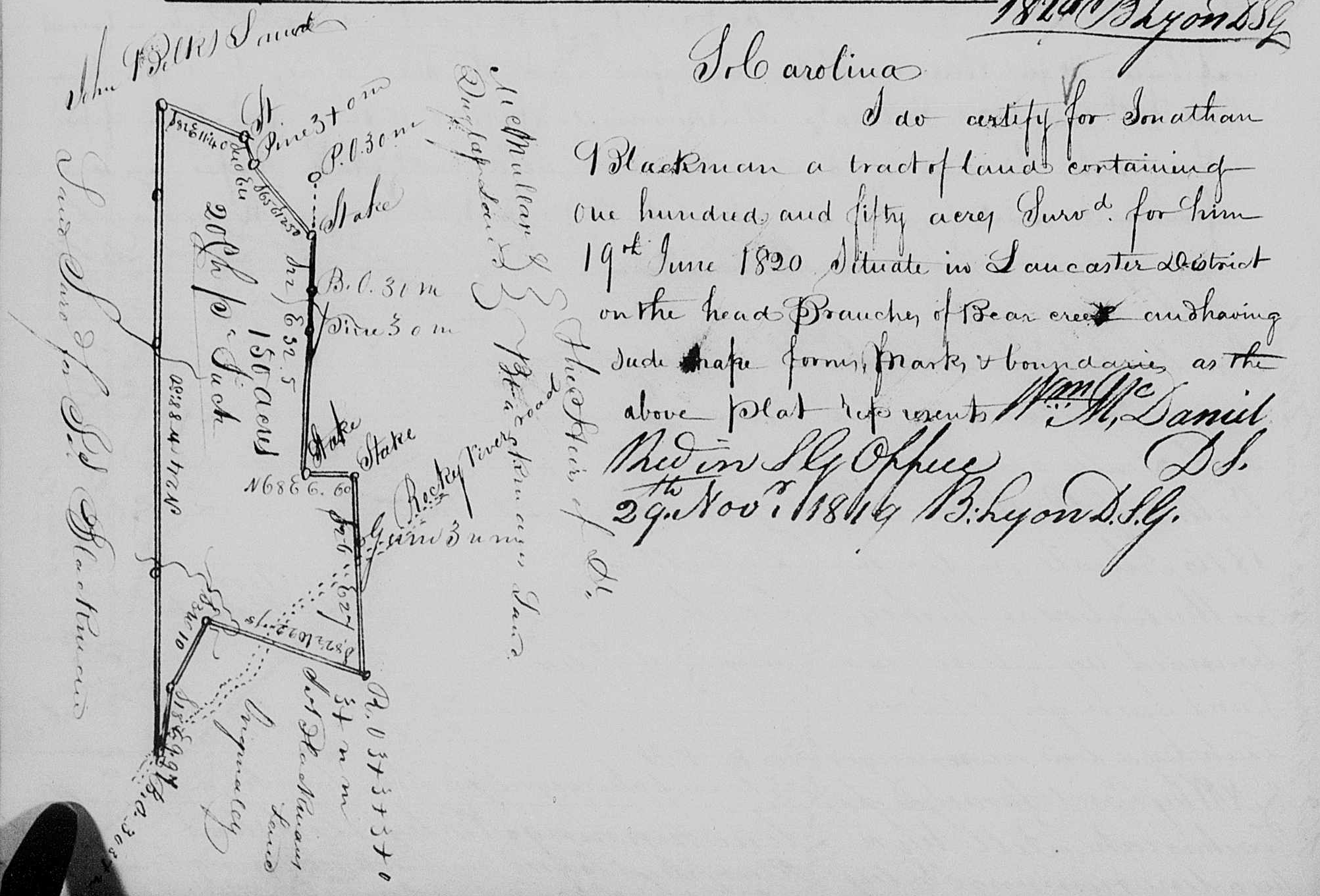
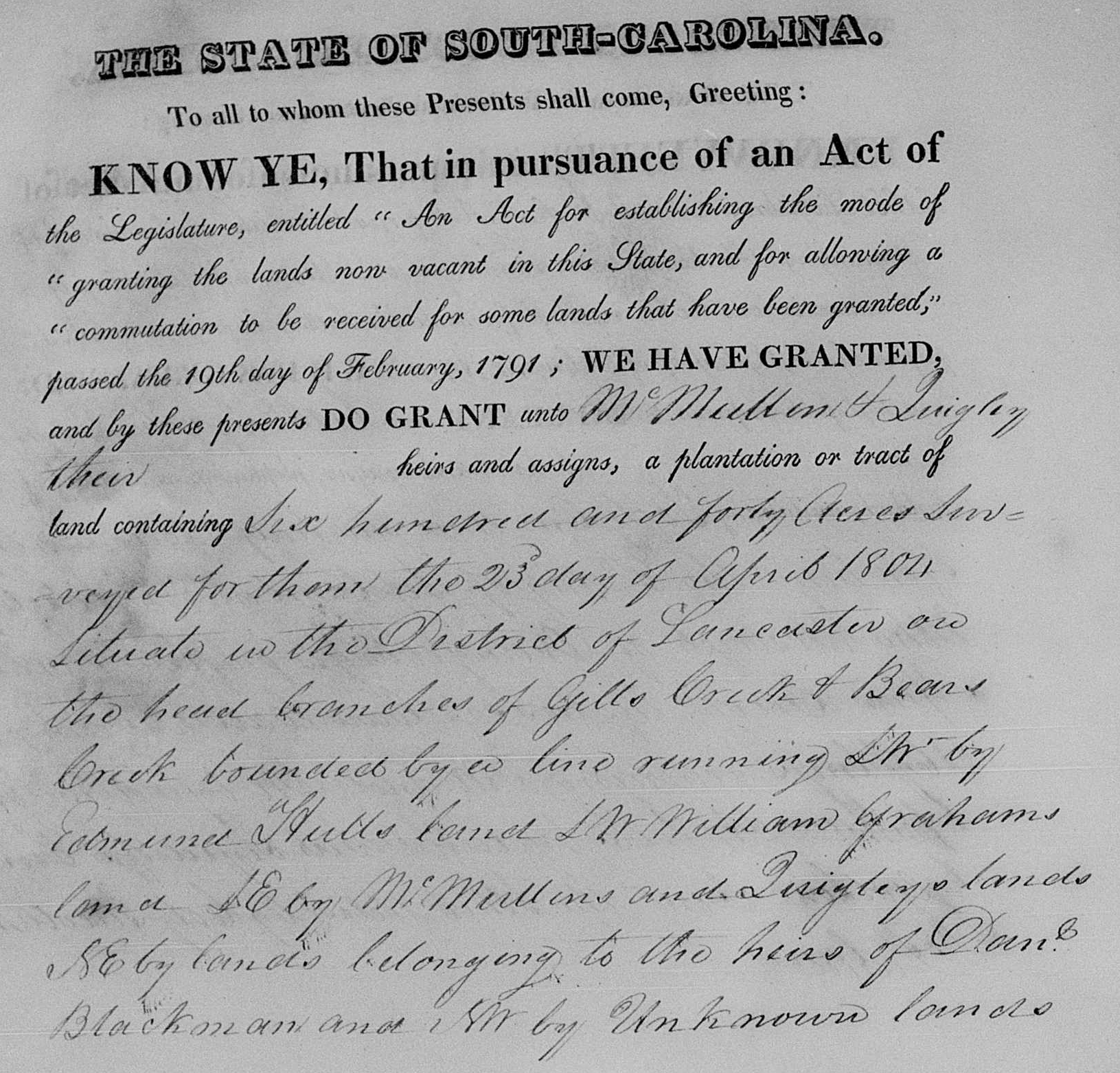
Taken together, these records suggest that Daniel likely died sometime between the 1800 census and early 1804, perhaps even as early as 1800–1803.
That possibility may also help explain some of the confusion surrounding the 1800 “Britain Blackman” entry. If Daniel died during 1800, particularly near the time the census was being taken or compiled, the household could have been caught in a moment of transition. An enumerator may have recorded the name of another adult male in the household, confused the household head, or copied the entry incorrectly during preparation of the final census schedule.
This does not prove that Daniel died in 1800, nor does it fully explain the appearance of the name Britain. It does, however, add another piece to the puzzle. By April 1804 the land records were already speaking of Daniel’s heirs, suggesting that the older head of the household had disappeared only a few years after the 1800 enumeration.
From that point forward, Daniel’s story is increasingly told through the people and property he left behind—Joel Blackmanᴾ⁰¹¹, Brittain Blackmanᴾ⁰¹⁵, the other possible members of his household, and the inherited land that continued to be identified with “the heirs of Daniel Blackman.”
John Blackmanᴸ⁰¹⁷
John’s household was small and young:
- one man aged sixteen through twenty-five;
- one woman aged sixteen through twenty-five;
- one boy under ten.
This was a newly established family. John and the woman in his household were both born between approximately 1774 and 1784.
He was therefore too young to be either John Blackman Srᴸ⁰⁰⁵ or John Blackman Jrᴸ⁰⁰⁷ from the 1790 census. This was a third John Blackman—a member of the younger generation who had reached adulthood during the 1790s.
His placement on the 1800 census is also worth noting. John was enumerated near James Blackmanᴸ⁰⁰³, suggesting that he may have lived in the same neighborhood around Little Lynches Creek. That location raises the possibility that his household stood on or near land associated with either James Blackmanᴸ⁰⁰³ or William Blackmanᴸ⁰⁰².
William Blackmanᴸ⁰⁰² remains a strong place to consider when reconstructing John’s residence and parentage.
William Blackmanᴸ⁰¹⁸
William’s household was also young:
- one man aged sixteen through twenty-five;
- one woman aged sixteen through twenty-five;
- two boys under ten;
- one girl under ten.
Like John Blackmanᴸ⁰¹⁷, William was born between approximately 1774 and 1784. He was therefore too young to be William Blackmanᴸ⁰⁰², the older William associated with the 1784 Little Lynches Creek plat and Peggy Blackman.
The 1800 census thus introduces a second William Blackman who must be kept separate from the earlier landholder.
William’s position within the census sequence may offer an important clue to where he was living. William appears farther away from Blackman cluster on the north end of Blackmans Branch. His placement suggests a location beyond Joseph Blackman’s land along Little Lynches Creek and closer to the area associated with the earlier William Blackmanᴸ⁰⁰².
That makes the 1784 William Blackman tract a logical place to consider when reconstructing the younger William’s residence. He may have been living on, near, or within land that had belonged to William Blackmanᴸ⁰⁰². This does not prove that the older William was his father, but the geographic pattern makes such a relationship worth considering.
William’s household was already well established by 1800, with three children under ten. By comparing this family with the 1810 census, it becomes possible to follow the household with considerable confidence. The census progression may also help determine whether his apparent proximity to William Blackmanᴸ⁰⁰²’s earlier tract reflects inheritance, family occupation, or simply residence within the same Little Lynches Creek neighborhood.
William Blackmanᴸ⁰⁰² and Wood Blackmanᴸ⁰⁰⁶
The older William Blackmanᴸ⁰⁰² does not appear as a clearly identifiable household head in 1800.
This should not be confused with William Blackmanᴸ⁰¹⁸, who was only sixteen through twenty-five in 1800 and belonged to a younger generation.
Wood Blackmanᴸ⁰⁰⁶ is likewise absent as a named household head. He had been documented as William’s witness in 1790 and was probably an older man by this time.
Their absence may indicate that they had moved, were living in another household, or escaped separate enumeration. Later census evidence shows Wood again as a household head, so his disappearance in 1800 was temporary rather than final.
Comparing 1790 and 1800
The two censuses capture the Blackman community at different stages of its development.
In 1790, the family was concentrated in five households headed largely by men of the older generation. Within those homes were sixteen unnamed boys under sixteen—young males whose identities would only begin to emerge in later records.
By 1800, several of those boys had reached adulthood, while some of the older household heads had disappeared from the census. James Blackmanᴸ⁰⁰³ and Joseph Blackmanᴸ⁰⁰⁸ remained visible, but John Blackman Srᴸ⁰⁰⁵ and John Blackman Jrᴸ⁰⁰⁷ were no longer separately enumerated. Daniel Blackmanᴸ⁰⁰¹ also appeared to be absent at first glance, although the household recorded under the name Britain Blackmanᴸ⁰¹⁵ is now believed to represent Daniel’s continuing household, with the given name entered incorrectly by the enumerator.
The transition can be summarized this way:
| Census year | Household heads | Total people | General pattern |
|---|---|---|---|
| 1790 | 5 | 38 | Large households centered on the older generation |
| 1800 | 5 | 33 | Older households continuing or changing form; younger men beginning families of their own |
The number of Blackman households remained the same, but the composition of those households had changed.
James continued to head a large, multigenerational home. Joseph’s two boys from 1790 progressed naturally into the ten-through-fifteen category. Daniel’s household appears to have continued under the questionable “Britain” entry, with younger family members now recorded as adults. At the same time, a younger John Blackmanᴸ⁰¹⁷ and a younger William Blackmanᴸ⁰¹⁸ had established households of their own.
What the 1800 Census Adds
The 1800 census does not settle every relationship, but it substantially sharpens the family reconstruction.
It shows that:
- James Blackmanᴸ⁰⁰³ and Joseph Blackmanᴸ⁰⁰⁸ remained in Lancaster County;
- James continued to head a large household that may have included James Blackman Jrᴸ⁰⁰⁹, Nathan Blackmanᴸ⁰¹⁰, John J. Blackmanᴸ⁰¹⁹, Benjamin, Uriah, Elisha, and Anna “Sarah” Blackman;
- Joseph’s two boys from 1790 appear to progress naturally into the older-child category, with Burrell Blackman provisionally identified as one of them;
- the household recorded under Britain Blackman likely represents Daniel Blackmanᴸ⁰⁰¹ and the continuing development of Daniel’s family;
- Joel Blackmanᴸ⁰¹⁴, Brittain Blackmanᴸ⁰¹⁵, and possibly Harbard Blackmanᴸ⁰¹⁶ fit the age structure associated with Daniel’s household;
- a younger John Blackmanᴸ⁰¹⁷ and a younger William Blackmanᴸ⁰¹⁸ had formed households of their own;
- John Senr. and John Junr. were no longer visible as independent household heads;
- and the census sequence, combined with the land records, begins to place the younger households within distinct parts of the Blackman neighborhood.
The value of the 1800 census lies not simply in the appearance of new names. It begins to connect the unnamed children of 1790 with later adult households, inherited land interests, and recognizable family branches.
The picture that emerges is no longer one of five isolated households. It is a connected community stretching from the Rocky River Road and Bear Creek area toward Little Lynches Creek, with different branches of the family beginning to occupy their own portions of the landscape.
Some identifications remain stronger than others. James Jr., Nathan, Joel, and Brittain fit increasingly coherent family patterns, while the parentage of the younger John and William remains unresolved. Even so, the combination of census order, age progression, land location, and later estate records provides a much firmer framework than the census totals alone.
The 1810 census now becomes the next major test. With more Blackman household heads appearing, it offers the opportunity to follow these younger families forward and determine which provisional placements continue to fit—and which may need to be revised. Blackman households and more detailed age progression provides the next opportunity to test those possibilities.


Leave a Reply