Tracing our ancestors is often like following a trail of breadcrumbs, each clue leading us deeper into the past. My journey to uncover my Smith lineage has led me time and again to one pivotal figure—William Smith of Surry County, Virginia. As the likely progenitor of my Smith line in America, understanding his origins is the next crucial step. Where did he come from? Why did he leave England? And could DNA provide the missing link to his homeland?
William Smith’s Arrival in Virginia (c. 1641)
What we do know is that William Smith, along with a Thomas Smith, appears to have arrived in the Virginia Colony around 1641. The details of their journey are murky, but one strong possibility is that they came as indentured servants—a common means of migration during the early 17th century. (Whispers of the Past: Delving into the Speculative Arrival of William Smith in Virginia & William Smith of Lawnes Creek Parish)
By the 1640s, England was on the brink of civil war, with King Charles I and Parliament locked in a bitter struggle. Economic instability, social upheaval, and a desire for new opportunities led many young men to seek a fresh start in the American colonies. Virginia, in particular, was hungry for labor, especially on tobacco plantations. In response, England encouraged migration by offering land incentives to those who could pay their way and by promoting indentured servitude for those who could not.
Indentured servants, typically between the ages of 15 and 30, agreed to work for a period of 4 to 7 years in exchange for passage, room, and board. If William and Thomas Smith arrived in this manner, it would not be unusual for them to have completed their service and established themselves in Surry County by the 1650s. However, without direct documentation of their transport, we must look to other means of determining their English roots.
One of the most exciting developments in this research has been the discovery of a Y-DNA match to a Smith family in England. This family’s lineage mainly stems from the Hibaldstow Parish of Lincolnshire and can be documented theoratically as far back as c. 1635. According to FamilyTreeDNA’s Time Predictor, our Most Recent Common Ancestor (MRCA) likely lived between 1550-1600. This provides a strong avenue of research—could William Smith have originated from Lincolnshire?
Case Study: Migration from Lincolnshire to America
A common misconception in genealogical research is that early English immigrants to America primarily came from London and southern England. However, evidence suggests that individuals from Lincolnshire and other northern regions also migrated to the New World.
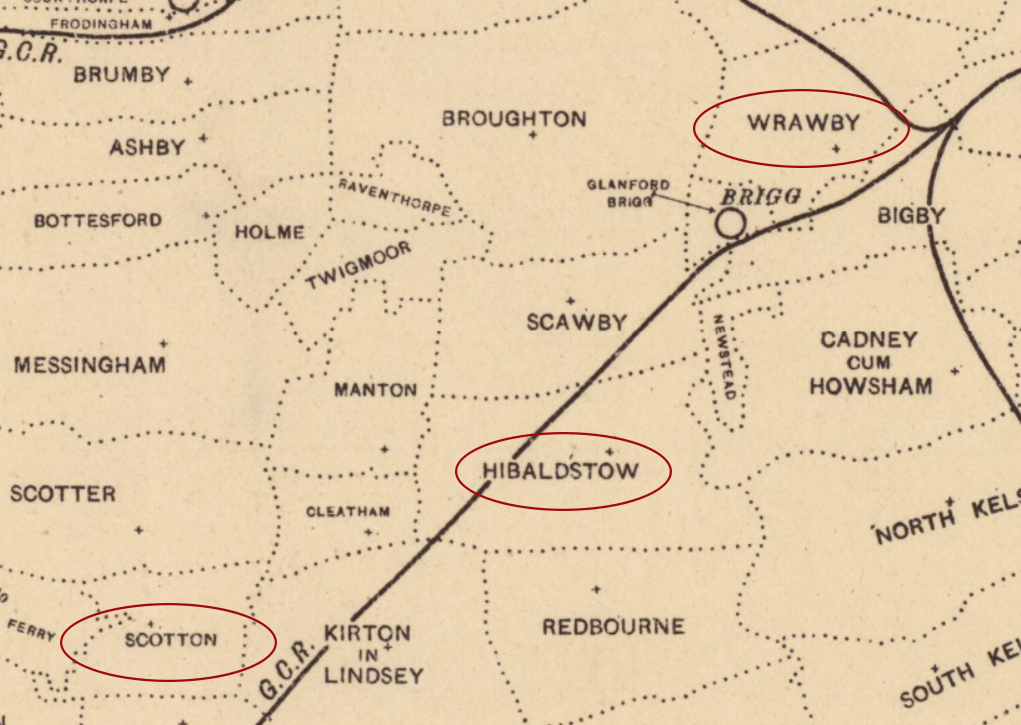
For example, as documented during the Puritan Migration Period, from a nearby parish to Hibaldstow—Wrawby Parish—William Luddington married Ellen Nicholl on April 7, 1635, and by 1639, they had migrated to Malden, Massachusetts. Additionally, Edward Wigglesworth, born in Scotten Parish, married Esther Middlebrook in Wrawby Parish where his son, Michael Wigglesworth, was born in 1631. Edward later migrated to New Haven, Connecticut.
These examples demonstrate that individuals from the Lincolnshire area did indeed migrate to America in the early 1600s. While William Smith may have taken a different route—arriving as an indentured servant rather than as a free settler—this case study supports the idea that men from this region were making their way to the American colonies.
Why Lincolnshire? A 17th-Century Perspective
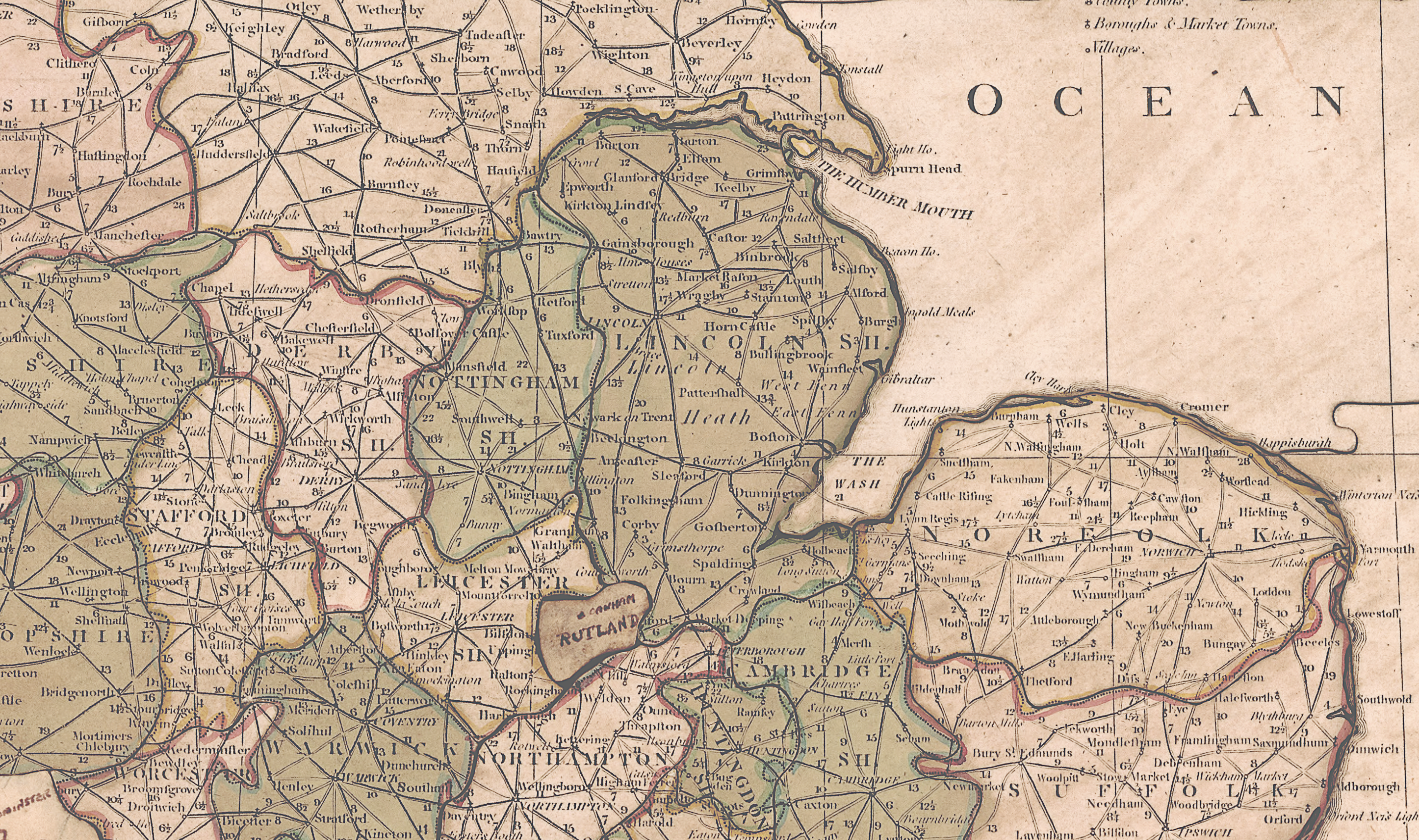
Lincolnshire, located in the East Midlands of England, was a rural, agricultural region in the 1600s. While not as heavily populated as London or other southern counties, it was home to many families who found themselves struggling economically, particularly as land became enclosed and common grazing rights were lost. The area was also influenced by Puritan religious thought, which played a significant role in English migration patterns during the period.
With England heading toward civil war in the 1640s, many young men faced limited prospects at home. Lincolnshire’s proximity to ports such as Boston and Hull provided opportunities for those looking to leave England for the colonies. If William Smith hailed from Lincolnshire, it is plausible that he took advantage of one of these routes to reach Virginia.
Taking a Closer Look at the Y-DNA Connection
Further analysis of the Y-DNA matched Smith family in Lincolnshire (haplogroup J-M267) begins with William Smith, who was born in Bottesford Parish and christened on 24 February 1811. His father, Robert Smith (born 1782 in Hibaldstow Parish), marks the earliest confirmed link of this lineage to Hibaldstow.
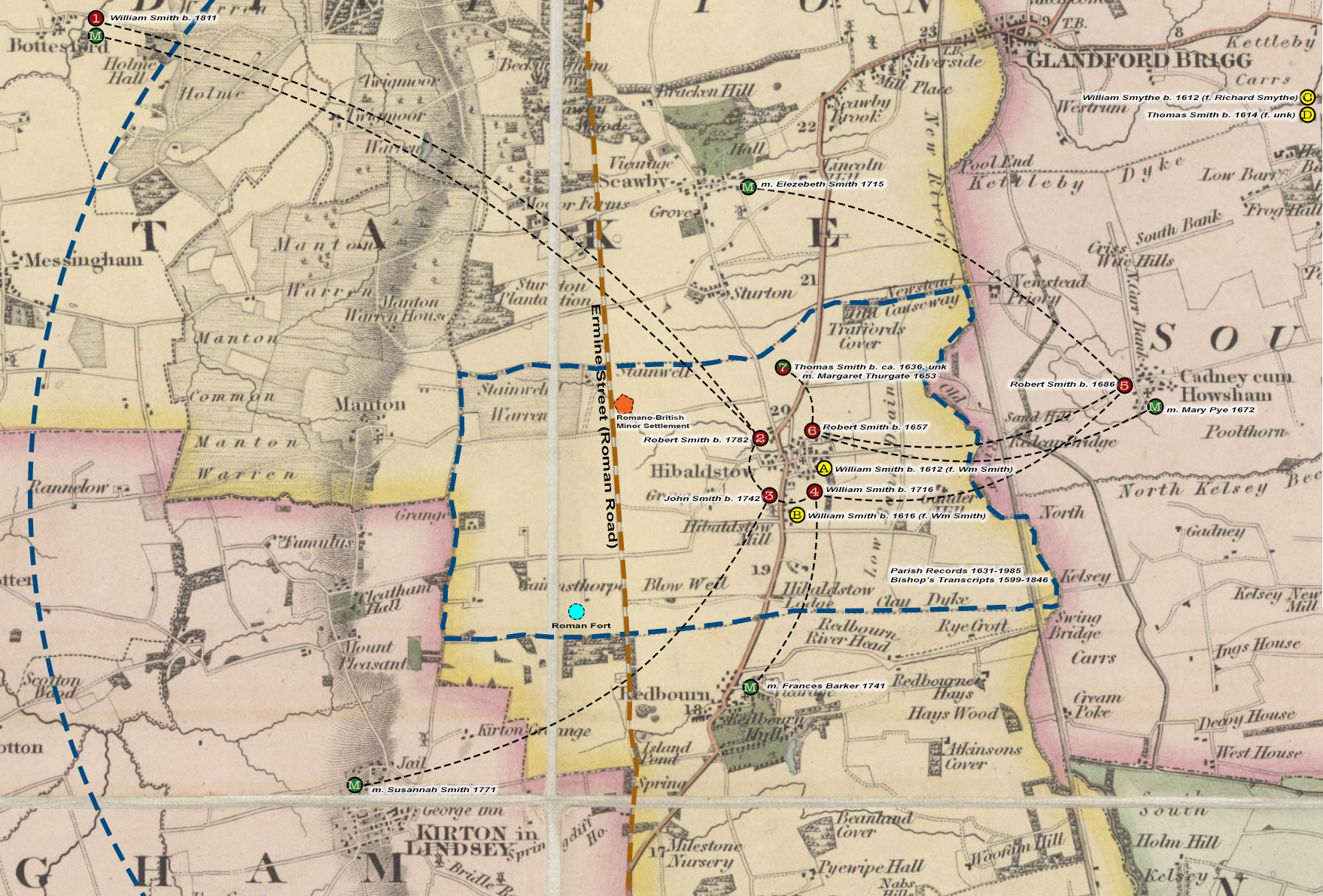
Through extensive examination of parish records and Bishop’s transcripts, this line can theoretically be traced until 1653, when Thomas Smith married Margaret Thurgate on 5 December 1653 in Hibaldstow Parish. The accompanying map illustrates the J-M267 Smith lineage’s geographic concentration around Hibaldstow, providing a visual representation of how this Smith family remained rooted in the area across generations.
For William Smith, the immigrant to America, it is estimated that he was born between 1614-1623. This places him approximately one to two generations before the documented J-M267 Smith lineage in Hibaldstow, meaning the connection is tantalizingly close but still requires further research.
Also identified on the map, marked with yellow icons, are the only two viable William Smith birth records found in Hibaldstow and the imediately surrounding parishes during the estimated birth span of William Smith, the immigrant to America. Both records from the Bishop’s Transcripts indicate that their fathers were also named William Smith, suggesting the existence of two distinct William Smiths who were born before 1600.
The research suggests that the William Smith born in 1612 is likely the same William Smith who married Martha Howe in Hibaldstow on 29 November 1632 and had children: John (1635), William (1637), Nicholas (1640), and Bryan (1643). Meanwhile, the William Smith born in 1616 has no known marriage records in Hibaldstow or surrounding parishes, raising the possibility that he could be the same William Smith who migrated to Virginia c. 1641.
This circumstantial but compelling evidence suggests that the William Smith born in 1616, son of William Smith of Hibaldstow, is a probable candidate for the William Smith who arrived in Virginia.
Conclusion: Piecing Together William Smith’s Journey
While definitive proof remains elusive, the combined evidence from historical records, migration case studies, and Y-DNA analysis strongly suggests that William Smith originated from Lincolnshire, likely from the Hibaldstow area. His path to Virginia was most likely through indentured servitude, following a structured, if perilous, route to the American colonies.
 digging our roots
I would like to talk to you about William. I have found some interesting facts regarding his earkly family.
LikeLike