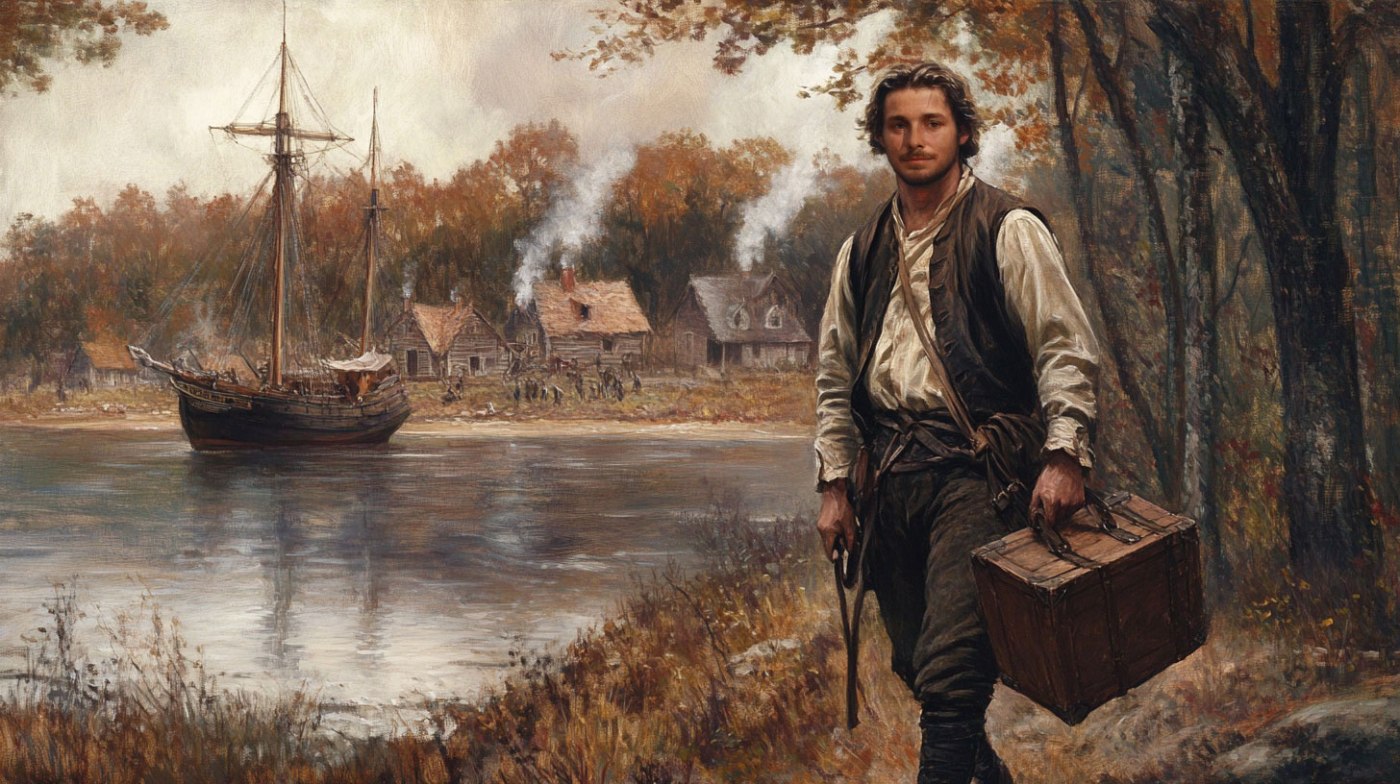
In 1692 John Parsons was granted 650 acres of land in the New Poquoson parish of York County, Virginia.
Virginia Patent Book 8, pg. 230

To all ye Whereas ye now know ye that I ye said Francis Nicholson Esq., Lt and said Governer ye give and grant unto the John Persons six hundred and fifty acres of land and marshes lying in ye New Poquoson parish in Yorke County. Beginning at an old pine stump at ye head of a gutt that part that land forms of land of Armiger Wade and from thence running along ye said Armiger Wade line of marked trees north and north halfe point two hundred and forty poles to a corner red oak of ye said Wade, thence East one hundred and eighty poles to a corner white oak standing in a branch of River Poquoson, thence east by south two hundred thirty four poles to three marked small pines standing in a line of red trees belonging to ye land of Thomas Quarles, thence along ye said line of marked trees being irregular south west by west and west south west and south and south by east two hundred and sixty poles to ye head of Long Creek, thence down ye said creek southerly one hundred poles to ye Back Creeke near ye mouth of ye Creek River thence westerly ye Back Creeke according to ye several courses thereof including all ye marshes to ye mouth of a gutt first specified, thence northerly up ye said creek to ye beginning place four hundred acres of ye said land bought by ye said John Persons of one Thomas Ouldis by bill of sale dated December of 17th 1688 and ye said Ouldis purchased ye said land of one George Downes who tooke it up by patent dated in ye year 1638. The residue being two hundred and fifty acres of marshes and parcels of land adjoining to it and it due by and for ye transportation of five persons - To have and to hold and To be held & yeilding & paying & provided & dated ye 29 day of April anno domnini 1692.
Henry Freeman, Matthew Hooper, Ann Crandall, Thomas Carter, John Wood

This land patent was located in the New Poquoson Parish on the Poquoson Peninsula, a region nestled between Back River and the Poquoson River in eastern York County, Virginia. Established around 1635, New Poquoson Parish served as the ecclesiastical and administrative center for settlers in this area. By 1692, the parish was renamed Charles Parish, reflecting changes in the colonial landscape as the community grew and evolved.
The issuance of this patent in April 1692 likely represents the first documented record of Thomas Carter in Virginia. It suggests that he migrated to the Virginia Colony sometime between 1690 and 1691. This reasoning is based on the typical process for acquiring a land patent during that time. Migrants were often required to fulfill specific conditions, such as transporting settlers or laborers, improving the land, or demonstrating a period of residence, before the formal patent was granted. Given that land patents were not immediate but rather the culmination of a process that could take months or even years, it is reasonable to infer that Thomas Carter had arrived and begun establishing himself in Virginia well before the official date of the patent. This timeline reflects the deliberate and methodical nature of colonial settlement and land acquisition in the late 17th century.
On June 20, 1694, Thomas Carter, likely the same individual associated with the 1692 land patent, served as a witness to the will of Christopher Calthorpe (York County, Deeds, Wills, Etc. 10, 1694-1697, pg. 38). Calthorpe was the grandson of Captain Christopher Calthorpe, a prominent figure in New Poquoson Parish. Captain Calthorpe had been an early settler in the area, receiving a 1,100-acre land patent in 1636 when New Poquoson Parish was part of Charles River Shire (later renamed York County in 1643). This connection places Thomas Carter in proximity to one of the region’s established families, suggesting he was actively integrating into the community.

Later that year, on August 24, 1694, Thomas Carter, along with William Colson, took oaths to formally prove Christopher Calthorpe’s will in court (York County, Deeds, Wills, Etc. 10, 1694-1697, pg. 24). This act further highlights Carter’s involvement in local affairs and his emerging role as a trusted member of the New Poquoson Parish community. These records not only reinforce his presence in York County during the 1690s but also provide a glimpse into the social and legal networks he was part of during this period.
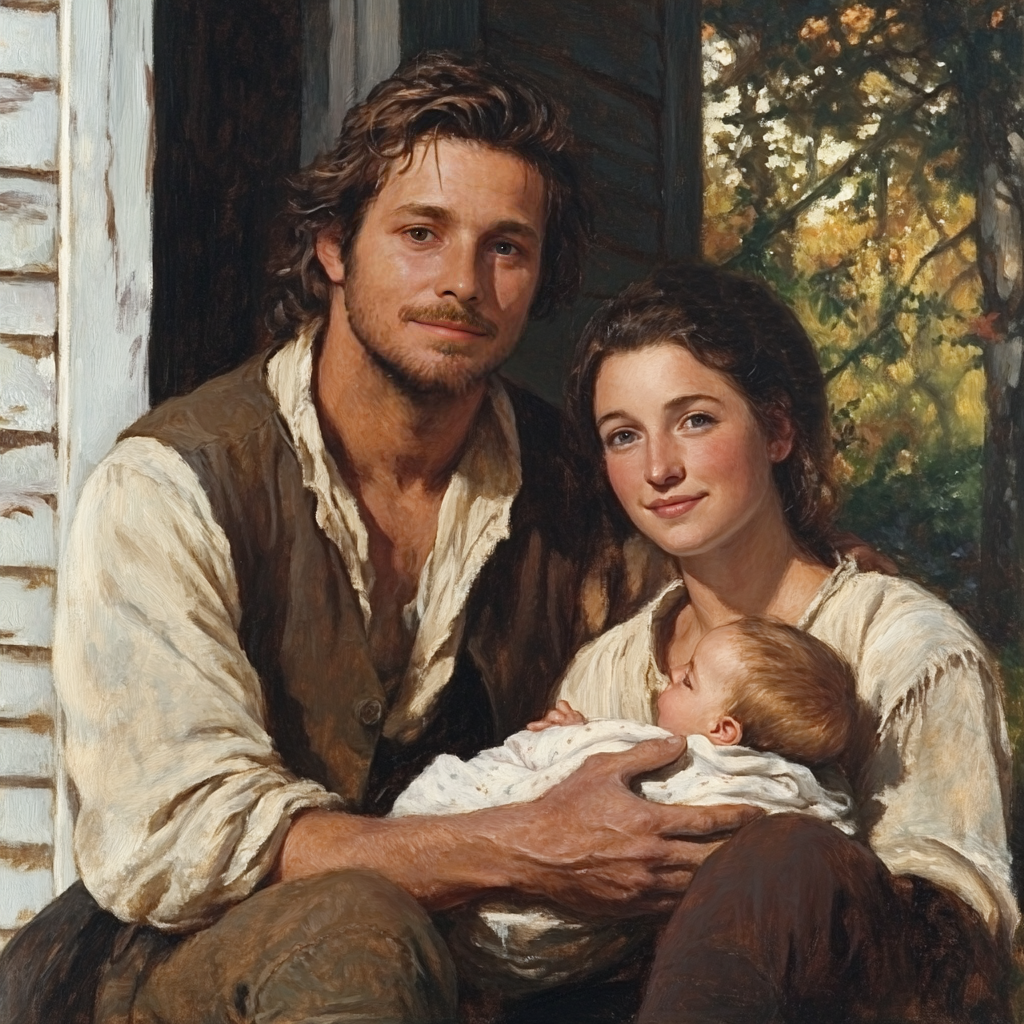
In 1694, Thomas Carter married Susannah Merry, a significant milestone in his early years in New Poquoson Parish. Susannah, born on August 20, 1672, was the daughter of William Merry and Jane Merry (maiden name unknown), both of whom were likely well-established residents of the parish. The couple’s marriage likely took place in New Poquoson Parish.
Their family began to grow shortly after. On November 10, 1695, Susannah gave birth to their first child, Robert Carter. Four years later, on June 17, 1699, she gave birth to their second child, Hope Carter, who was likely named in honor of Susannah’s sister, Hope Merry (Charles Parish, York County Virginia, History and Register, Landon C. Bell, pg. 60).
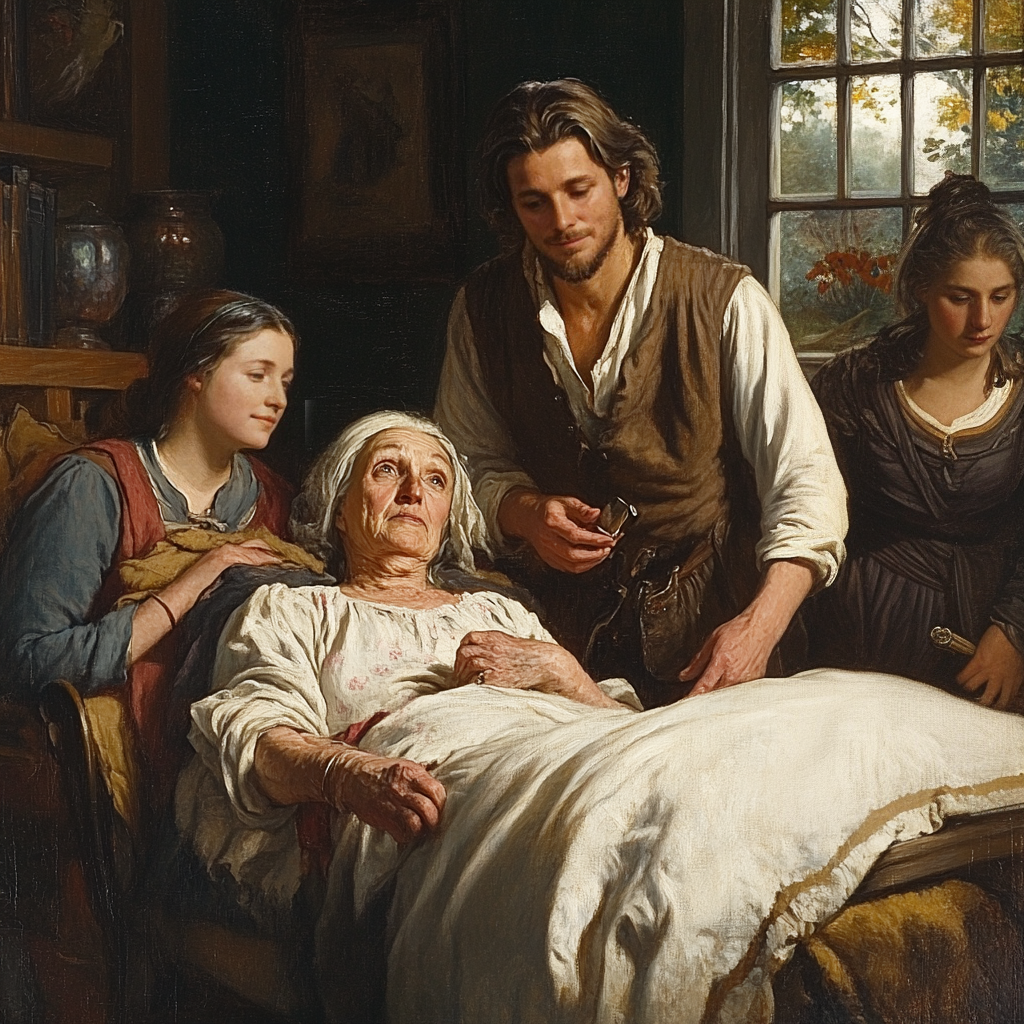
Susannah’s mother, Jane Merry, likely passed away in January of 1699, leaving behind a nuncupative will, a spoken declaration made in her final moments when a written will could not be prepared. Nuncupative wills were commonly used during emergencies or for individuals who died suddenly without formalizing their intentions in writing. In this instance, the court granted Susannah Carter administration rights to her mother’s estate on January 24, 1699, as recorded in the York County probate records. The nuncupative will was attached to the court proceedings, demonstrating its legal validity. The decision to appoint Susannah as administrator underscores her close relationship to Jane Merry, likely as her daughter and next of kin, and her role as a significant beneficiary of the estate.
York County, Deeds, Orders, Wills, No. 11, pg. 270

To the worshipfull his Majesty's Justice for Yorke County - the deposition of Katherine Pond & Mary her daughter. Katherine being near sixty years of age on there about. Mary being thirty years on there about this deposeth.
That your deponent being at ye house of Jane Merry about two days before her death being ye 16th October 1699 was persuading ye said Jane Merry to settle her business & dispose of what she had, telling her that it would be a great satisfaction to herself & to her friends of a great deal of trouble to which she yeilding unto said, Thus I give unto Henry Webb my grandson, son of John Webb ye half of what I have. I give unto my other grandson Robert Carter ye other half of what I have only one mane land I give out of my said estate. I give to John Webb Sr of ye above said John Webb my grandchild & one mane land and of ye above said estate. I give to my grand daughter Mary Webb and to my loving daughter Susanna Carter, I give one new bed ticken (ticking) & all my hoggs this to be given out of ye estate before it be divided between Henry Webb & Robert Carter to this your deponent one only to give oath to. Test - Katherine Pond her marke; Mary C--- her marke.

All a court held for Yorke County January ye 24th 1699 order for a Com of Admr (Commission of Administration) with ye above nuncupative will Annex was this day granted to Susanna Carter - Test William Sedgewick Clerk
In 1700, a year after Jane Merry’s passing, it seems that Thomas and Susannah Merry Carter had not fully carried out the instructions outlined in Jane Merry’s nuncupative will. Specifically, they had not delivered the entire portion of the Merry estate that was intended for Mary Merry Webb’s branch of the family. This led to John and Mary Webb taking Thomas and Susannah Carter to court in an effort to resolve the matter and ensure that Jane Merry’s wishes were honored.
York County, Virginia Deeds Wills Orders, etc 11, 1697-1702, pg. 400

John Webb and Mary his wife arresting Thomas Carter and Susanna his wife to the court in and upon the case declaring that whereas Jane Merry being possesed of a personal estate consisting of divers goods and chattells to the value of sixty pounds sterling and dyed interstate by reason whereof one moiety of the estate appears to belong to the plaintiffs where judgement is granted against the defendant for present delivering of the aforesaid moiety and that the defendant pay costs and charges.
The court ultimately ruled in favor of John and Mary Webb, deciding that one moiety (or half) of Jane Merry’s estate must be promptly delivered to them as outlined in the nuncupative will. Furthermore, Thomas and Susannah Carter were ordered to cover the court costs and ensure the estate was properly divided in accordance with Jane Merry’s final wishes.
After 1700, Thomas Carter and his family seem to have left York County, Virginia, as there are no further entries in the Charles Parish register documenting the births of their children. This absence of records suggests that the Carters likely relocated to seek new opportunities in another part of Virginia. Supporting this theory is the fact that the Carters do not appear in The Quit Rents of Virginia, 1704 for York County or any other county, indicating that they had left York County before that time.
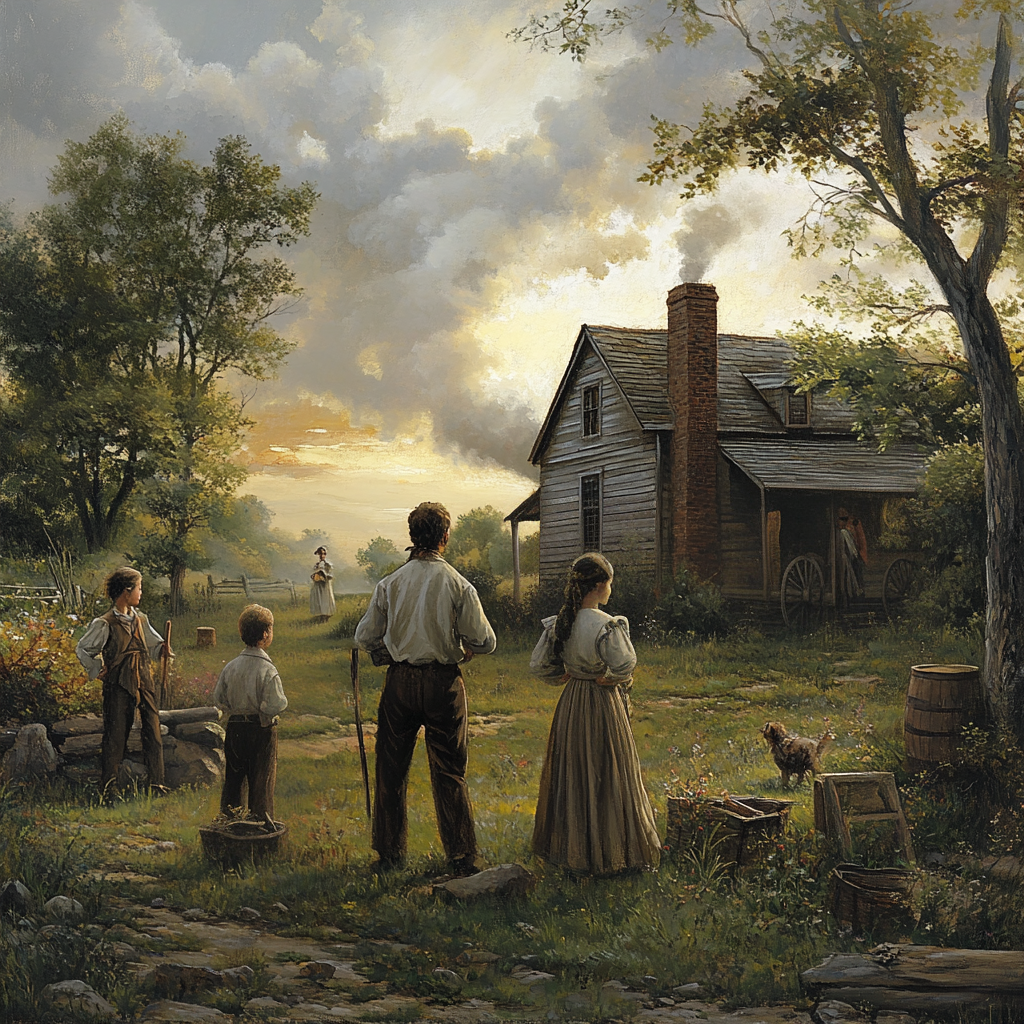
It appears that Thomas and Susannah Carter began a new chapter of their lives, leaving York County behind to explore opportunities in the growing and ever-expanding Virginia colony. During this period of transition, their family grew to include several more children: Thomas Carter Jr, John Carter, Edward Carter, Elizabeth Carter, and Joseph Carter, marking the beginning of a new era for their lineage.
Susannah Merry Carter’s sister and brother-in-law, John Webb, appear to have relocated to Henrico County, Virginia, around 1716. For the Webb family, this marked an important chapter as they established new roots near the Beaverdam Creek and along the James River.
On June 4, 1716, John Webb Sr of St. James Parish, Henrico County, purchased a 550-acre tract of land (Henrico County Wills and Deeds 1714-1718, pg. 86). This property was described as “lying on the north side of James River in the County of Henrico” and “beginning on the north side of the western branch of Beaverdam Creek.” The land had originally been patented to Joseph Pleasants on August 14, 1715 (Henrico County Wills and Deeds 1714-1718, pg. 86; VPB 10:254). Shortly after acquiring this property, Webb sold 250 acres to Peter Baze and 300 acres to Charles Hulsey. These transactions collectively identified the land as being located “on the lower side of the westernmost main branch of Beaverdam Creek” (Henrico County Wills and Deeds 1714-1718, pg. 117 & 118).
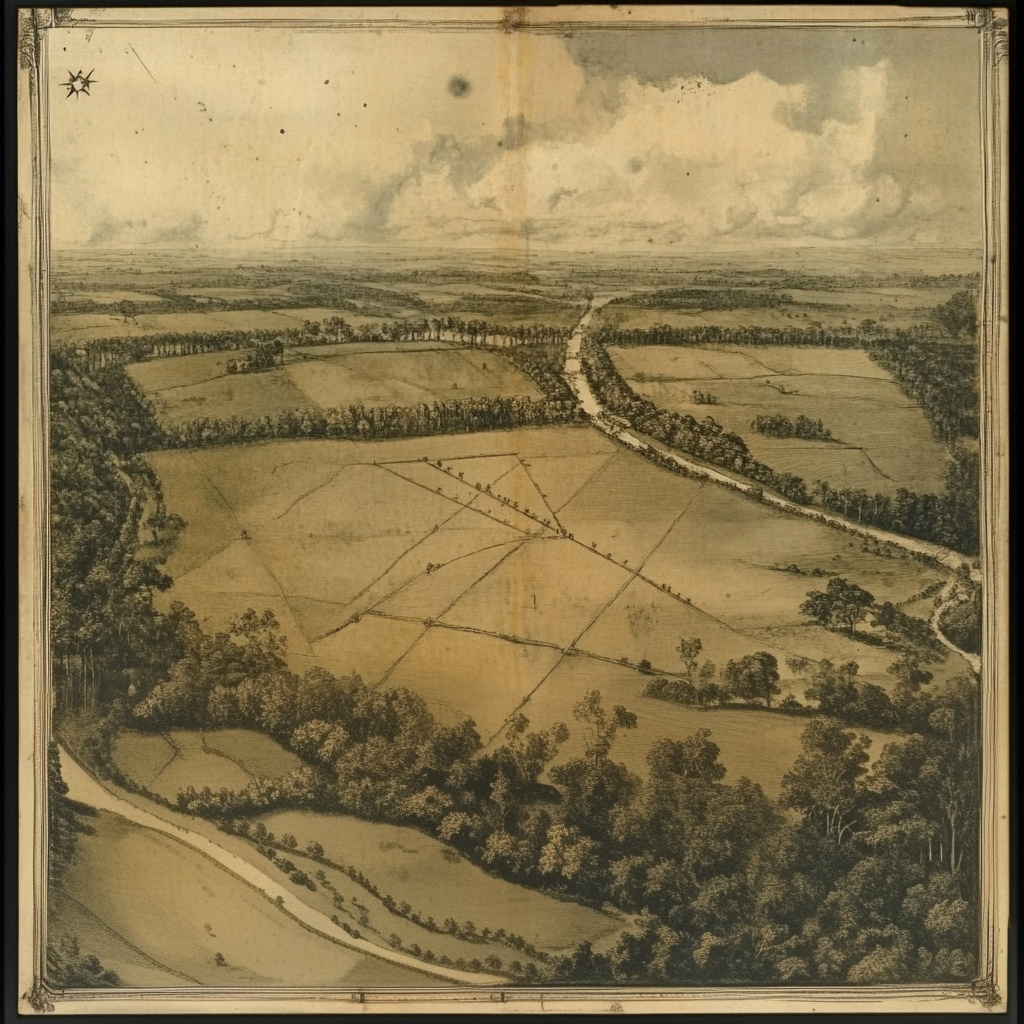
The relocation of John Webb and his significant land dealings near Beaverdam Creek could have set an example for other connected families, such as the Carters. Given the familial ties between the Webbs and Carters in York County, Webb’s move to Henrico County may have influenced the Carters to consider similar opportunities for expansion.
By 1720, Thomas Carter and his family likely embarked on a westward journey, joining the growing wave of settlers seeking opportunities in the expanding frontiers of Henrico County, Virginia. The presence of kin, such as Susannah’s brother-in-law John Webb and family, who may had already settled near Beaverdam Creek, may have provided both a sense of safety and the comfort of familiarity as the Carters transitioned to their new home.
The first documented evidence of the Carter family in Henrico County appears in 1720, when Thomas’s eldest son, Robert Carter, at the age of 24, was recorded purchasing 200 acres of land. This marked a significant milestone for the Carter family as they began to establish their presence in a new region, contributing to the story of westward expansion in early Virginia.
Henrico County, Virginia, Court Minute Book 1719-1724, pg. 18

Tarlton Woodson acknowledged a deed dated the fourth day of April 1720 from himself to Robert Carter, acknowledging the said deed and thereon upon the same with the livery of seisin endorsed, which he also prays may be admitted to record.
Then 2 years later Thomas Carter purchased 100 acres from Tarlton Woodson.
Henrico County, Virginia, Court Minute Book 1719-1724, pg. 242

Tarlton Woodson acknowledges a deed dated the 4th day of March 1722 from himself to Thomas Carter to be his and deed and thereupon the same with the livery of seisin endorsed which he also acknowledges is admitted to record.
Tarlton Woodson was granted a patent for a substantial 3,090-acre tract of land in 1719 (Virginia Patent Book 10:422). This land was located on the north side of the James River, near the west branch of Beaverdam Creek. When Goochland County was established from Henrico County in 1728, this property fell within its boundaries, marking it as part of the rapidly expanding settlements along the James River.

In 1736, Tarlton Woodson sold a significant portion of this land to Colonel John Fleming. In the deed, Tarlton described the history of the land, noting that parts of the original patent had already been distributed: “… land containing within the aforesaid patent except one thousand seven hundred and ninety eight acres of land contracted or and disposed of by John Woodson Sen, deceased and since his death by the aforesaid Tarlton Woodson patentee confirming unto the several persons hereafter named that is to say unto John Atkinson, deceased two hundred acres, unto Robert Carter, Charles Huddlesy (Hulsey) and John Webb two hundred acres, unto Thomas Carter one hundred acres, …” (Goochland DB 2 1734-1736). This detailed accounting of land divisions provides a glimpse into the some missing early land transfers and settlements in Henrico County.
Shortly after settling in Henrico County, it is believed that Susannah Merry Carter passed away around 1721-1722. Susannah had been an integral part of the Carter family’s journey, supporting Thomas through their move and building a foundation for their new life. Her loss would have been deeply felt by Thomas and their children, leaving a void in their hearts and daily lives. Thomas now faced the profound challenge of raising their children alone, continuing the great work they had begun together and ensuring that their family’s legacy would endure.
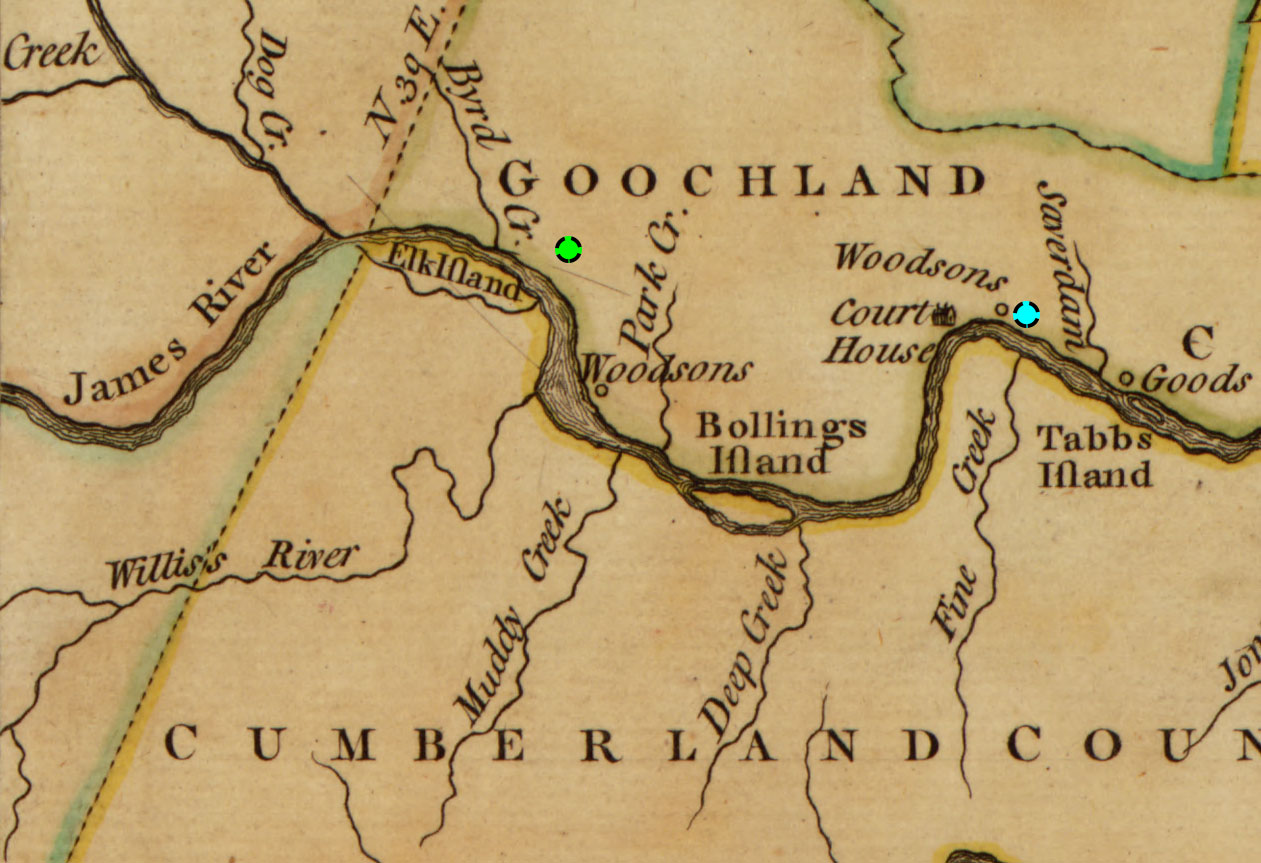
A few years later, Thomas Carter appears to have remarried, this time to a local woman named Penelope, who is thought to be the daughter of Roger Carroll, a respected landowner in the area. Roger Carroll owned property located between the mouth of Byrd Creek and the west branch of Beaverdam Creek, known today as Courthouse Creek.
- Ordered that a road be cleared from about two miles above the mouth of the Byrd Creek up the County as far as Buck Island and Joseph Barringer is appointed surveyor of this said road (Goochland Order Book 3:114; September 1732)
- Samuell Buck is appointed surveyor of the road from Joseph Barringers to Buck Island (Goochland Order Book 3:178; May 1733) (Samuel Buck purchased 348A from Jacob Woodson on 4 December 1725. This tract was in St. James Parish & Henrico County at a place called and known by name of Bird (Byrd) at the mouth of creek called Bird (Byrd Creek) on the east side of the creek (Wills and Deeds No. 1, Part 1, 1725-1737, pg. 40))
- Ordered that the path down the River from Buck Island to John Witts be kept open round the plantation on the River by the Tithables of said plantation (Goochland Order Book 5:181; December 1742)
In 1727, Roger Carroll of Henrico County drafted his Last Will & Testament (Wills and Deeds No. 1, Part 2, 1725-1737, pg. 170) , which included the following notable provisions:
“I give and bequeath to eldest son William the upper two hundred of land lying on the north side of the {unintelligible} River at a place called Buck Island …” “Lastly I appoint my beloved wife Elizabeth & my son Thomas Carter and my son William, Executors of this my Last Will and Testament …”
In the context of Roger’s will, the reference to “my son Thomas Carter” is widely believed to indicate his son-in-law rather than a biological son. This usage was not uncommon in colonial Virginia, as the term “son” was often applied to sons-in-law in familial and legal documents. Such phrasing reflected the blending of families through marriage, emphasizing the close familial bond and trust placed in the son-in-law, especially when naming him as an executor. This connection reinforces the belief that Thomas Carter married Penelope, Roger Carroll’s daughter, further solidifying the ties between the Carter and Carroll families in Henrico County during this period.
Furthermore, seven years later, William Carrol of Goochland drafted his Last Will & Testament (Wills and Deeds No. 2, 1734-1736, pg. 170) , which included the following notable provisions: “I give to that child which my dear wife in all likelyhood may bring into the world 200 acres of land lying at Buck Island if it lives whether boy or girl to possess the same if it dyes …”. The will was witnessed by William Sanders, Thomas Carter, George Williamson, and Julius Sanders. Will was proved in court on 19 November 1734 by the oaths of George Williamson & Thomas Carter.
A year before, in 1726, Thomas Carter drafted his Last Will & Testament.
Goochland County, Virginia Deed Book 3 With Wills, Inventories, Etc, 1737-1742, pg. 138

In the Name of God Amen. I Thomas Carter of St. James Parish in Henrico County being at this present writing in perfect sense and memory blessed be almight God for it doe make this my last Will and Testament in manor and form following.
First. I give and bequeath to my Eldest son Robert Carter one cow yearling or to his heir.
2dly. I give and bequeath to my second son Thomas Carter one cow yearling or to his heir.
3dly. I give and bequeath to my son John Carter one shilling sterling.
4ly. I give and bequeath to son Edward Carter one shilling sterling.
5ly. I give and bequeath to my daughter Elizabeth Carter one shilling sterling.
6ly. I give and bequeath to son Joseph Carter all that land I now live upon being one hundred acres to him and his heirs forever but if in case my son Joseph should die without issue then the said land to return to my son Edward. As for my personal estate I give to my wife Penelope Carter whom my legacies are paid.
I appoint my beloved wife execurtix of this my last will and testament in witness whereof I have hereunto set my hand and affixed my seal this 2d day of November in ye year of our Lord 1726.
Signed Sealed in presence of: Thomas Edwards, William Pledge, and Dorothy (her mark) Pledge. Signed Thomas Carter (seal)

At a court continued and held for Goochland County June 21 1738.
This Will was proved by the oath of William Pledge to be the last Will and Testament of Thomas Carter dec'd and it was thereupon ordered to be recorded.
In 1735, Thomas Carter made a “Deed of Gift” to his son Edward Carter, transferring ownership of his land near Beaverdam Creek. This act legally ensured that Edward became the rightful owner of the property, with Thomas relinquishing all control. As a result, by the time of Thomas’s passing, the land was no longer part of his estate, and he was unable to bequeath it to Joseph or any other heir in his will. This transfer marked a clear change in Thomas’s plans for the distribution of his property.
Goochland County, Virginia Deed Book 2 1734-1736, pg. 99

In the name of God Amen know all men by these presents that I Thomas Carter of Goochland County for the kind love and respect I have towards my son Edward Carter doe give unto him and his heirs forever that part of my land that I now live upon which I bought of Mr. Talton Woodson one of the Executors of his father Mr. John Woodson deceased, being part of licking hole survey; that is to say from the road as far as it extends or goes over the north side Beaverdam Creek as deed of sale will make appear from the said Talton Woodson upon boundary record will make appear with all the appurtenances and previliges thereunto; belonging only I reserve my life time in that part as formerly to us and do upon it what I please not disturbing my son Edward and if in case my son Edward should have occasion to build any houses between the road and the river upon his own proper to said charge then he to have the use of them to himself but if in case my son Edward should die without issue then the said land to return to my son Stephen and his heirs forever. In witness whereof I have hereunto set my hand and fixed my seale this fourth day of June in the year of our Lord 1735.
Signed Sealed in the presense of Chares Raley, William Grathork, and John Lane; Signed Thomas Carter (seal)
Thomas Carter and Susannah Merry Carter had the following children:
Robert Carter, b. 10 November 1695, York County, Virginia; d. ca. May 1759, Cumberland County, Virginia
Hope Carter, b. 17 June 1699, York County, Virginia; d. 14 October 1699, York County, Virginia
Thomas Carter Jr, b. ca. 1702, Virginia; d. ca. July 1796, Mecklenburg County, Virginia
John Carter, b. ca. 1706, Virgina; d. ca. March/April 1772, Cumberland County, Virginia (CWB 2, pg. 114)
Edward Carter, b. Virginia
Elizabeth Carter, b. Virginia
Joseph Carter, b. Virginia
Thomas Carter and Penelope Carroll Carter, his second wife, had the following children:
Stephen Carter, b. ca 1727, Henrico County, Virginia
 digging our roots
Leave a comment