Isaiah Smith Jr was born circa 1816 in Georgia and was the presumed son of Isaiah Smith Sr. Based upon my research, the possibility exist that Isaiah Smith Jr was born in Wilkinson County, Georgia.
In 1827, his father Isaiah Smith Sr moved to Houston County, Georgia and lived on the adjoining property of Needham Smith Sr (Isaiah Smith Sr’s presumed uncle).
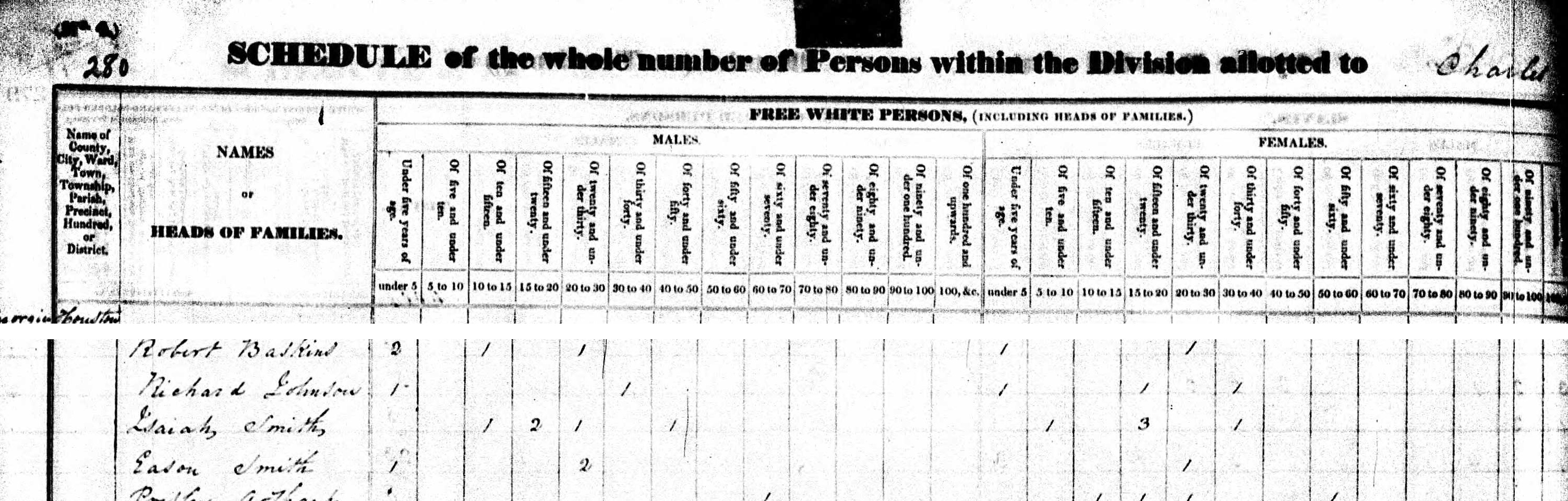
The 1830 U.S. Census for Houston County, shows Isaiah Smith Sr as a head of household and annotated with one male of fifteen and under twenty living in his househould. This would suggest that the male was born between June 1815 – May 1820. This is likely a reference to Isaiah Smith Jr who would have been about 14 years old in 1830, assuming his birth month was before June.
DNA research has identified several siblings of Isaiah Smith Jr, including John W Smith, Richard G Smith, and Elizabeth Smith Crozier.
In 1840, Isaiah Smith Jr’s father moved south from District 13 Houston County into District 3 Dooly County. His father purchased Lot 53 which is situated on the outskirts of what is now Unadilla, Georgia.

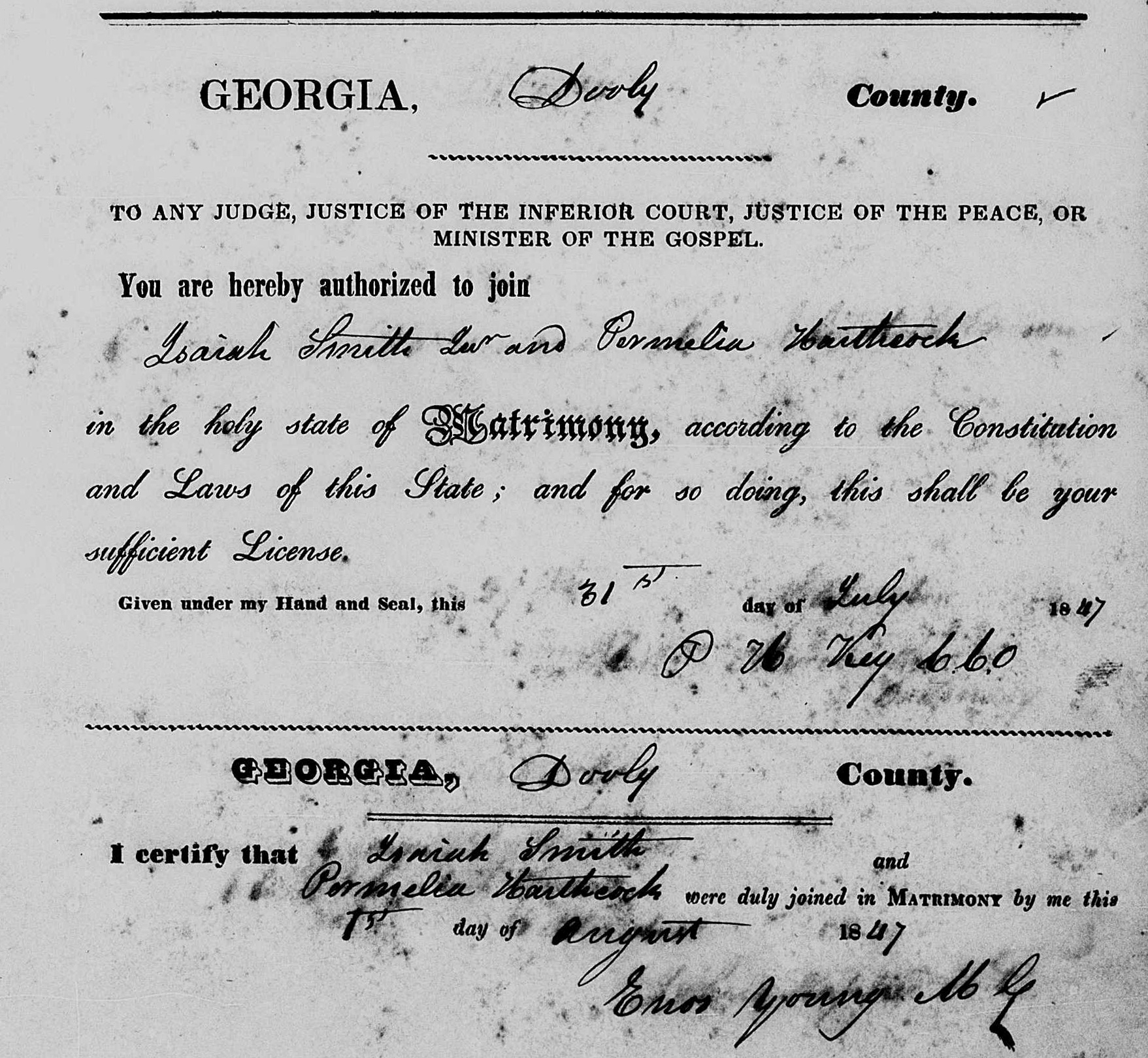
On August 1, 1847, Isaiah Smith Jr married Permelia Harthcock (Amelia), both residents of Dooly County. The union was significant as it brought together two families from the same locality. Amelia’s father, James Harthcock, was not only a resident in District 3, but also lived near Isaiah Smith Sr, as indicated by the 1840 U.S. Census for Dooly County. This close proximity likely facilitated the relationship between Isaiah and Amelia, laying the foundation for their marriage.
Isaiah Smith Jr and Amelia Harthcock Smith resided in Dooly County near the boundary of District 1, situated west of Byromville, Georgia, for a few years. This is supported by the 1850 U.S. Census for Dooly County, which indicates Isaiah Smith Jr’s residence in proximity to Needham Raines, Isaiah’s cousin. Needham Raines (Needham Smith Sr’s grandson) was the owner of Lots 116 and 117 in District 1, Dooly County.
During their time in Dooly County, Isaiah and Amelia welcomed two sons into their family: Henry Smith, born in 1848, and Richard S Smith, born in 1850.
Isaiah Smith Jr appears to have left Dooly County by 1851, as he does not appear on the 1851 Dooly County Tax List. Coincidentally, his father is also not shown on that tax list.
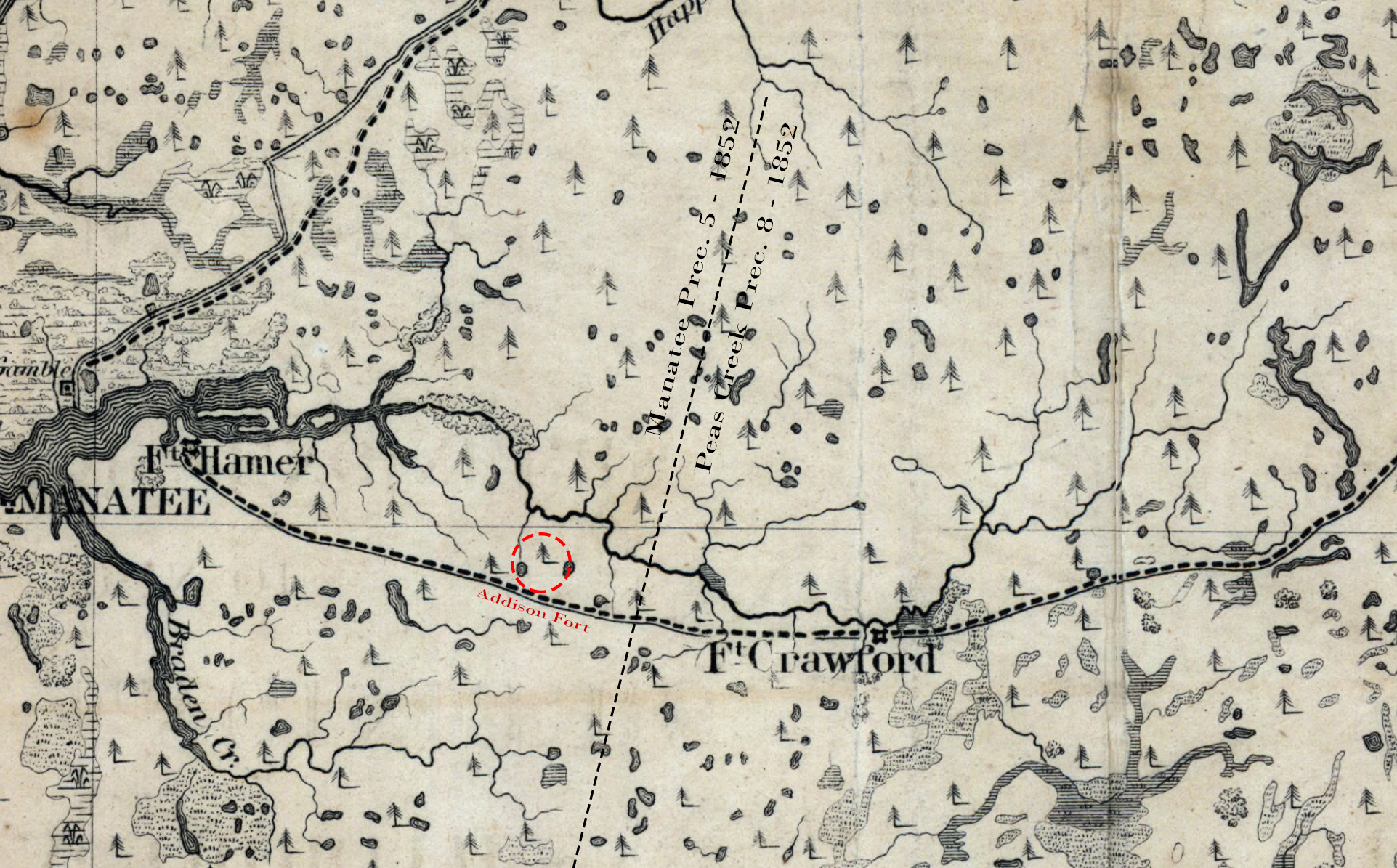
In the early 1850s, in central Hillsborough County, Florida, two prominent cattle barons, John Addison and John Parker, began amassing significant land holdings and large herds of cattle along the Manatee and Peace Rivers. By 1852, John Addison Sr was a registered voter in Manatee Precinct 5, while John Parker was a registered voter in Peas Creek (Peace Creek) Precinct 8, both in Hillsborough County.
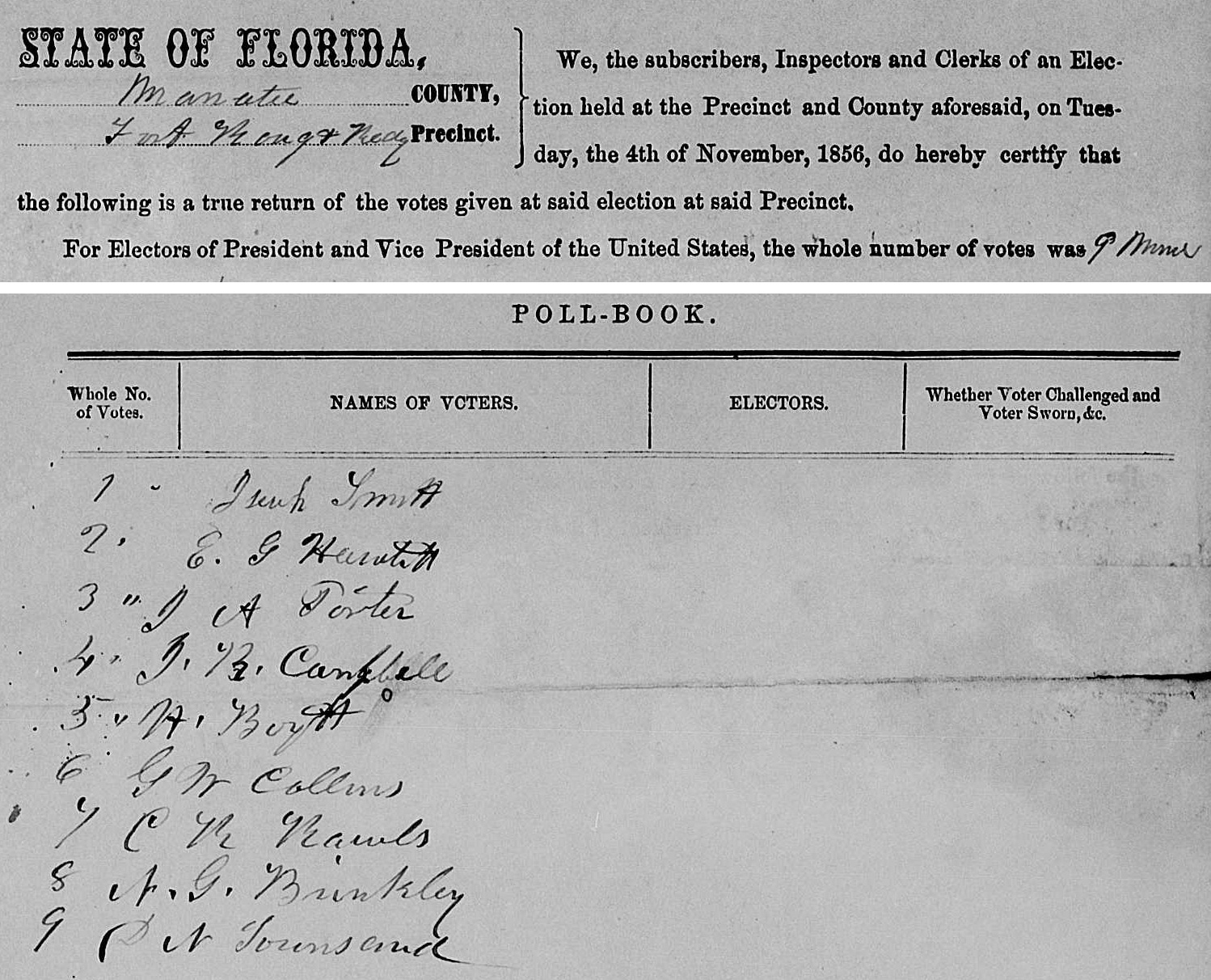
Between 1851 and 1856, Isaiah Smith Jr left Dooly County, Georgia, and ventured to the Florida frontier in Manatee County, Florida. He settled near the headwaters of the Manatee River in the Fort Rough and Ready Precinct (likely between Addisons Fort and the unoccupied fort of Fort Crawford).
Soon after arriving in Florida, tensions with the Seminole Indians, who had remained in the state after the Second Seminole War, reached a boiling point. On December 20, 1855, Seminole chief Billy Bowlegs led a retaliatory attack on a surveyors’ camp, resulting in the wounding of Lieutenant George Hartsuff and the killing and wounding of several soldiers.
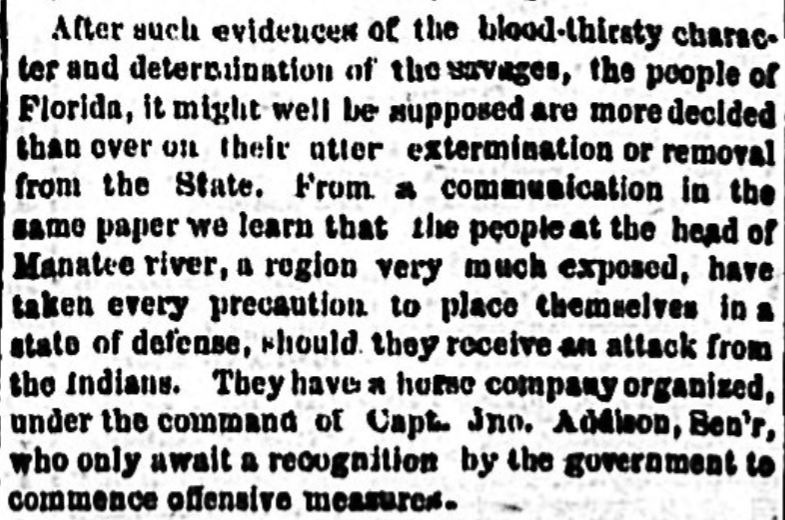
As tensions escalated with the outbreak of the Third Seminole War, settlers along the Manatee River, including the Addisons, began fortifying their homesteads. A significant number of Manatee’s citizens were mustered into service under Lieutenant John Addison.
This included Isaiah Smith Jr who was mustered into Addisons Company in 8 April 1856 and mustered out on 7 October 1856. Isaiah was paid $161.22 for this service (Letter from the Secretary of War, relative to the claim of Florida against the United States for the suppression of Indian hostilities between the years 1855 and 1860, pg 70 (see archive here; Isaiah listed on page 70 & 72)).
John Addison’s reinforced cabin, initially known as Addison’s Fort, was later renamed Fort Rough and Ready during the Seminole War.
In August 1856, cattle baron John Parker, living near the headwaters of the Manatee River, was appointed to command Parker’s Company, part of 1st Lt. William H. Whitaker’s Detachment of Florida Mounted Volunteers. John Addison, his sons John, William, and Joel, along with Isaiah Smith Jr, were mustered into the company on October 7, 1856.
Isaiah Smith Jr was documented age 37 and mustered in at Manatee by William H. Whitaker and John Parker for 6 months. (Florida Militia Muster Rolls, Seminole Indian Wars, Vol 8, pg. 76 & Vol 10, pg. 100). He was mustered out on 17 December 1856 at Tampa.
On 22 December 1856 he would muster in at Fort Brooke for 6 months. He would muster out on 22 June 1857. During this enlistment, Isaiah Smith Jr would become an aquaintance of Eli P. Whidden who was 27 and serving in the same company.
A month later Isaiah Smith Jr volunteered again and is documented age 37 and mustered in at Fort Brooke, Florida on 7 July 1857 into McNeill’s Company, Florida Mounted Volunteers for 6 months. He would muster out on 25 December 1857 at Fort Brooke. The return for this enlistment reports that Isaiah Smith Jr was absent from 25 June to 1 October 1857. He was sick since 27 August 1857 and in November 1857 he was absent sick since 22 November at Tampa.
Isaiah Smith Jr, for a third time, would volunteer for service. He is documented age 37 and mustered at Fort Brooke on 27 January 1858 as a Farrier in Captain McNeill’s Independant Company, Florida Mounted Volunteers for 6 months. He would muster out on 22 May 1858 at Fort Brooke.
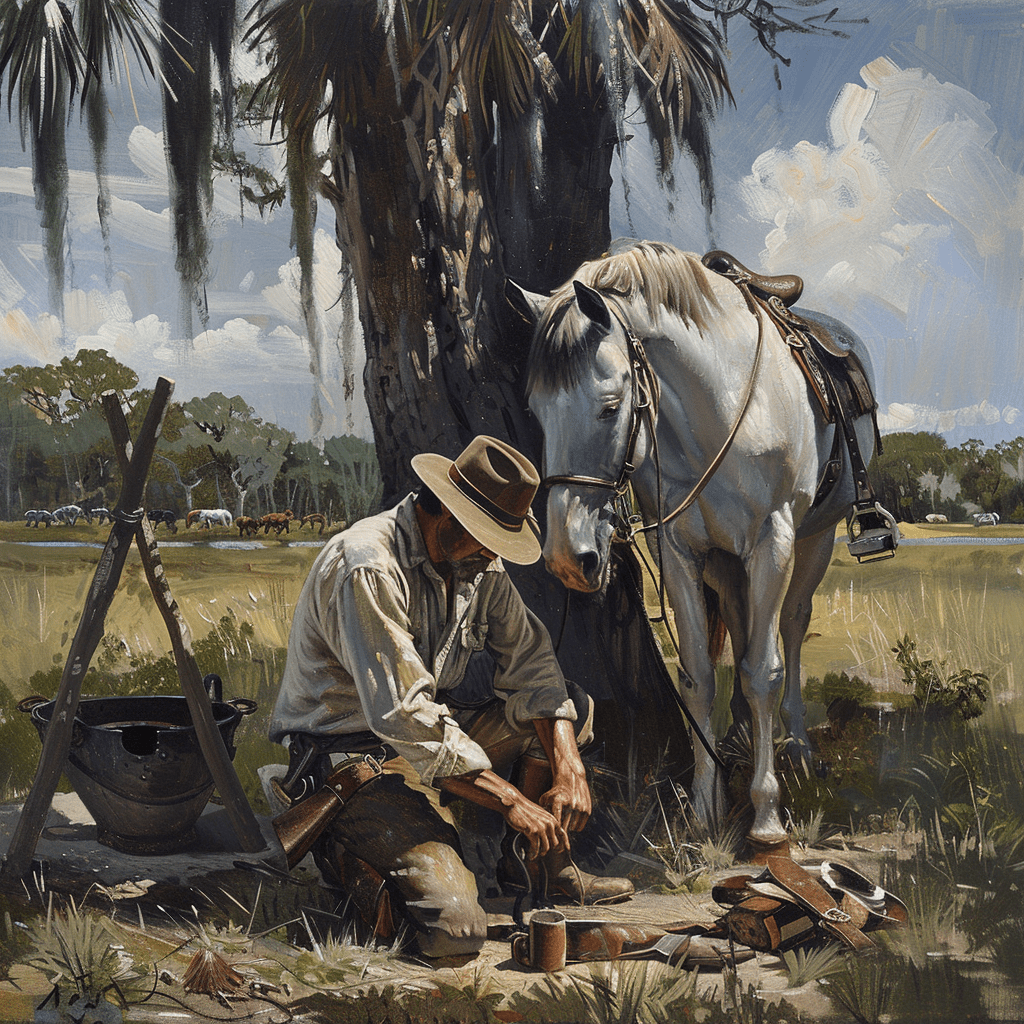
An interesting note from Isaiah Smith Jr’s last enlistment was that he was a farrier. A farrier is a specialist in equine hoof care, including the trimming and balancing of horses’ hooves and the placing of shoes on their hooves, if necessary. The role of a farrier combines aspects of blacksmithing and veterinary care, as they must understand the anatomy and physiology of the horse’s lower limb as well as the techniques for making and fitting horseshoes. During the Seminole Wars, including the Third Seminole War, farriers were essential to military operations that involved cavalry units. Their responsibilities were critical for several reasons which included maintaining cavalry readiness and preventing lameness and other hoof-related issues.
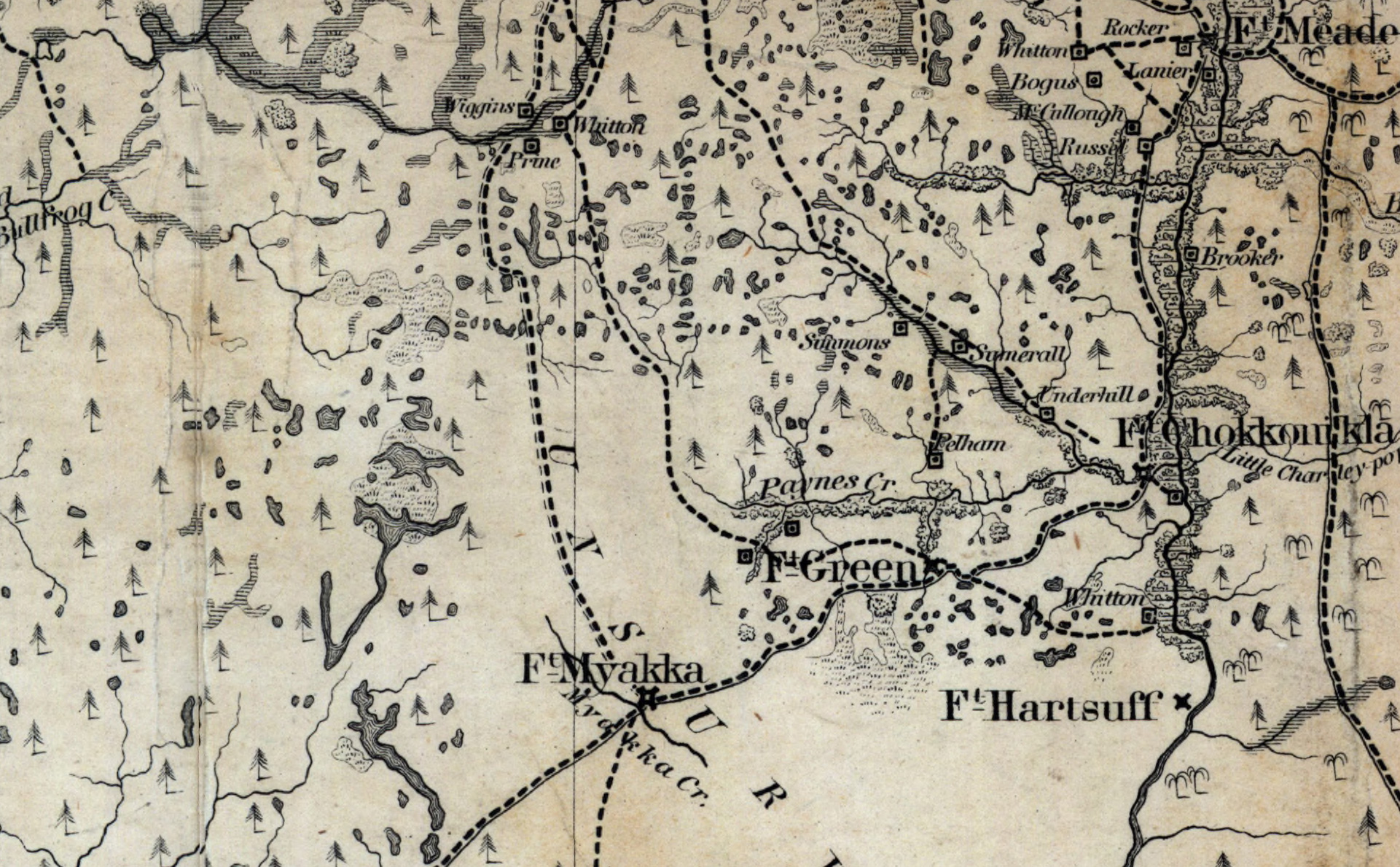
After the Seminole War concluded in late 1858, Isaiah Smith Jr remained in Manatee County and lived beyond the headwaters of the Manatee River, in an area near Fort Green and Fort Chokonikla (Creek language translation ‘burned store or house’ (reference to indians killing Captain Payne and Lott ‘Dempsey’ Whidden and burning their store in 1849) which was abandoned in 1850). Fort Green was about 8 miles to the northwest of what is today Wauchula, Florida.
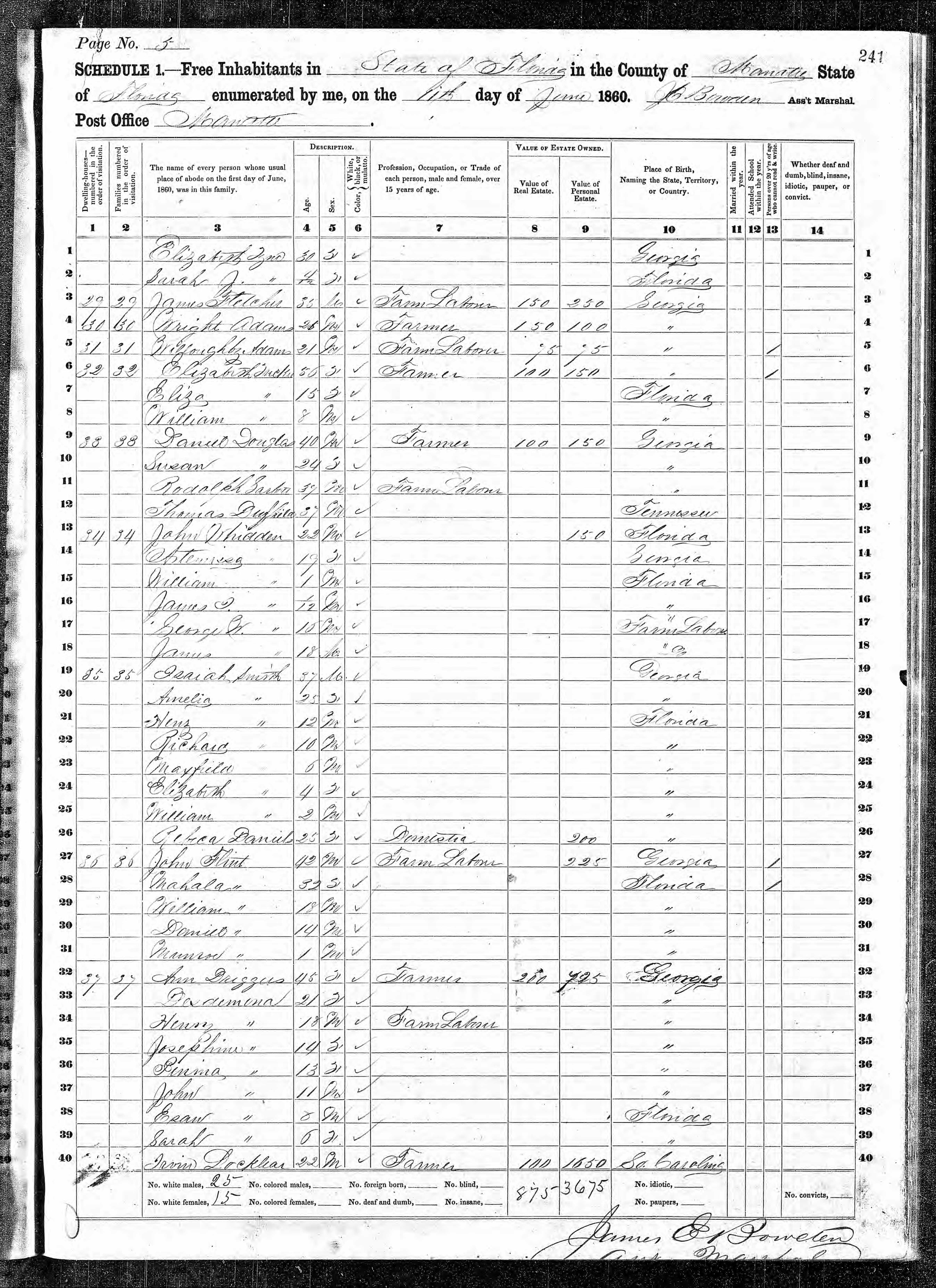
This is derived from the 1860 Manatee County U.S. Census, which shows him living near Willoughby Whidden, his brother Maxwell (Maxfield) Whidden and Maxwell’s son Eli P. Whidden who Isaiah Smith Jr befriended when they served together in the war. Willoughby Whidden was known to be living near Fort Hartsuff and is shown as such on the map above.
This area was heavily influenced by the cattle industry and surrounded by known cattle ranchers. It is likely that Isaiah Smith Jr supported his family as a cattleman. The life of a cattleman in central and south Florida was rugged and demanding, requiring a blend of skills from animal husbandry to navigation of the vast and often untamed Florida landscape.
Cattlemen in this era often worked on open ranges, herding cattle through grasslands and swamps, and driving them to market or shipping points. They faced the challenges of protecting their herds from predators and rustlers, ensuring the cattle had sufficient forage and water, and maintaining the health of the animals. These men lived a nomadic lifestyle, frequently moving with their herds, and relied on their deep knowledge of the land and weather patterns. Cattlemen like Isaiah played a crucial role in the local economy, supplying beef to growing markets, and their efforts helped lay the foundations for Florida’s cattle industry.
In the genealogy community, there’s a troubling phenomenon known as ‘genealogical plagiarism’. It’s when researchers copy information from other sources without verifying its accuracy or conducting independent research. This can lead to the perpetuation of errors and misinformation within the genealogical community, as subsequent researchers may unknowingly rely on these flawed sources, further perpetuating the inaccuracies.
This perpetuation has resulted in misinformation regarding the identification of Isaiah Smith Jr (b. 1816) as the son of Isaac Smith and Nancy Carver. Family genealogists, while examining the 1860 U.S. Census for Manatee County, have identified a William Smith (dwelling 26), as the son of an Isaac Smith that is living in Columbia County, Florida. They then inaccurately label Isaiah Smith (dwelling 35) as an ‘older brother’ based on proximity (nearby neighbor), without providing any other supporting information. This misinformation spreads as it is copied and republished by subsequent family genealogists, ultimately leading many to accept the inaccurate data as true.
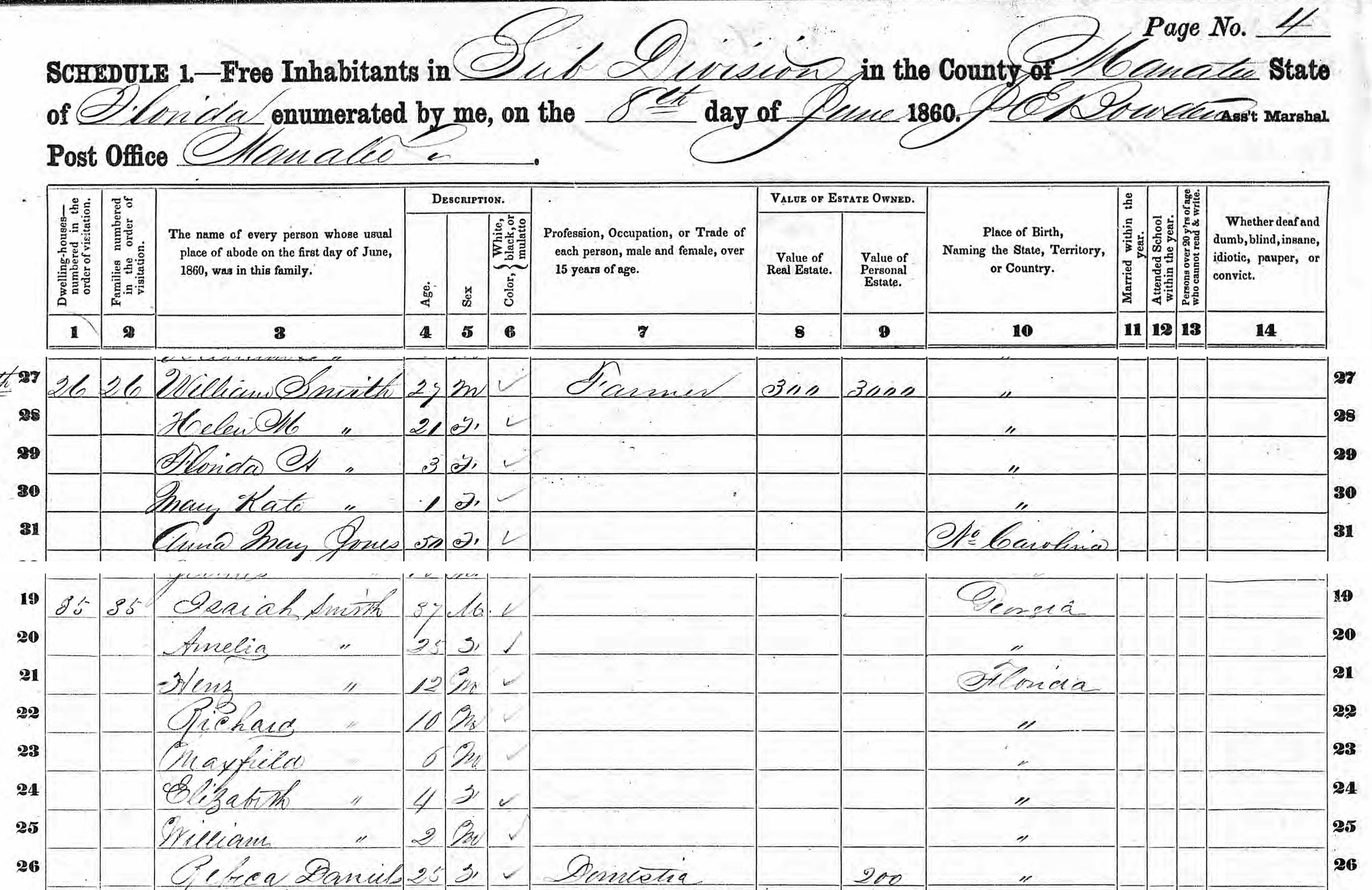
To reinforce the findings of this article, it’s crucial to note the genetic testing results of Isaiah Smith’s 3x great-grandson, who belongs to the J-M267 haplogroup, and William Smith’s 2x great-grandson, who belongs to the I-M253 haplogroup. These distinct genetic profiles indicate that despite living near each other in 1860 Manatee County, Florida, these two Smiths are not biologically related. Consequently, it can be confidently concluded that Isaiah Smith Jr is not the son of Isaac Smith and Nancy Carver Smith.
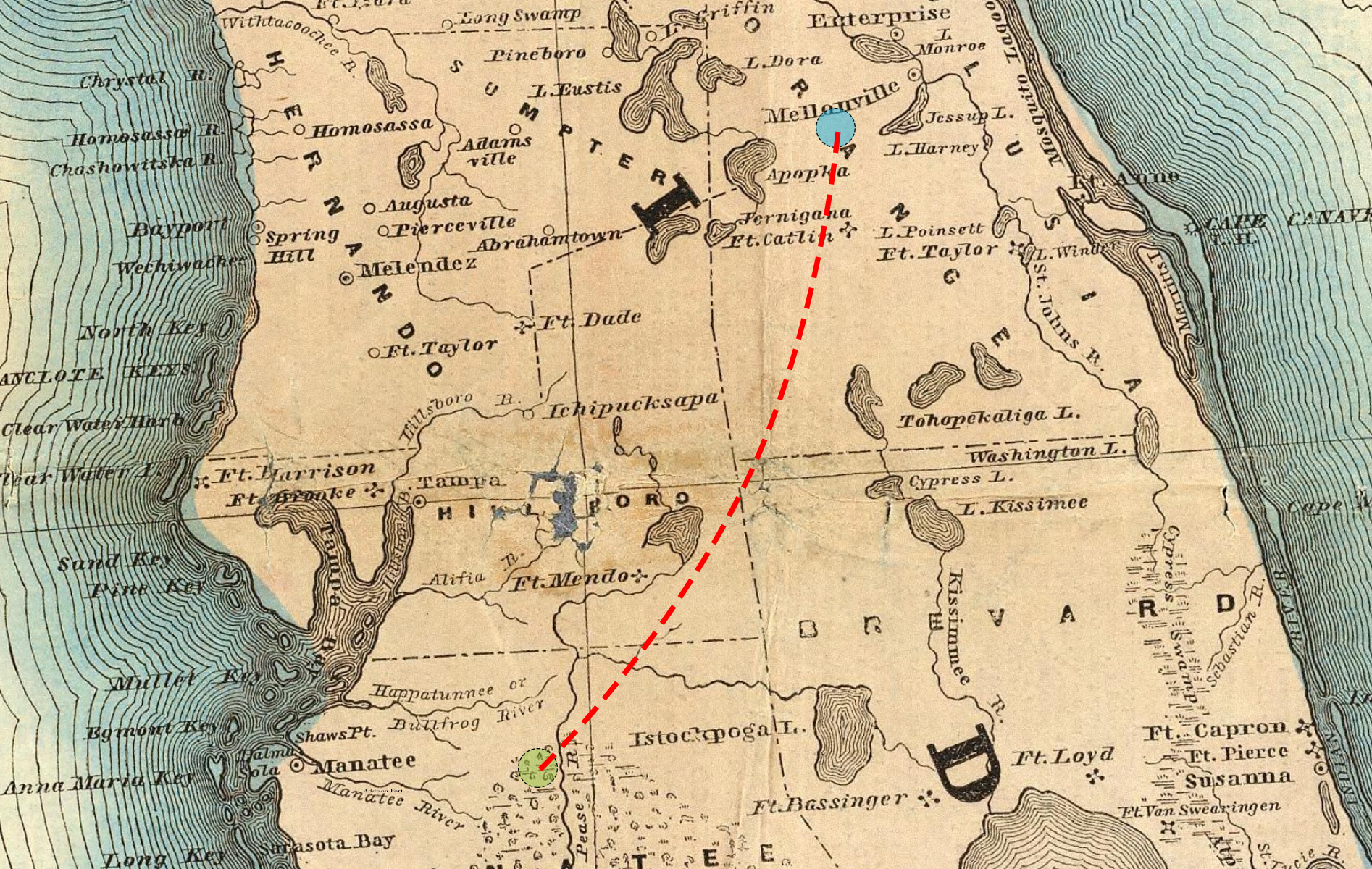
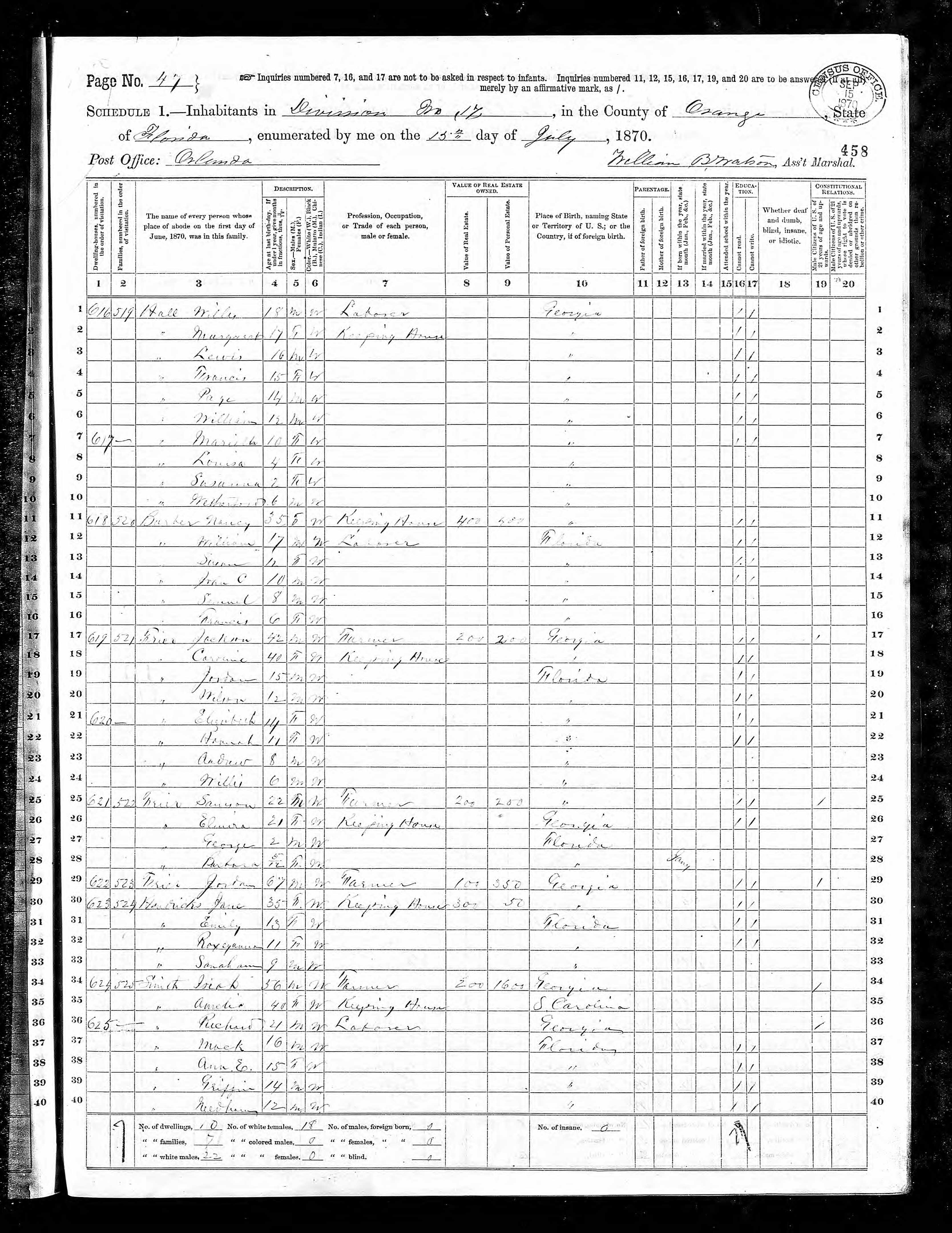
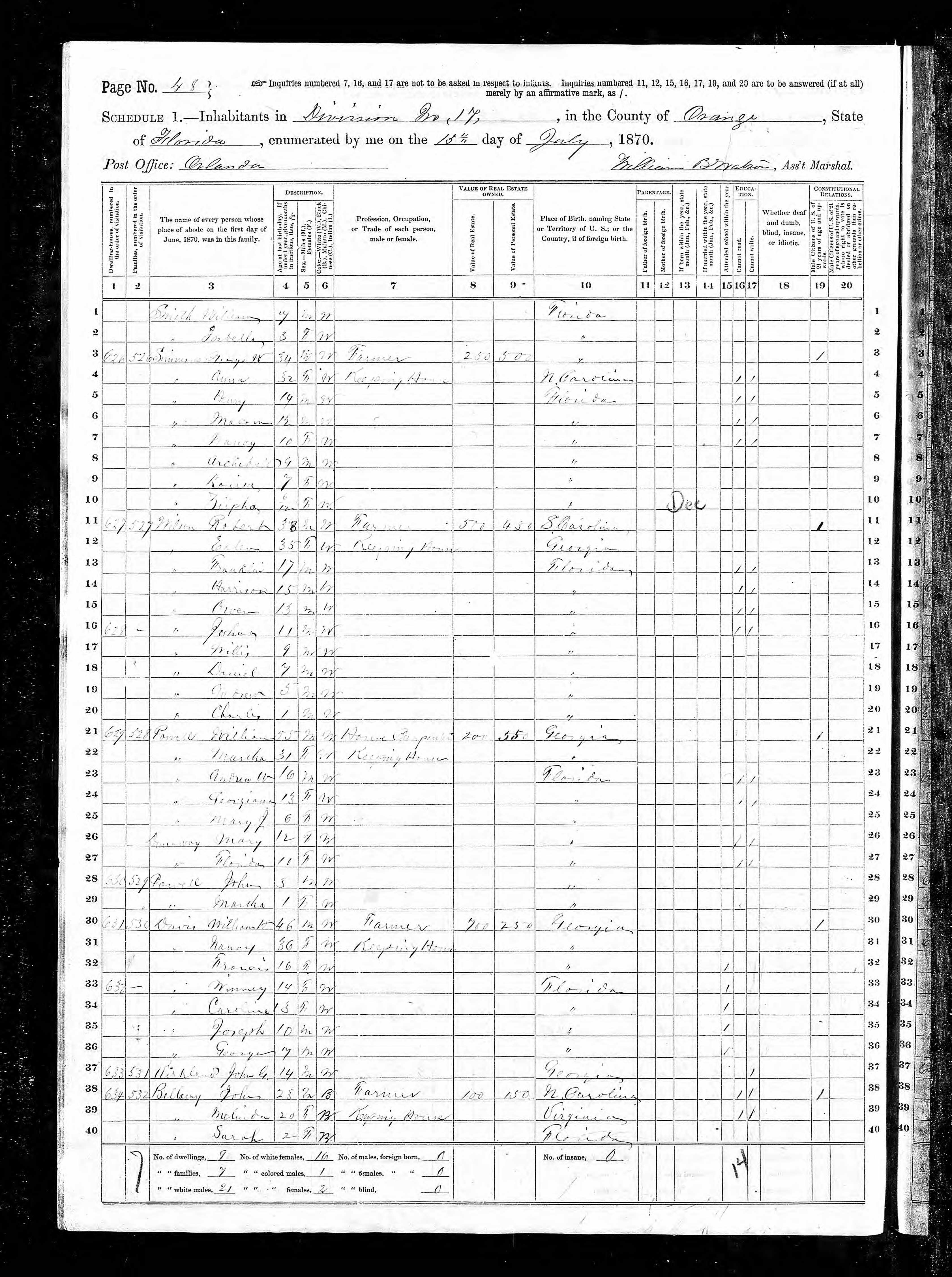
It is presumed that in late 1860 after the collection of the census, Isaiah Smith Jr relocated his family to Orange County, Florida, residing near the town of Orlando. He likely lived in Orlando during the American Civil War. This assertion is supported by the information gleaned from the 1870 U.S. Census and the obituary of his son Needham Smith indicating he was born in Orlando (March 1861).
During the early 1860s, Orlando held a strategic position in Florida’s cattle industry, especially in the context of the Civil War. As a middle junction for cattle drives originating from central and southern Florida, Orlando served as a critical resting point. Cattlemen driving their herds northward to market or to supply Confederate troops found Orlando an ideal location allowing the cattle to rest and graze at local pastures, ensuring they remained healthy and strong for the remainder of their journey.
The Civil War significantly influenced cattle operations in Florida, including in and around Orlando. With major ports like Manatee and Tampa frequently blockaded by Union forces, the usual routes for shipping cattle were disrupted. This blockade forced cattlemen to find alternative pathways to move their livestock. Orlando’s inland location made it a safer and more accessible hub for cattle drives. Consequently, the town saw increased activity and became a focal point for the cattle trade. This surge in cattle-related activities would have provided ample opportunities for work and trade for cattlemen like Isaiah Smith Jr, who could use the town as a base for further operations.
Isaiah, along with other cattlemen, likely found Orlando’s burgeoning role in the cattle industry during the Civil War appealing. The demand for beef was high to support Confederate troops, and with traditional shipping routes compromised, cattle drives through Orlando became more lucrative. The influx of cattlemen and their herds would have required support services, such as blacksmiths, farriers, and supply depots, creating a robust local economy around the cattle trade. Isaiah’s experience and skills as a cattleman and farrier would have been in high demand, making Orlando a practical and profitable place to operate.
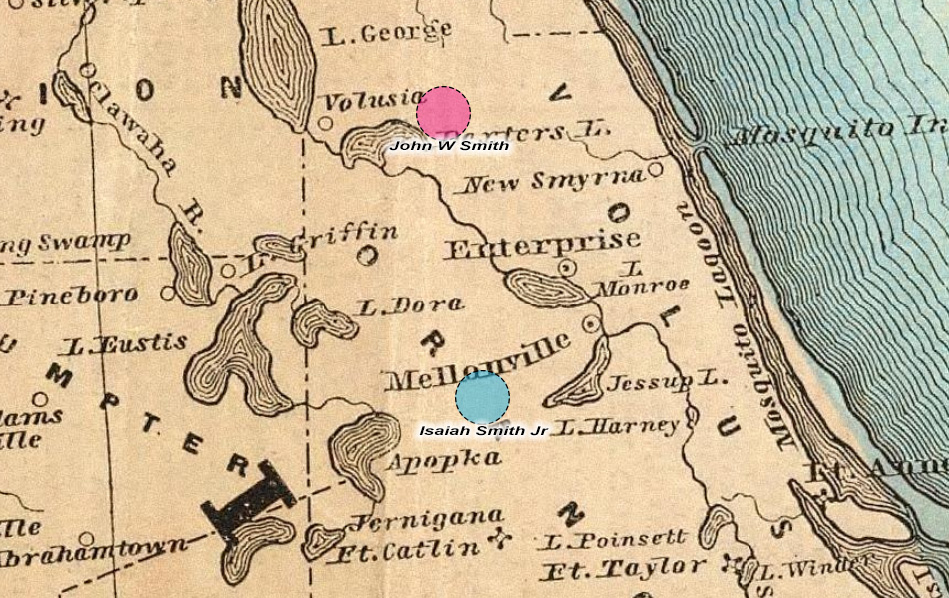
During their time in Orange County, and likely a brief period in Volusia County where his brother John W. Smith lived and where his son William was born, Isaiah and Amelia expanded their family with the births of two sons, Needham Smith and William Smith, and a daughter, Isabelle Smith.
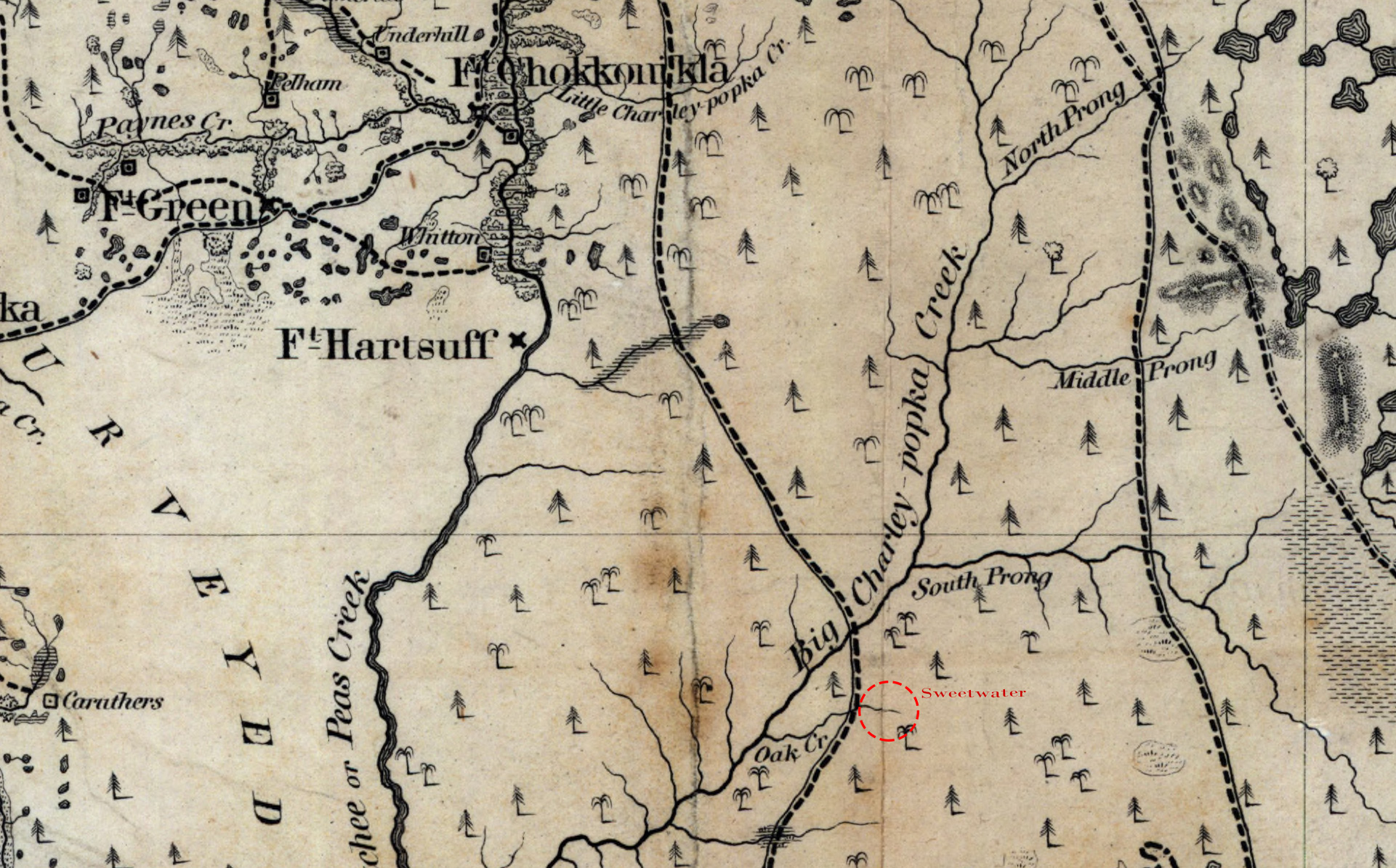
Around 1875, Isaiah Smith Jr returned to Manatee County. This time, he settled in an area near the Sweetwater Community on Oak Creek, as indicated by the 1880 U.S. Census. This was located about 20 miles from where he had previously lived around Fort Green.
In the 1860s Eli P. Whidden moved to Oak Creek (now called Sweetwater Community) and built himself a new home. Isaiah Smith Jr is found living near Eli P. Whidden on the 1880 U.S. Census.
Within the following year Isaiah Smith Jr appears to have fallen on bad times. During the winter of 1875, a resident named Antonio Bastite (presumed to be Bautista) reported a burglary at his dwelling house, where his property was stolen on 28 December 1875.
Mr. Bastite claimed the following items were stolen: two rifle guns of the value of fifty dollars each, one lot of carpenter tools valued at fifty dollars, one box of sugar valued at twenty four dollars, cans of condensed milk of valued at twenty five cents, one lot of farming utensils valued at fifty dollars , one box of candles valued at ten dollars, one bushel of rice valued at seven dollars, one lot of clothing valued at hundred dollars, and three kegs of nails valued at ten dollars each.
Subsequently, an inquiry into the burglary was conducted over the following year, leading to the convening of a grand jury to assess the evidence and determine whether formal charges were warranted.
Meanwhile in May 1876 Isaiah Smith Jr was brought to court on an assumpsit case by Wright Carlton who claimed Isaiah Smith Jr made him a promissory note in writing for the sum of one hundred and sixty dollars. Isaiah Smith Jr failed to pay the promissory note on the date due.
The court commanded Isaiah to pay one hundred and sixty four dollars and 26 cents plus eight dollars and 65 cents for court cost.
A year later, upon reviewing the evidence, the grand jury found sufficient grounds to indict Isaiah Smith Jr and others for burglary. Consequently, Isaiah Smith Jr was apprehended and placed in custody. He subsequently posted bond on October 29, 1877.
Isaiah Smith Jr’s bond amounted to $300, with his two securities, John Parker and Lewis H. Parker, contributing $150 each. Notably, John Parker, who served as Captain of the company of mounted volunteers alongside Isaiah Smith Jr in 1856, acted as one of the securities. Lewis H. Parker, who happened to be John Parker’s son, served as the other security.
John Parker and Lewis H. Parker also acted as securities for Isaiah Smith Jr’s son, Henry Smith, who faced charges related to the same burglary incident.
In total, Isaiah Smith Jr, his sons Richard Smith and Henry Smith, along with Archibald Hogans, John Ashley, and Joseph Ashley, were accused and formally charged with burglary.
It appears that the others accused were dropped from the case and the charges were placed soley on Isaiah Smith Jr. On 8 May 1879, Isaiah Smith Jr was found guilty. It appears Isaiah didn’t serve any remaining jail time, however he was required to pay a fine of one hundred dollars to the court.
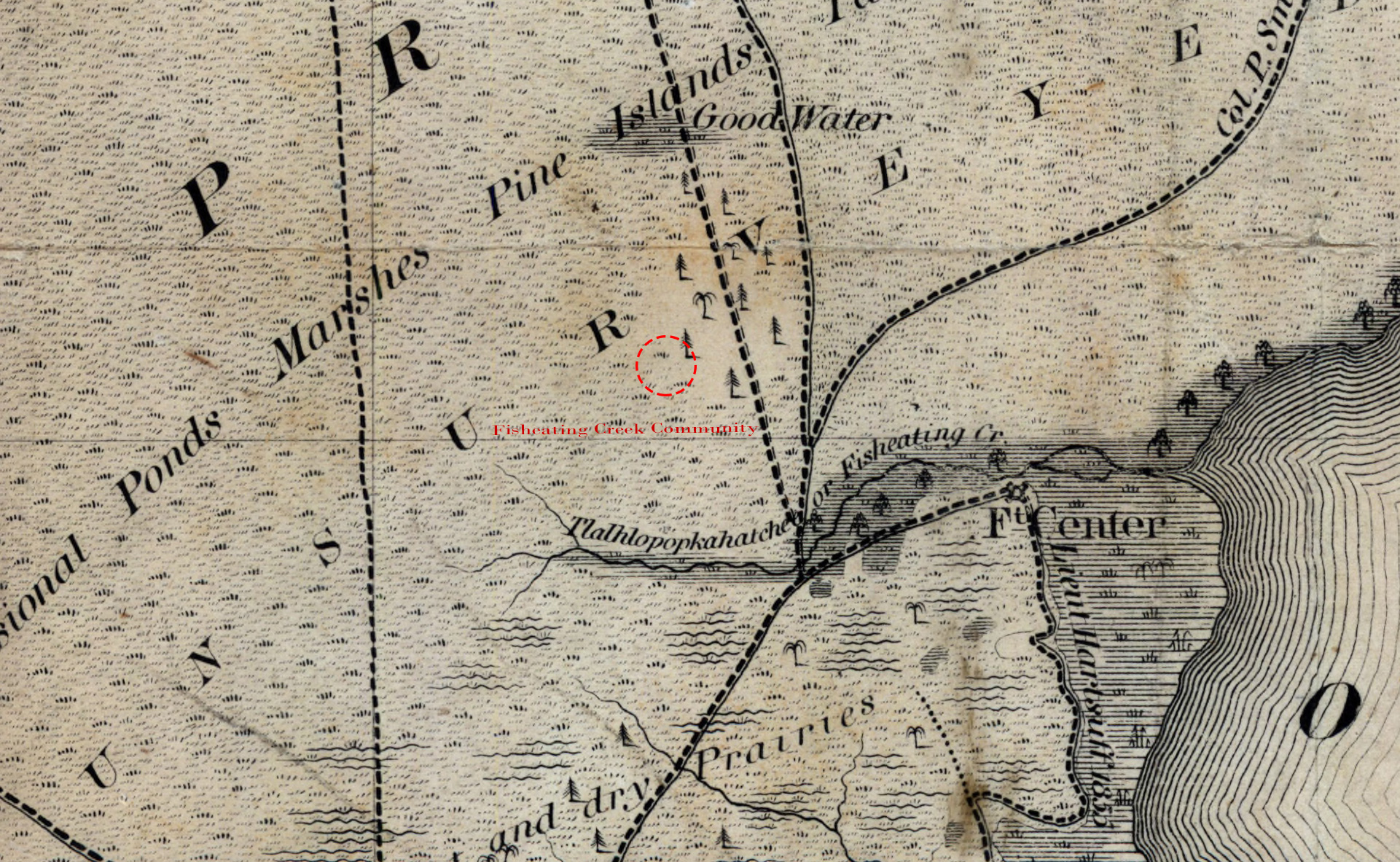
Sometime in the early 1880’s, Isaiah Smith Jr moves once again to the southeast of Arcadia, settling in a remote area of Florida in the vicinity of the Fisheating Creek Community as it was called in the 1870s.
This first settlement was to the west of what is known today as old Venus (established when the post office formed).
This area known today as old Venus was situated at the junction of two military trails and had a rich history as a crossroads during the three Seminole Indian Wars. The trails, once used by soldiers, were now travesed by cattle drivers who began to settle in the region during the 1880s.
At the time, the early pionners of Fisheating Creek and old Venus were not homesteaders but squatters, living off the land without formal claims. The area, which would later become part of Highlands County, had very few non-native settlers before 1890.
Based on the tax records of the period, it is persumed that Isaiah Smith Jr died circa 1884 at the Fisheating Creek Community. This the last year he was recorded paying taxes. Oral tradition says that Isaiah Smith Jr was found dead on the banks of Fisheating Creek from a rattlensake bite.
Oral tradition also claims Isaiah Smith Jr and Amelia Harthcock Smith are buried in the southeast corner o the Methodist cemetery in Venus.
Isaiah Smith Jr and Permelia Harthcock Smith had the following children:
Henry Smith, b. 1848, Dooly County, Georgia; d. 25 December 1923, DeSoto County, Florida
Richard S Smith, b. August 1850, Dooly County, Georgia
Griffin Smith, b. 1854, Hillsborough County, Florida; d. 2 October 1940, Lee County, Florida
Anne Elizabeth Smith, b. 1856, Manatee County, Florida; d. 1924, DeSoto County, Florida
‘John Doe’, b. 1858, Manatee County, Florida;
Needham Smith, b. March 1861, Orange County, Florida; d. 19 March 1940, DeSoto County, Florida
William Thomas Smith, b. 27 August 1863, Volusia County, Florida; d. 14 August 1938, DeSoto County, Florida
Isabelle M Smith, b. 5 May 1867, Florida; d. 20 February 1937, Volusia County, Florida
There is an irregular recording of children’s names in Isaiah Smith Jr’s family during the 1860 and 1870 U.S. census records.
For example, in the 1860 census, the third child is named Maxfield, while in the 1870 census, this same child is named Mack. In adulthood, this person is identified as Griffin Smith. At no other time does he use the names Maxfield or Mack, nor the initial M. Therefore, one could presume his full name might have been Griffin Maxfield Smith or potentially Maxfield Griffin Smith.
In the 1860 census, the fifth child is listed as William, but in the 1870 census, that same child is listed as Griffin. However, the seventh child, in 1870, is also named William Smith and is consistently known as William throughout his life, suggesting that the name of the fifth child in 1860 may have been a mistake. Given that the third child is known to use the name Griffin, it is likely that the name of the fifth child in 1870 is also incorrect. Despite these discrepancies, this fifth child, born in 1858, is believed to have been a real person.
Due to the ambiguity surrounding the fifth child’s name, I have chosen to identify him as John Doe for the time being. It is believed that he likely died sometime in the early 1870s. This may also explain why younger generations of the Smith family do not recall knowing this individual, as he perhaps died young and was not often mentioned in later generations.
For a further examination those census records can be viewed here: 1860, 1870-1, 1870-2.
 digging our roots
Leave a comment